
Minoxidil is one of the best known treatments for hair loss, but many people are surprised to discover that the rules around buying it are not the same everywhere. In some countries, topical minoxidil can be purchased freely from pharmacies, supermarkets, or online retailers. In others, at least some formulations require a prescription. Oral minoxidil introduces another layer of complexity because regulations and prescribing practices vary considerably.
This often creates confusion, especially for people reading international advice online. A recommendation made by a dermatologist in one country may not match what is legally available in another.
The answer to whether you need a prescription therefore depends less on the drug itself and more on where you live, which formulation you want, and how local regulators classify the product.
What minoxidil actually is
Minoxidil was originally developed as a treatment for high blood pressure. During its use in cardiovascular medicine, doctors noticed that some patients developed increased hair growth as a side effect. This eventually led to the development of topical formulations for androgenetic alopecia, also known as pattern hair loss.
Minoxidil is mainly used in two forms. Topical minoxidil is applied directly to the scalp for hair loss, and comes in liquid and foam preparations, commonly in 2% and 5% strengths. Oral minoxidil is taken as tablets, usually at much lower doses than those historically used for blood pressure treatment, and is increasingly used off-label for hair disorders.
Topical minoxidil is available in liquid and foam preparations, commonly in strengths such as 2% and 5%. Oral minoxidil is prescribed in tablet form, usually at much lower doses than those historically used for blood pressure treatment.
Why prescription rules differ
Drug regulation is national rather than global. Regulatory agencies evaluate medicines differently depending on local evidence reviews, healthcare systems, historical prescribing patterns, and safety concerns.
A medication that is considered suitable for over the counter use in one country may still require medical supervision elsewhere.
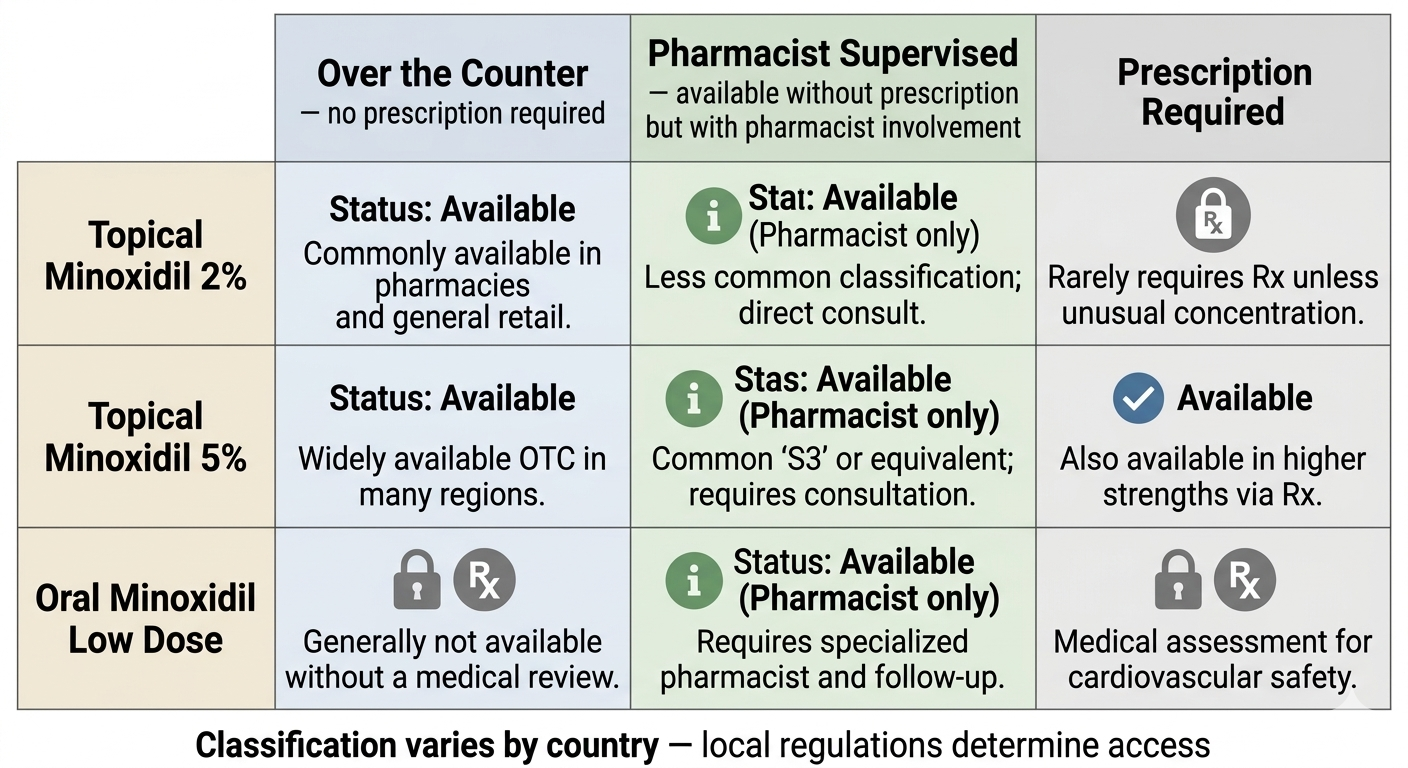
Minoxidil also sits in an unusual category because topical formulations are generally considered relatively safe when used correctly, while oral formulations require more caution due to potential cardiovascular effects.
This leads to several possible situations:
- Topical minoxidil available without prescription
- Topical minoxidil requiring pharmacist supervision
- Oral minoxidil prescription only
- Different rules for different strengths
- Different rules for men and women in product labelling
Topical minoxidil is often available without prescription
In many European countries, the United Kingdom, the United States, and several other regions, topical minoxidil can usually be purchased without a prescription.
This is especially true for standard strengths marketed for androgenetic alopecia. Pharmacies may stock multiple versions, including branded and generic products.
The reasoning is largely based on long term use data and relatively predictable side effect profiles when the medication is applied correctly to intact scalp skin.
Even so, over the counter availability does not mean the product is appropriate for everyone. Some people should still seek medical advice before starting it.
Situations where medical assessment matters first
Self treating hair loss can delay diagnosis if the cause is unclear.
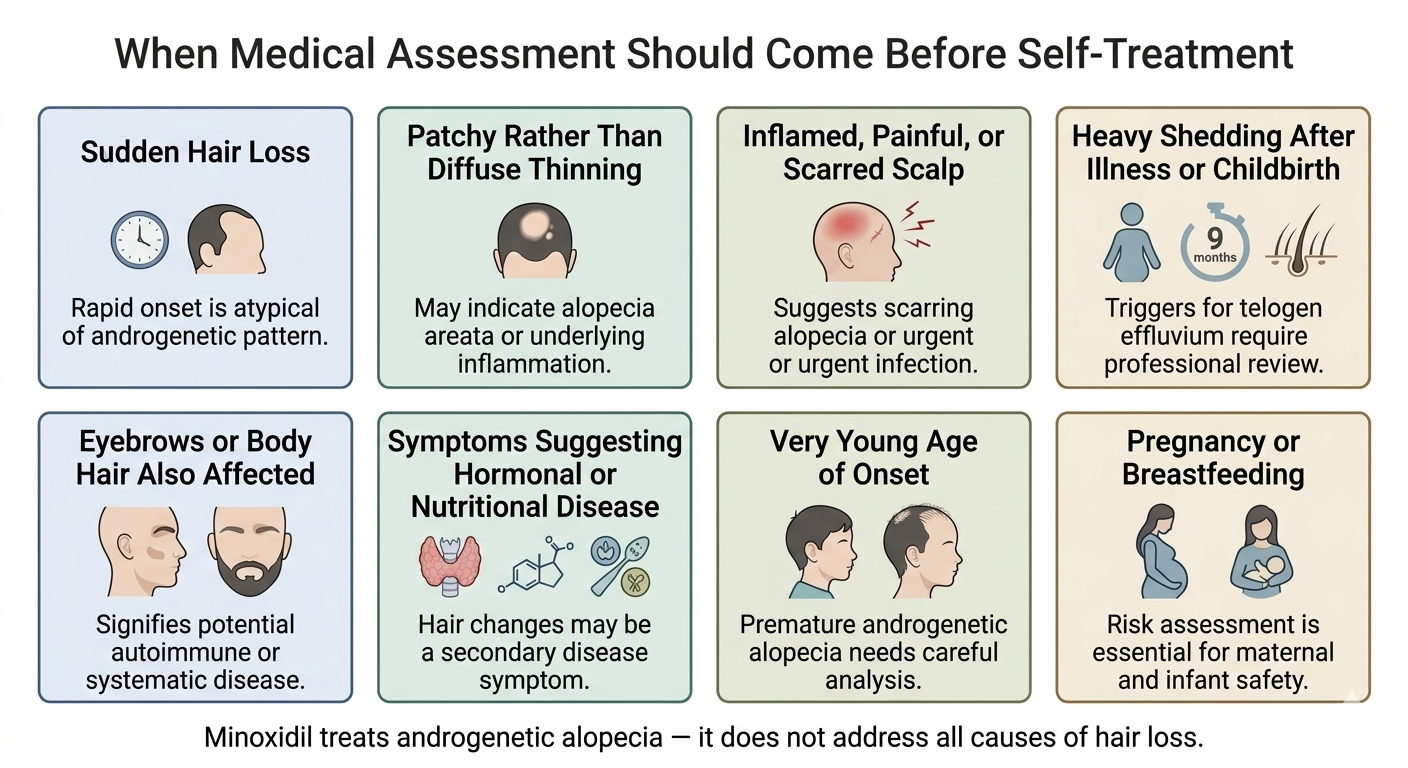
Medical assessment is especially important if:
- Hair loss is sudden
- There are bald patches rather than diffuse thinning
- The scalp is inflamed, painful, or scarred
- There is heavy shedding after illness or childbirth
- Eyebrows or body hair are also affected
- There are symptoms suggesting hormonal or nutritional disease
- The person is very young
- The individual is pregnant or breastfeeding
Minoxidil may help androgenetic alopecia, but it will not treat every type of hair loss. In some inflammatory or scarring conditions, relying only on cosmetic products may delay treatment that is medically important.
Oral minoxidil is different
Oral minoxidil has become increasingly discussed in dermatology over recent years, particularly at low doses for hair disorders. However, it is not simply “stronger minoxidil.”
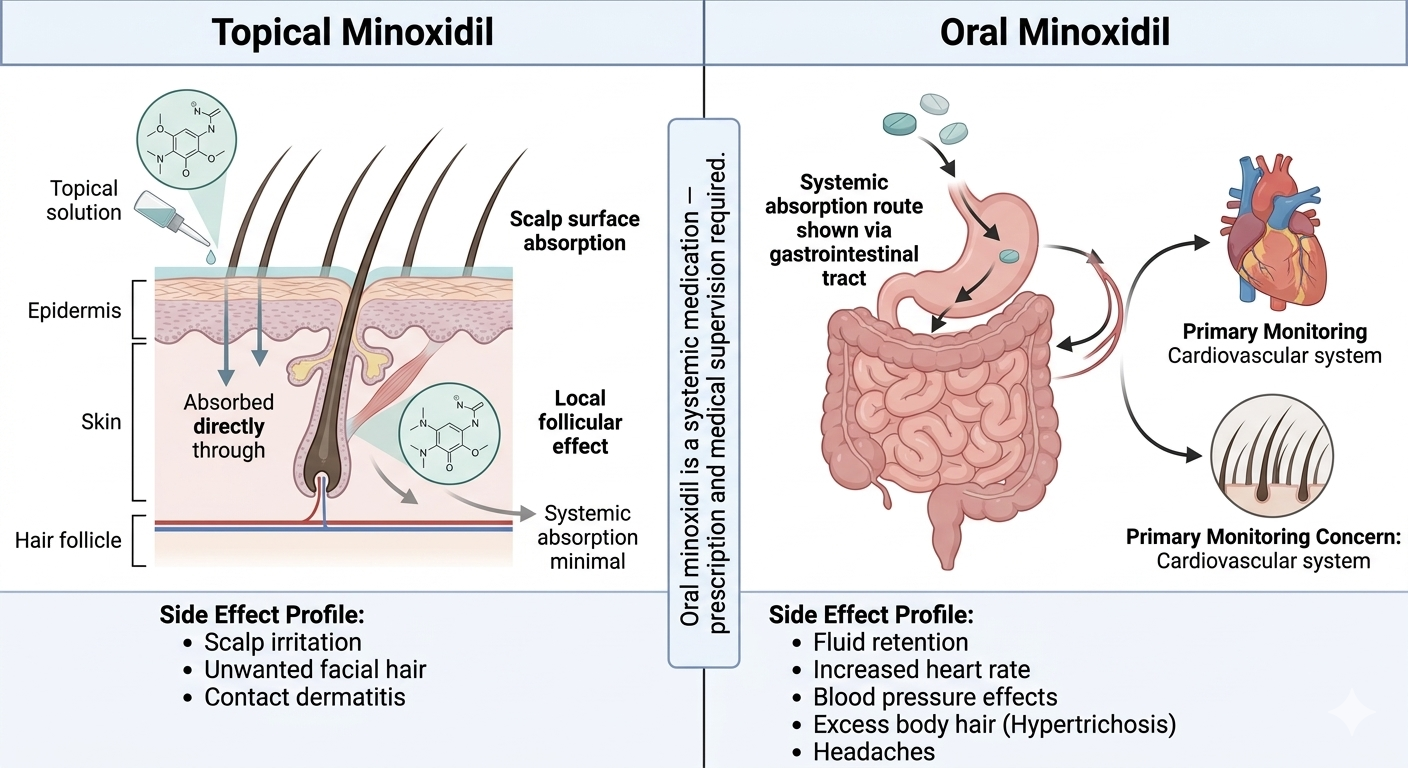
It is a systemic medication. That distinction matters.
Low dose oral minoxidil is prescribed off label in many countries for hair loss, meaning it may not have formal regulatory approval specifically for alopecia despite growing clinical use.
Prescription requirements are much stricter because oral minoxidil can affect blood pressure, heart rate, fluid balance, and cardiovascular function.
Potential side effects include:
- Swelling
- Increased heart rate
- Light headedness
- Fluid retention
- Excess body hair growth
- Headaches
Most patients on low doses tolerate treatment reasonably well, but careful selection still matters. People with certain cardiovascular conditions may not be suitable candidates.
Oral minoxidil should not be started casually through unregulated sources without medical supervision.
Why online advice creates confusion
Hair loss discussions online are highly international. Someone in Spain may describe buying minoxidil at a local pharmacy without difficulty, while someone elsewhere may be told to obtain a prescription first.
This can make regulations appear inconsistent or arbitrary. In reality, they simply reflect different healthcare systems and legal classifications.
Online discussions also blur the distinction between topical and oral use. A person reading about “minoxidil” may not realise that one discussion refers to foam applied to the scalp while another refers to systemic tablets prescribed by a doctor.
The safety considerations are not identical.
Are stronger formulations always better?
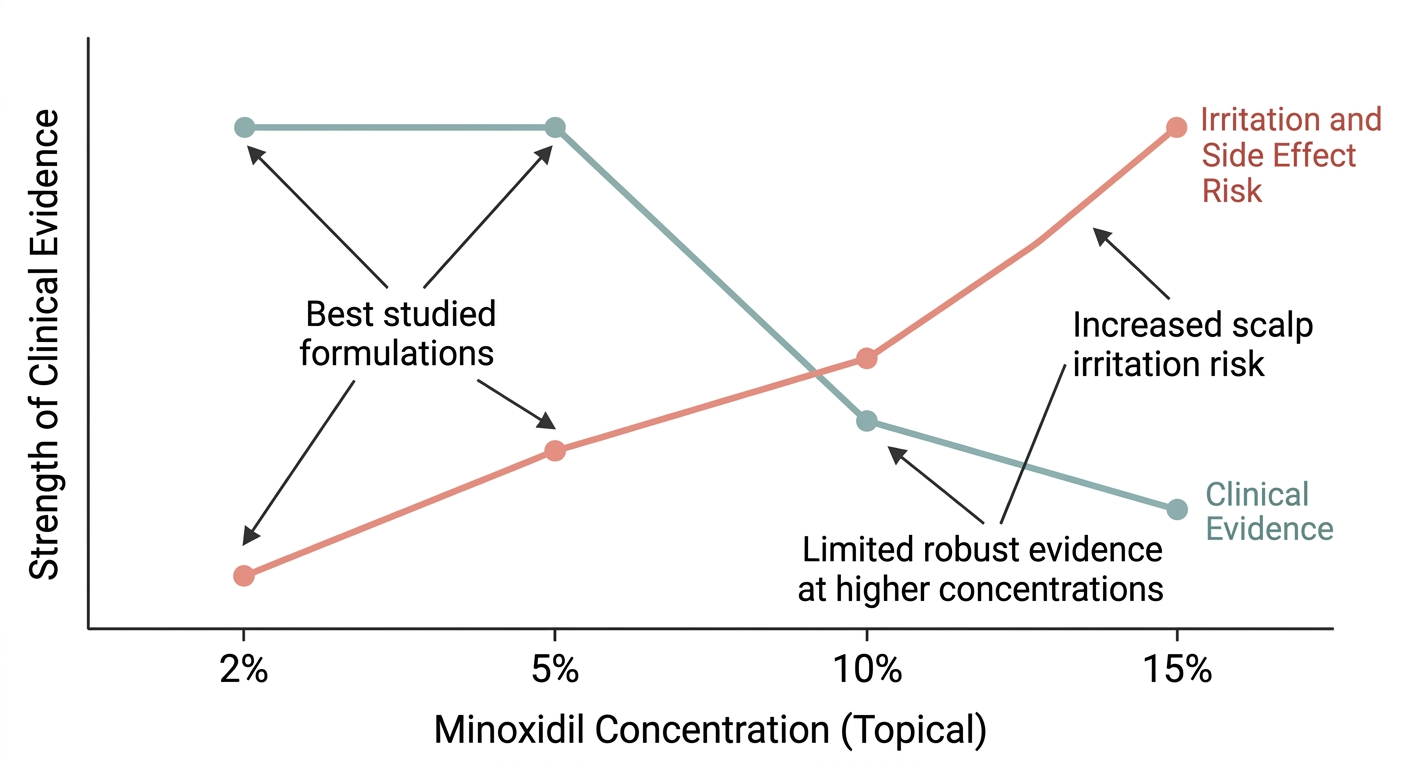
Some products marketed online contain unusually high concentrations such as 10% or 15% minoxidil. These are not automatically more effective.
Evidence for higher concentrations is less robust than for standard strengths, and irritation risk may increase. More is not always better in hair medicine. A scalp that becomes persistently inflamed, itchy, or irritated may tolerate treatment poorly and reduce adherence.
Standard formulations remain the best studied.
Minoxidil for women
Women often encounter additional confusion because some packaging is marketed specifically for men or women.
Historically, lower strength products were often recommended for women because of concerns about unwanted facial hair growth and irritation. However, prescribing practices have evolved, and some clinicians now use higher strength formulations in selected women depending on the diagnosis and risk profile.
Pregnancy and breastfeeding are particularly important considerations. Minoxidil is generally avoided during pregnancy because safety data are limited.
Women with diffuse thinning should also be assessed properly because female hair loss can have multiple overlapping causes, including iron deficiency, thyroid disease, hormonal disorders, menopause, and telogen effluvium.
What about online pharmacies?
Online pharmacies have made access easier, but they also create quality control problems.
Legitimate regulated pharmacies can be useful, especially for people in areas with limited local availability. However, counterfeit or poorly regulated products remain a concern.
Buying from unregulated online sources carries several risks worth understanding:
- Incorrect concentration — the product may be weaker or stronger than stated, reducing effectiveness or increasing irritation
- Contamination — poorly manufactured products raise safety concerns
- Fake branding — the product may not contain its stated ingredients
- Improper storage — stability may be compromised during transit or warehousing
- No medical screening — important contraindications may go unidentified
This becomes even more important with oral minoxidil, where unregulated access carries greater medical risk.
Can pharmacists help?
In many countries, pharmacists play an important role in hair loss management. They may advise on:
- Correct application technique
- Side effect monitoring
- Product selection
- Whether medical referral is appropriate
- Drug interactions
- Scalp irritation management
A pharmacist may also recognise situations where over the counter treatment is unlikely to address the underlying problem.
Common misconceptions about prescriptions and safety
One misunderstanding is that prescription medicines are always dangerous while non prescription products are automatically safe. That is not how regulation works.
Some over the counter products can still cause side effects, allergic reactions, or inappropriate self treatment. Equally, some prescription medicines are prescribed safely and routinely under supervision.
Another misconception is that needing a prescription means a product is more effective. Prescription status mainly reflects regulatory decisions about monitoring and risk management, not necessarily superiority.
Expectations still matter
Even when minoxidil is obtained legally and used correctly, expectations should remain realistic.
Hair growth is slow. Visible improvement often takes several months. Some people stabilise rather than regrow substantial density. Others respond modestly or not at all.
Stopping treatment usually leads to gradual loss of maintained benefit over time because the underlying hair loss process continues.
Minoxidil is a management tool, not a permanent cure for androgenetic alopecia.
The practical takeaway
Whether you need a prescription for minoxidil depends largely on geography and formulation. Topical minoxidil is available without prescription in many countries, while oral minoxidil generally requires medical supervision because of its systemic effects.
The more important issue is not simply legal access. It is making sure the diagnosis is correct and the treatment fits the situation. Hair loss is not one disease, and not every thinning pattern should be managed with self treatment alone.
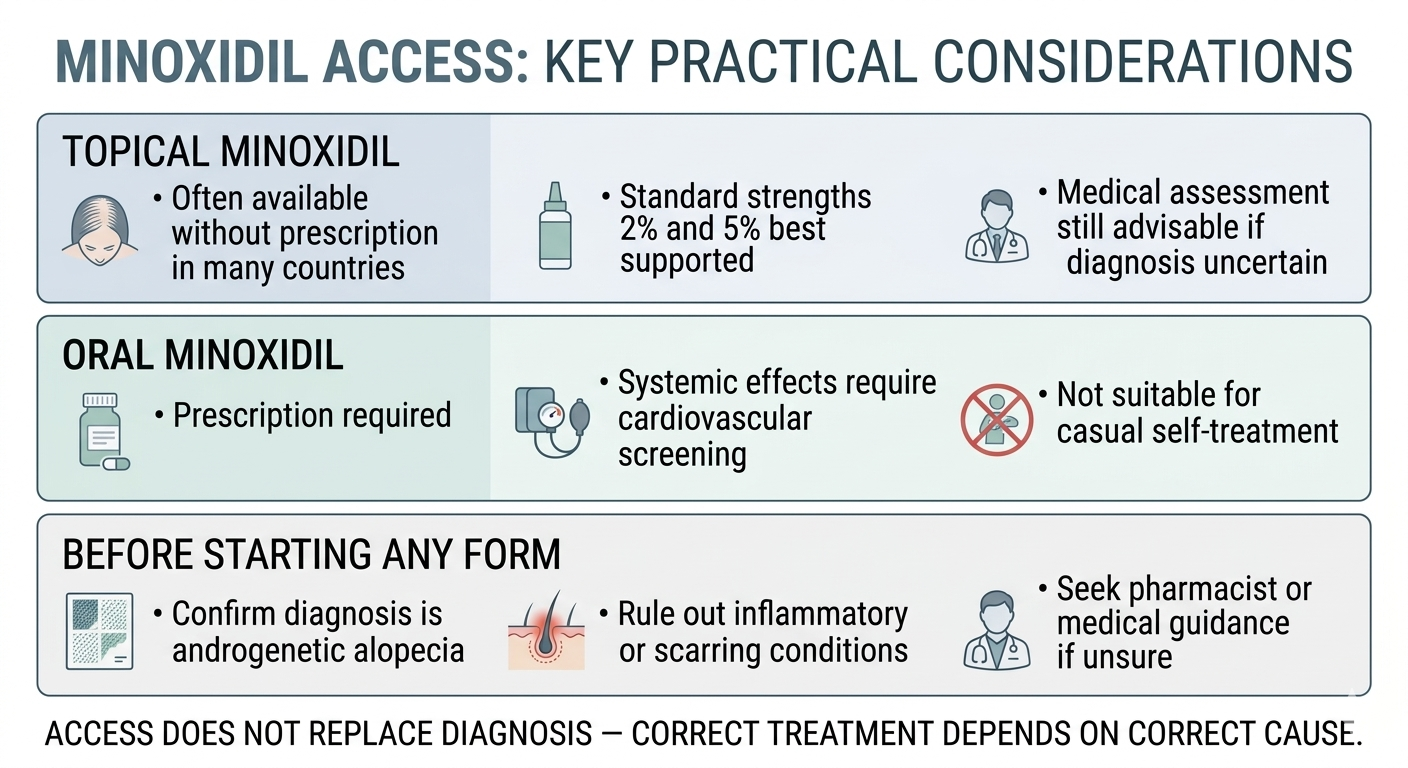
Minoxidil remains one of the most evidence supported treatments for androgenetic alopecia, but appropriate use, realistic expectations, and proper medical assessment still matter more than how easily the product can be purchased.
Author: Dr. Priya Goswami
Medical review: Dr. Denis Broun
Next step
If you notice coverage changes without increased shedding, confirm what process is occurring.
Take the Hair Assessment to have a physician review your pattern, identify whether miniaturization is present, and determine appropriate staging and next steps.


Add Comment