The hair loss market is crowded, emotional, and often confusing. Products promise thicker hair, faster growth, stronger follicles, fuller hairlines, scalp activation, stem cell stimulation, and “clinically proven” results that are difficult to verify. Many people spend large amounts of money before discovering that the evidence behind a product is weak or nonexistent.
This does not mean every hair growth product is useless. Some treatments do have meaningful scientific support. Others may improve the cosmetic appearance of the hair even if they do not change the biology of hair loss. The challenge is learning how to separate plausible treatments from expensive marketing.
A useful starting point is understanding that hair growth is biologically slow. Products that claim dramatic transformation within days or a few weeks are already making claims that do not fit normal hair physiology.
First ask what problem the product claims to solve
Not all hair loss is the same. Before evaluating any product, it helps to clarify the underlying issue.
Hair thinning may result from:
- Androgenetic alopecia
- Telogen effluvium
- Nutritional deficiency
- Scalp inflammation
- Autoimmune disease
- Breakage rather than follicle loss
- Hormonal disorders
- Age related miniaturisation
A product that helps one condition may do very little for another.
For example, a thickening spray may improve the appearance of fine hair but will not treat active autoimmune alopecia. An antifungal shampoo may help seborrhoeic dermatitis but will not reverse advanced male pattern baldness.
A product becomes more credible when its claims match a realistic biological mechanism.
Be cautious with the word “clinically proven”
“Clinically proven” is one of the most overused phrases in the hair industry.
Sometimes it refers to a properly designed controlled study. Sometimes it refers to a very small internal company trial without independent review. Occasionally it means almost nothing at all.
A more useful question is:
- What exactly was studied?
- How many participants were involved?
- Was there a placebo comparison?
- Was the study peer reviewed?
- Was the improvement measured objectively?
- Who funded the research?
- Was the effect meaningful or only statistically detectable?
A product may technically produce a small measurable change while still failing to create visible cosmetic improvement for most users.
Evidence quality matters more than ingredient lists
Many products advertise long ingredient lists as proof of effectiveness. In reality, the number of ingredients tells you very little.
Some formulations contain dozens of botanical extracts with limited or no meaningful human evidence. Others rely heavily on laboratory data that has never translated into reliable clinical outcomes.
The presence of an ingredient with theoretical benefit does not guarantee the final product works.
Concentration matters. Stability matters. Absorption matters. Study quality matters.
A simpler product with strong evidence is usually more credible than a complicated formula supported mainly by marketing language.
Ingredients with stronger evidence
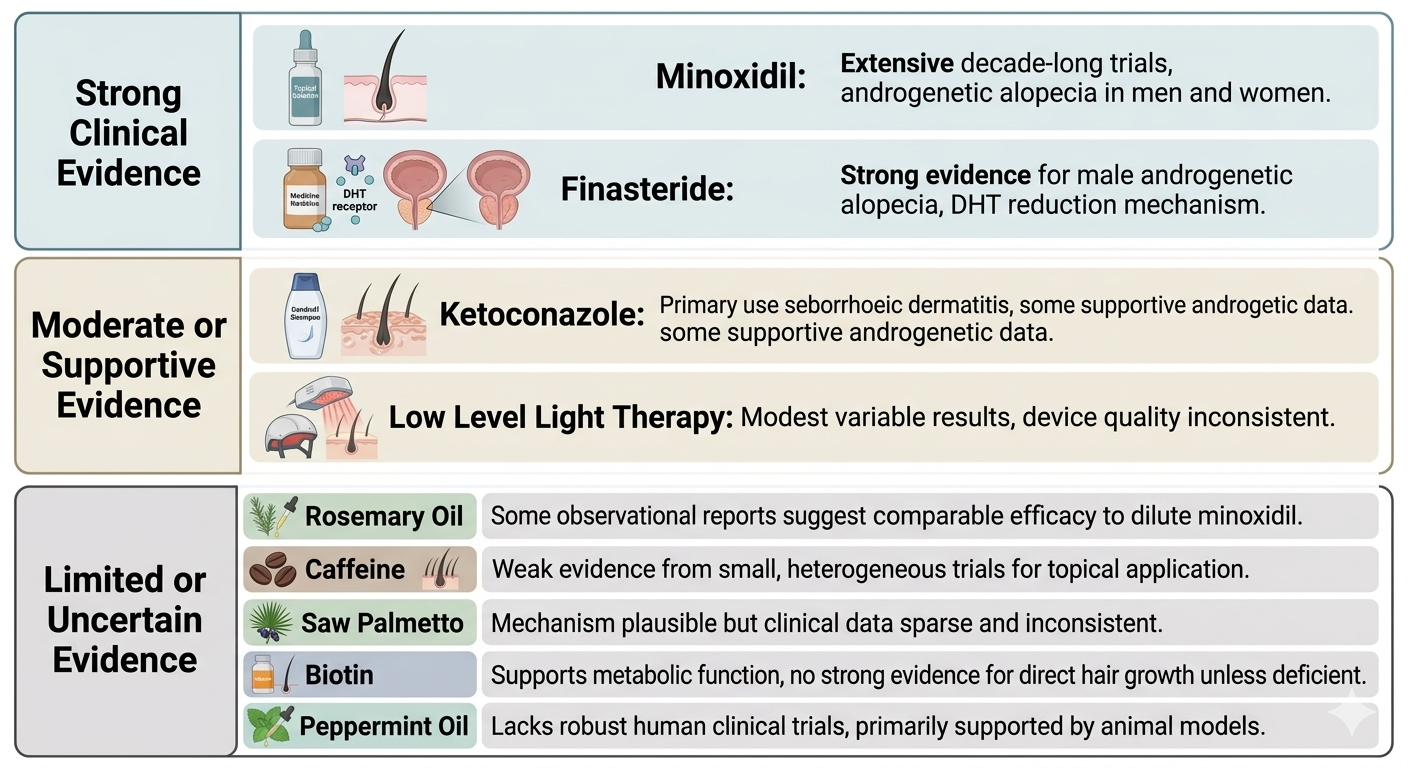
Only a relatively small number of hair loss treatments have substantial clinical evidence behind them.
Minoxidil
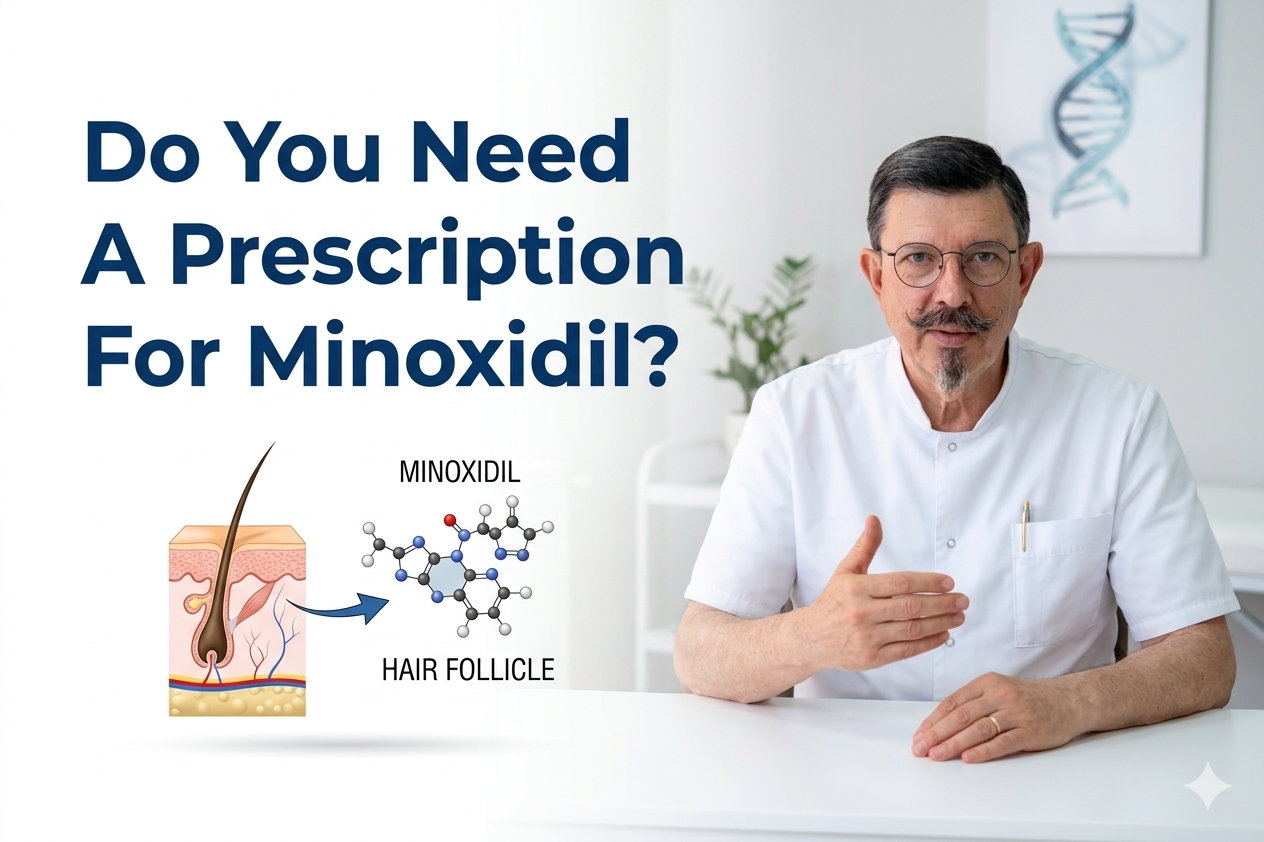
Topical minoxidil remains one of the most evidence supported treatments for androgenetic alopecia in both men and women.
It does not work for everyone, and results vary, but its effectiveness has been studied extensively over decades.
Finasteride
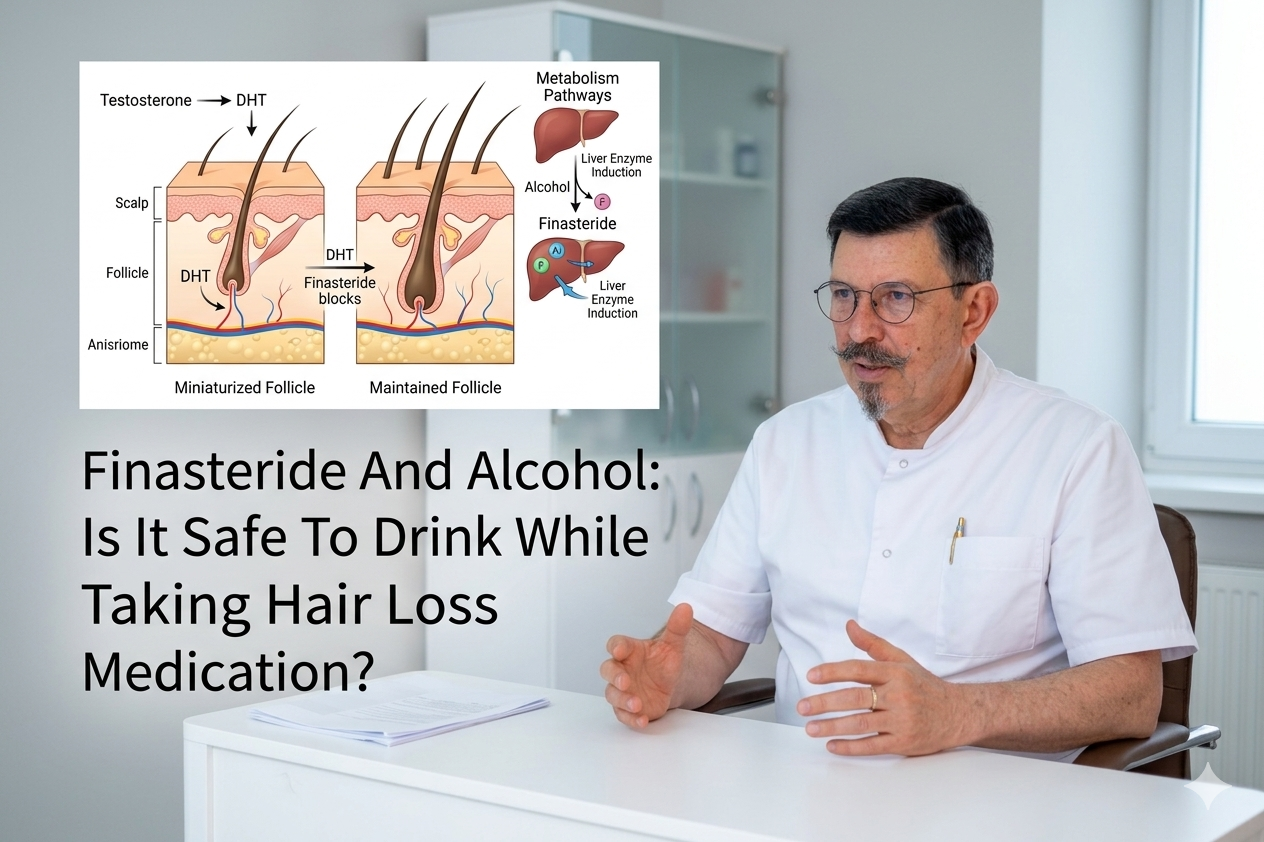
Finasteride has strong evidence for male androgenetic alopecia. It works through hormonal pathways involving DHT reduction.
However, it is a prescription medicine in many regions and requires discussion of possible side effects.
Ketoconazole
Ketoconazole shampoos are mainly used for seborrhoeic dermatitis and fungal related scalp inflammation, but some evidence suggests possible supportive effects in androgenetic alopecia management.
The data are weaker than for minoxidil or finasteride.
Low level light therapy
Some low level light devices have supportive clinical studies. Results appear modest and variable rather than dramatic.
Device quality and consistency differ considerably.
Ingredients with weaker or uncertain evidence
Many trending ingredients fall into a more uncertain category.
Several trending ingredients fall into a more uncertain category. Rosemary oil has some supportive small studies but limited large-scale evidence. Peppermint oil is backed mainly by animal data and early research. Biotin is useful primarily in cases of true deficiency. Caffeine has a stronger laboratory rationale than clinical evidence. Saw palmetto shows some evidence but results are inconsistent and less established than proven treatments. Rice water benefits are mostly anecdotal and cosmetic. Onion juice has only limited small studies and carries irritation concerns. Collagen supplements have weak evidence for direct hair regrowth.
This does not automatically mean these ingredients are ineffective. It means certainty is lower and marketing claims often exceed the available data.
Watch for impossible claims
Certain promises are immediate warning signs.
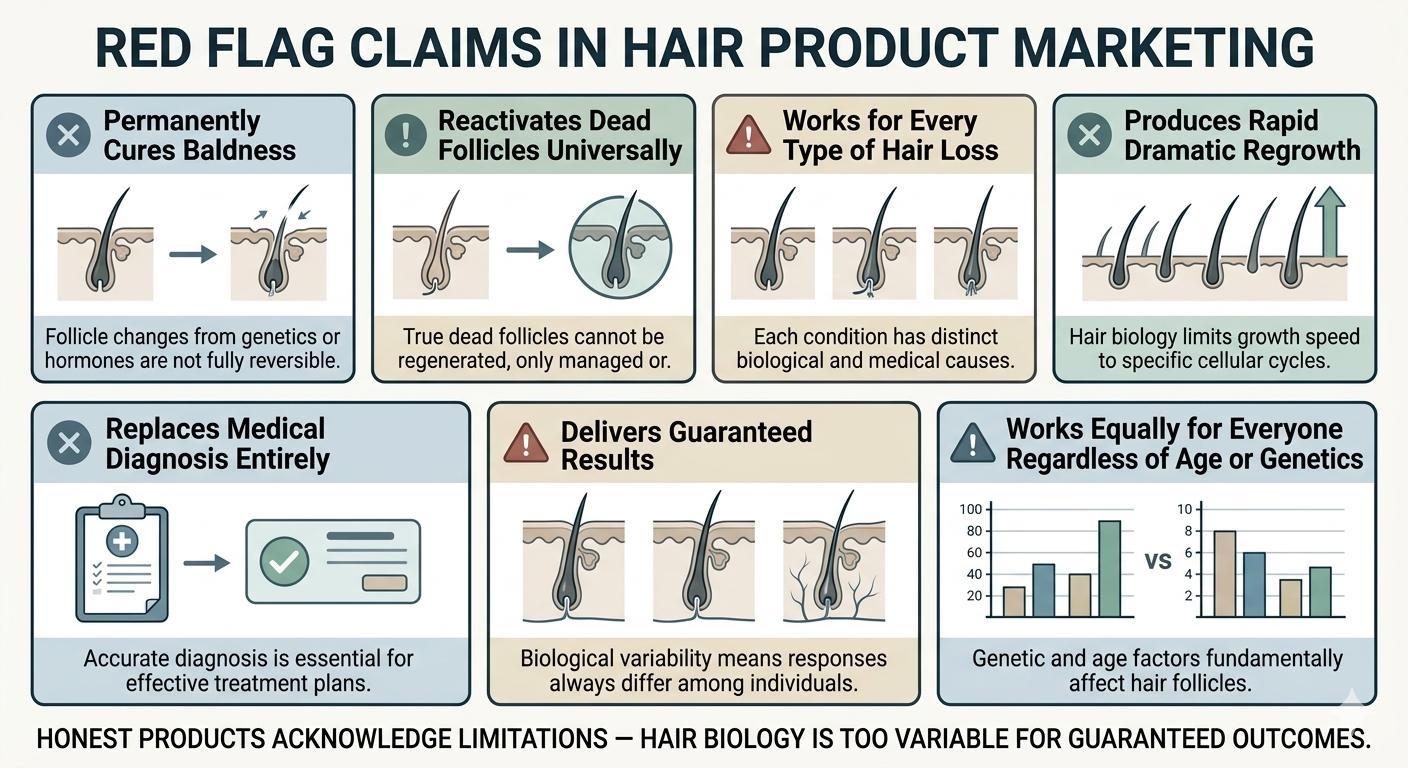
Be cautious if a product claims to:
- Permanently cure baldness
- Reactivate dead follicles universally
- Work for every type of hair loss
- Produce rapid dramatic regrowth
- Replace medical diagnosis entirely
- Deliver guaranteed results
- Work equally for everyone regardless of age or genetics
Hair biology is too variable for guaranteed outcomes.
Even evidence based treatments fail to produce major regrowth in some individuals. Honest products usually acknowledge limitations.
Before and after photos can mislead
Hair marketing relies heavily on visual comparisons, but photographs are easy to manipulate unintentionally or deliberately.
Differences in:
- Lighting
- Hair styling
- Hair length
- Hair colour
- Camera angle
- Wet versus dry hair
- Hair fibres or concealers
can all create the illusion of dramatic improvement.
A product should not be judged solely by promotional images.
This is especially important with scalp concealers, volumising fibres, and thickening products that create immediate cosmetic effects rather than biological regrowth.
Understand the difference between cosmetic and medical benefit
Some products genuinely improve how the hair looks without changing follicle activity.
That still has value. Some products genuinely improve how the hair looks without changing follicle activity — and that still has value. Hair fibres reduce scalp visibility. Volumising sprays increase temporary fullness. Conditioners reduce breakage and friction. Thickening shampoos improve texture temporarily. Styling powders create lift and a density illusion. These are cosmetic tools rather than medical treatments. The problem arises when cosmetic effects are marketed as follicle regeneration.
These are cosmetic tools rather than medical treatments.
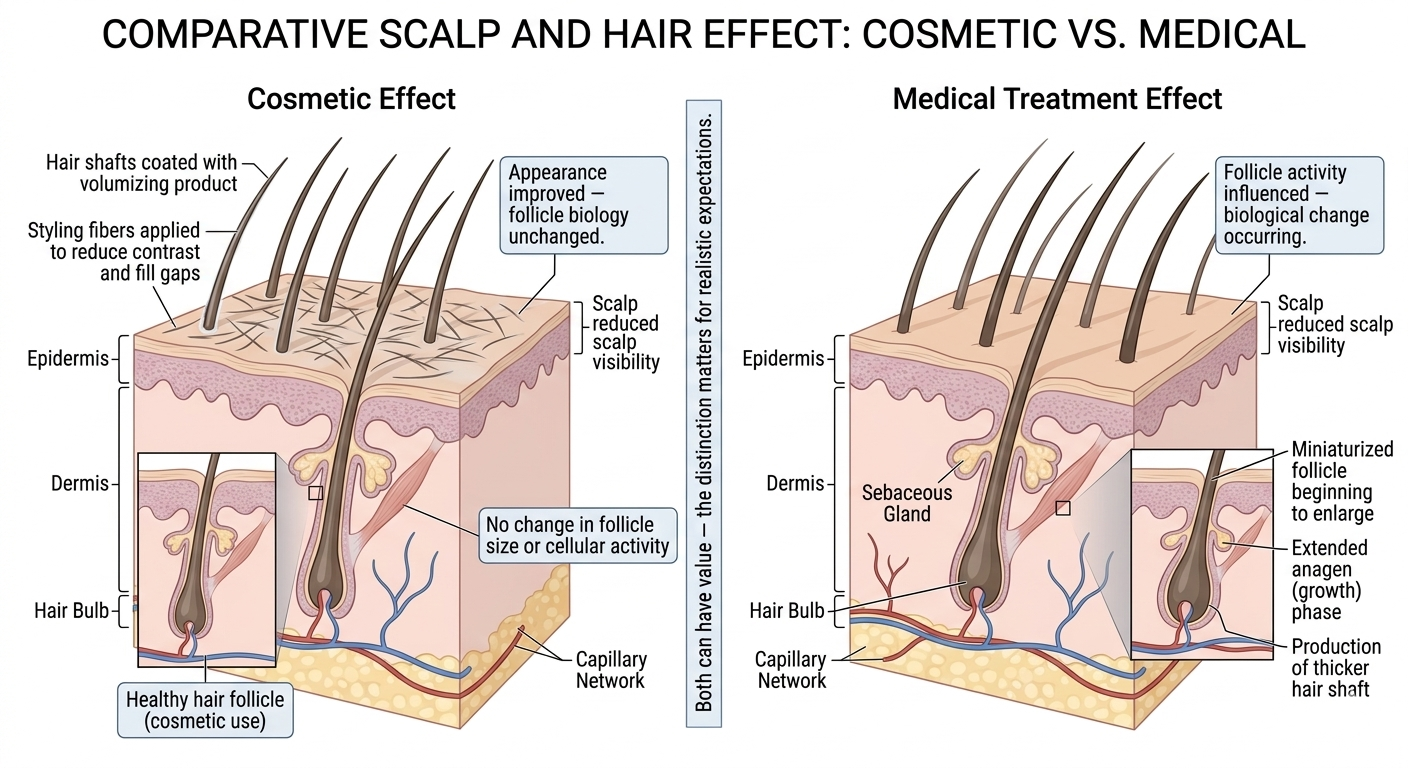
The problem arises when cosmetic effects are marketed as follicle regeneration.
The scalp matters too
A healthy scalp environment matters for hair quality and treatment tolerance.
Some products are worth considering not because they regrow hair dramatically, but because they reduce inflammation, itching, scaling, or irritation that may worsen shedding or breakage.
However, “scalp detox” language should be viewed cautiously. The scalp does not require aggressive purification rituals or constant exfoliation.
Inflamed scalps usually benefit more from medically appropriate treatment than heavily fragranced “revitalising” routines.
Price is not a reliable indicator
Expensive products are not automatically better.
Many luxury hair growth products contain familiar ingredients packaged with premium branding. In some cases, the active components resemble much cheaper formulations.
A high price may reflect advertising costs, packaging, celebrity partnerships, or influencer marketing rather than stronger evidence.
Equally, very cheap products from unreliable sellers may carry quality control concerns.
Value depends on evidence, safety, consistency, and suitability rather than prestige.
Influencer recommendations should be interpreted carefully
Social media has changed hair product marketing significantly.
Some influencers genuinely share personal experiences. Others are heavily sponsored. Many have cosmetic enhancements, styling assistance, filters, extensions, fibres, or professional lighting that influence appearance.
Personal anecdotes are not the same as controlled evidence.
One person’s positive experience may not predict another’s outcome because hair loss mechanisms differ widely.
Side effects still matter with “natural” products
Natural products are often marketed as automatically safer alternatives. This is not always true.
Essential oils, botanical extracts, and herbal blends can still cause:
- Contact dermatitis
- Scalp irritation
- Allergic reactions
- Burning
- Dryness
- Folliculitis
Patch testing may help reduce risk when trying new topical products.
A product that leaves the scalp persistently inflamed is unlikely to support healthy hair long term, regardless of its marketing claims.
Consistency and patience are essential
Hair growth cycles are slow. Even effective treatments usually require several months before visible improvement appears.
Products that genuinely affect follicle behaviour rarely work overnight.
This creates another problem in the market: people often stop useful treatments too early while repeatedly switching to newer heavily marketed alternatives.
Reasonable evaluation periods are important. At the same time, continuing an ineffective product indefinitely simply because it was expensive is also unhelpful.
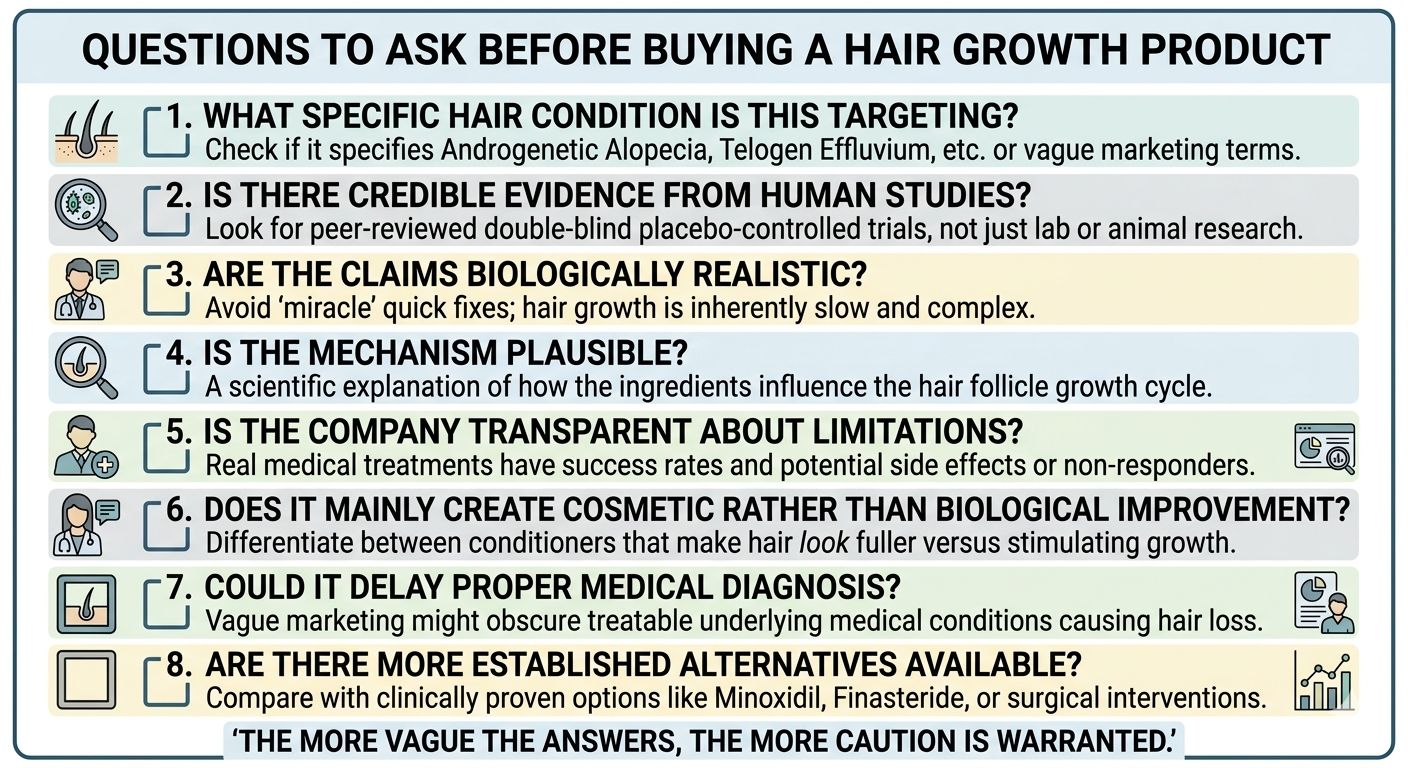
Questions worth asking before buying
A practical way to assess a hair growth product is to ask:
- What specific condition is this targeting?
- Is there credible evidence in humans?
- Are the claims realistic?
- Is the mechanism biologically plausible?
- Is the company transparent about limitations?
- Does the product mainly create cosmetic improvement?
- Could this delay proper diagnosis?
- Are there safer or more established alternatives?
The more vague the answers become, the more cautious you should be.
When medical assessment is more important than another product
Some situations deserve proper medical evaluation rather than endless product experimentation.
Seek assessment if hair loss is:
- Sudden
- Patchy
- Painful
- Associated with scalp inflammation
- Accompanied by fatigue or illness
- Rapidly progressive
- Occurring alongside hormonal symptoms
Blood tests, scalp examination, or specialist assessment may identify causes that cosmetic products cannot address.
The practical takeaway
A hair growth product is worth considering when its claims are realistic, its mechanism makes biological sense, and there is credible human evidence supporting its use. Products become less trustworthy when marketing language grows more dramatic while evidence becomes harder to find.
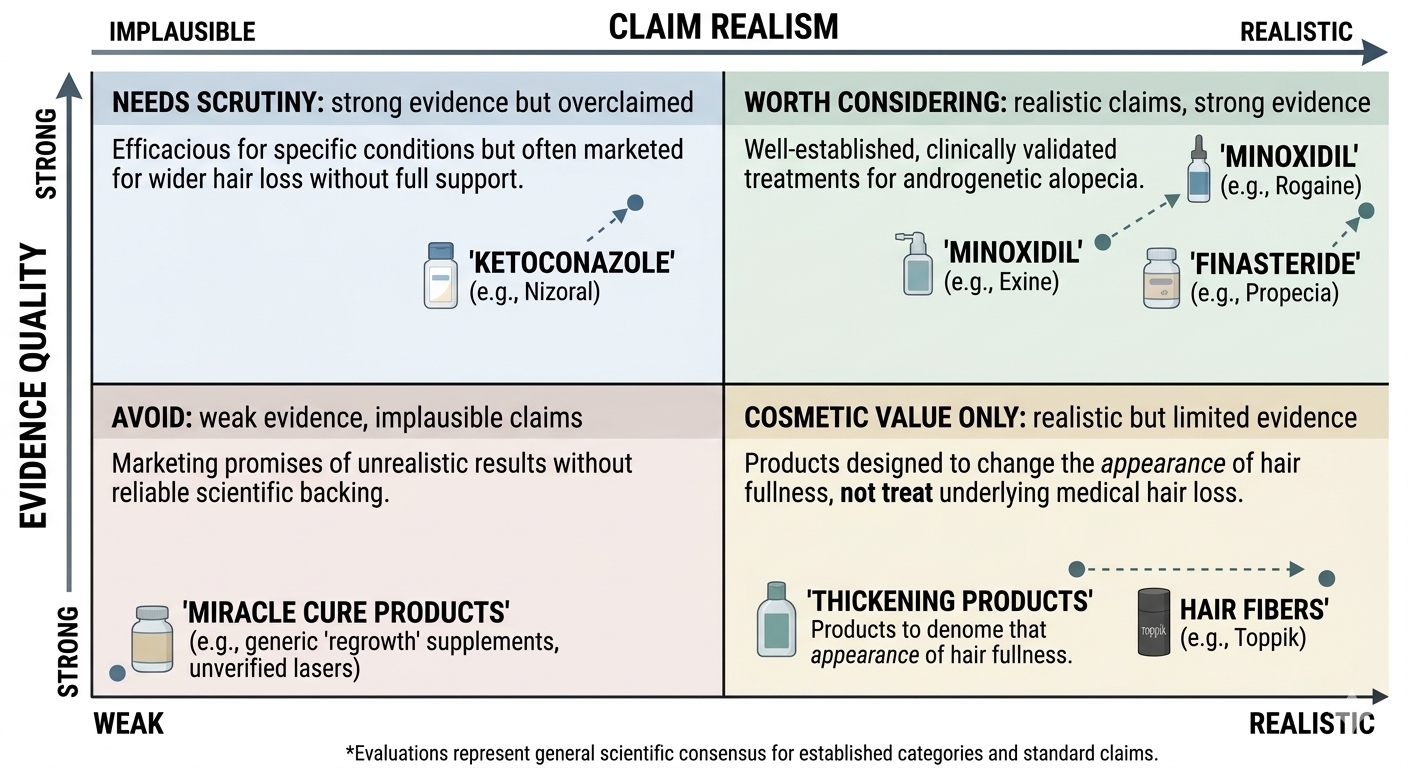
The most effective treatments for common pattern hair loss remain relatively limited and medically grounded. Many cosmetic products can still improve appearance and confidence, but that is different from true follicle regrowth.
The best approach is usually sceptical but not cynical. Some treatments genuinely help. Many do not. Learning the difference protects both the scalp and the wallet.
Author: Dr. Priya Goswami
Medical review: Dr. Denis Broun
Next step
If you notice coverage changes without increased shedding, confirm what process is occurring.
Take the Hair Assessment to have a physician review your pattern, identify whether miniaturization is present, and determine appropriate staging and next steps.
Add Comment