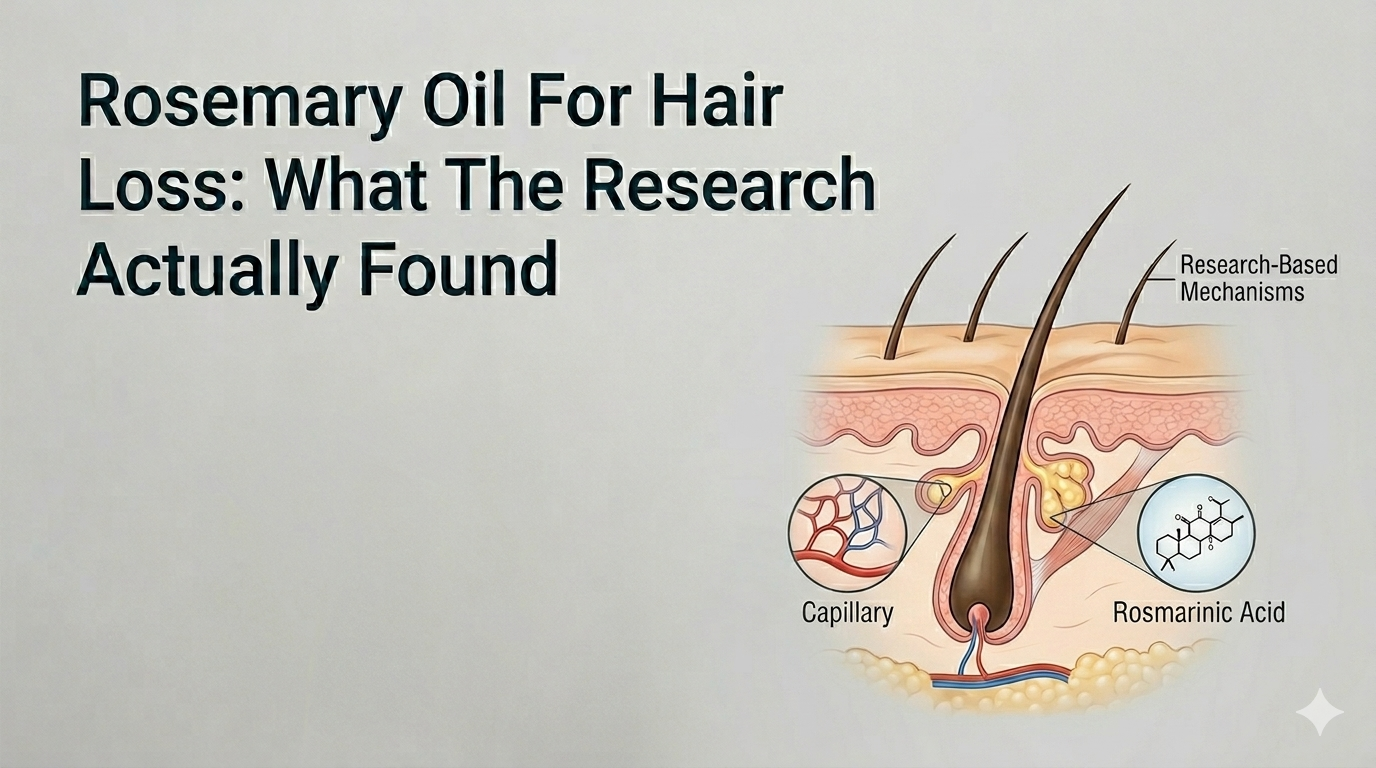
Rosemary oil has become one of the most widely discussed natural remedies for hair loss. It is frequently promoted online as a “natural alternative” for thinning hair, particularly for individuals looking for non-pharmaceutical approaches.
Despite the popularity, many claims surrounding rosemary oil are exaggerated, simplified, or disconnected from the actual scientific evidence.
The important question is not whether rosemary oil is “miraculous,” but whether there is meaningful evidence that it influences hair biology in a measurable way.
The answer is more cautious than many marketing discussions suggest.
What rosemary oil actually is
Rosemary oil is an essential oil extracted from the plant Rosmarinus officinalis.
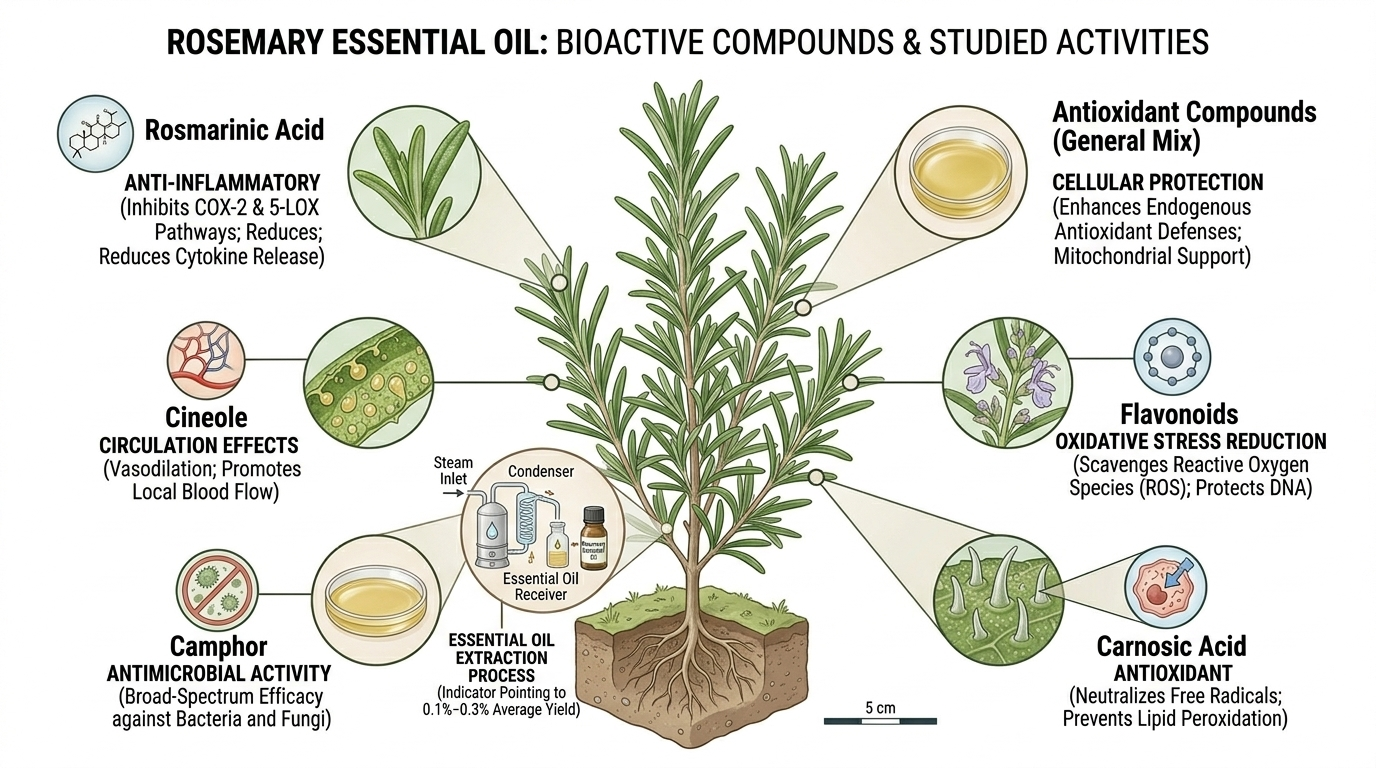
It contains multiple biologically active compounds, including:
- rosmarinic acid
- cineole
- camphor
- carnosic acid
- flavonoids and antioxidants
These compounds have been studied in various biological contexts involving:
- inflammation
- oxidative stress
- circulation
- antimicrobial activity
This does not automatically mean the oil reverses hair loss, but it provides some biological rationale for scientific investigation.
Why rosemary oil became associated with hair growth
Interest in rosemary oil increased significantly after small studies suggested possible effects on hair density in androgenetic alopecia.
The discussion expanded rapidly online because:
- the treatment is accessible
- it is perceived as “natural”
- it avoids some concerns associated with medications
- it became heavily amplified on social media platforms
Unfortunately, online discussions often oversimplify the actual evidence.
The most commonly cited study
The study most frequently referenced compared rosemary oil with topical minoxidil in men with androgenetic alopecia.
Participants used either:
- rosemary oil lotion
or - 2% minoxidil lotion
over several months.
The study reported that both groups showed some increase in hair count after six months.
This result generated considerable attention because rosemary oil appeared to produce measurable improvement in some participants.
Important limitations of the evidence
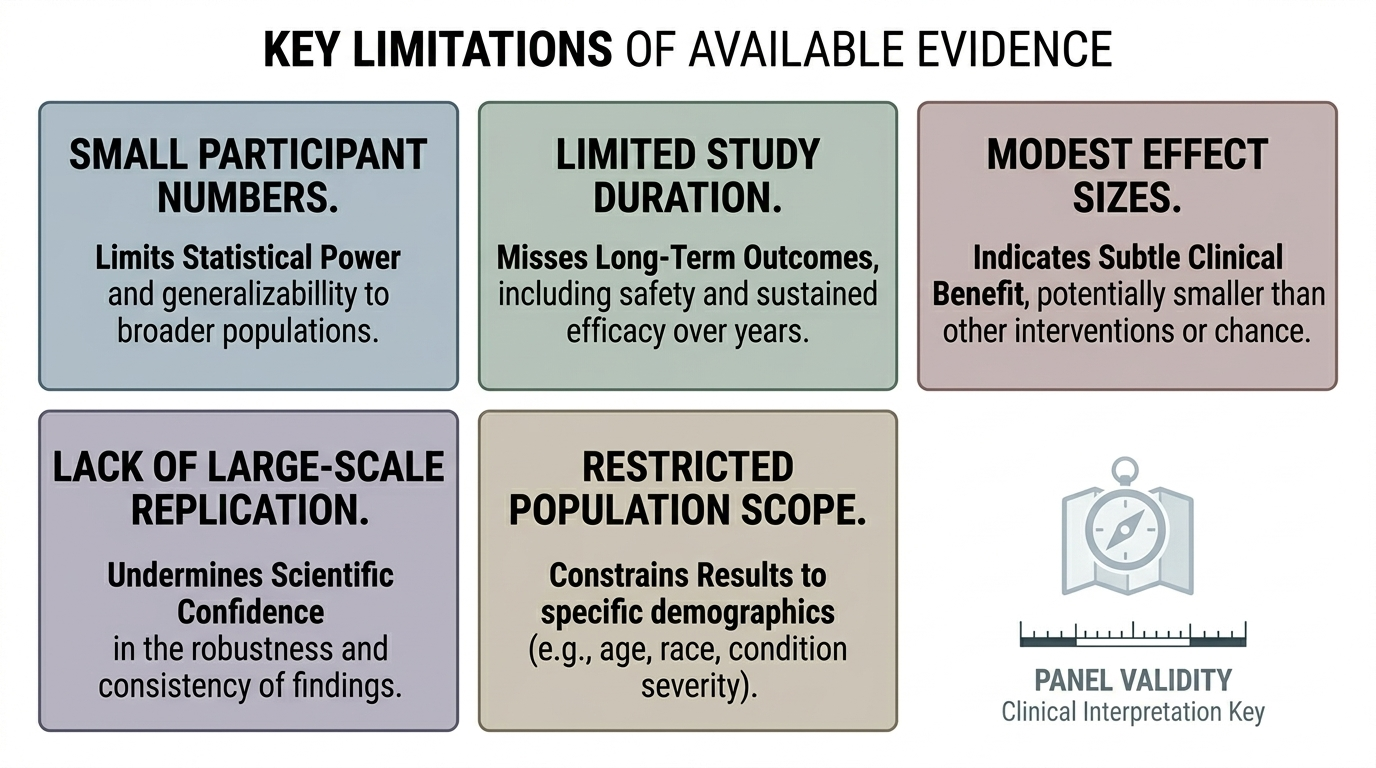
Although interesting, the study had several important limitations.
These include:
- relatively small participant numbers
- limited duration
- modest overall effect sizes
- lack of large-scale replication
- restricted population scope
Importantly, one small study does not establish equivalence between treatments or prove broad clinical effectiveness.
What the study actually suggests
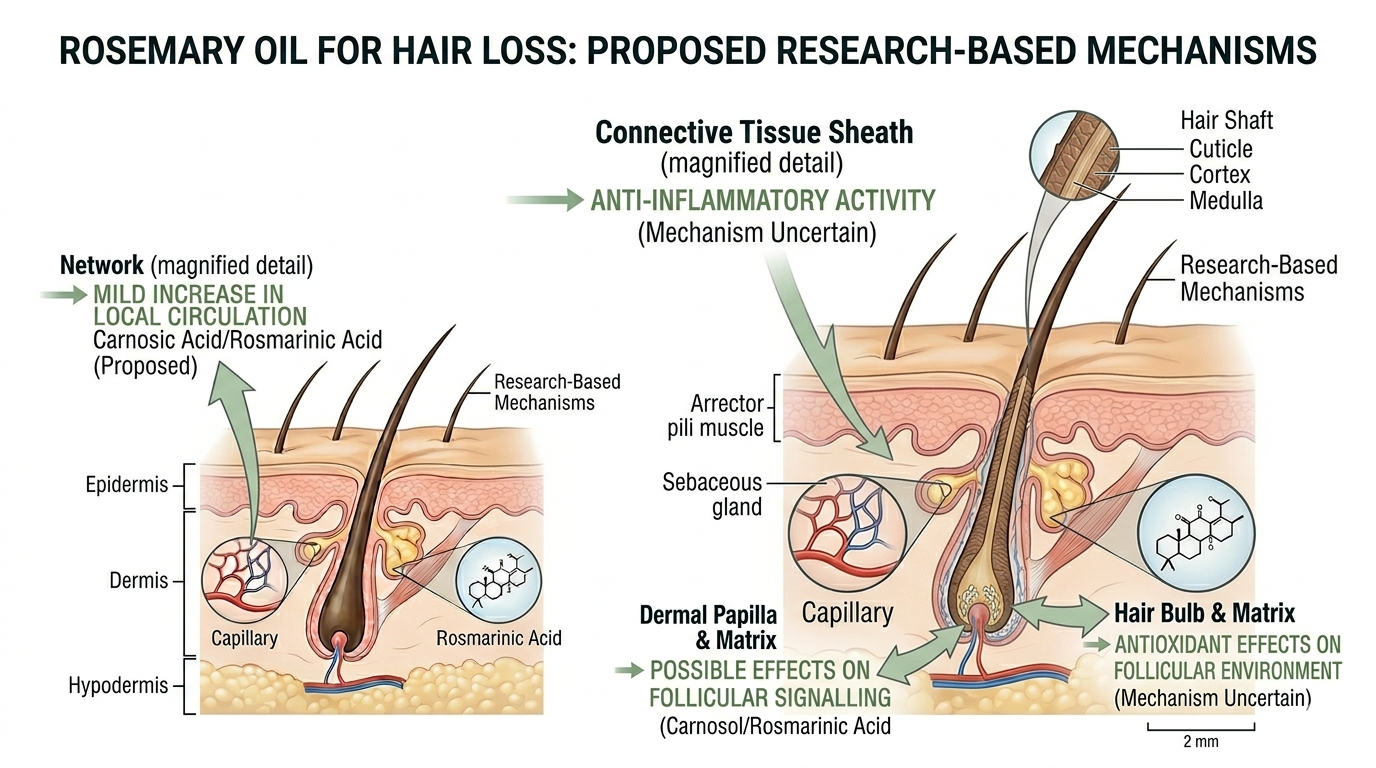
The available research suggests that rosemary oil may influence the scalp environment in some individuals.
Possible mechanisms discussed include:
- mild anti-inflammatory effects
- changes in local circulation
- antioxidant activity
- effects on follicular signalling pathways
However, the exact biological mechanism remains uncertain.
There is currently no strong evidence that rosemary oil directly reverses advanced follicle miniaturisation.
Hair growth studies are difficult to interpret
Hair growth research is inherently complex.
Hair density naturally fluctuates because follicles cycle independently through:
- growth phases
- resting phases
- shedding phases
This means modest improvements in density can sometimes occur even without dramatic biological reversal of hair loss.
The quality, consistency, and scale of evidence therefore matter greatly.
Online claims often exceed the evidence
One of the major problems surrounding rosemary oil is the gap between scientific evidence and online marketing.
Common unsupported claims include:
- “works exactly like prescription treatment”
- “regrows all lost hair naturally”
- “blocks hair loss permanently”
- “works for everyone”
Current evidence does not support these kinds of conclusions.
Scalp massage may also influence perception
Many individuals applying rosemary oil also massage the scalp regularly.
Massage itself may:
- improve temporary blood flow
- increase scalp awareness
- improve cosmetic appearance temporarily
- increase consistency of hair care routines
This makes it difficult to separate the effect of the oil from behavioural changes associated with its use.
Irritation can occur
Essential oils are concentrated substances and may irritate the skin if improperly used.
Possible side effects include:
- scalp irritation
- redness
- itching
- burning sensation
- allergic reactions
Rosemary oil is usually diluted before topical application because concentrated essential oils may damage sensitive skin.
“Natural” does not automatically mean safer
A common misconception is that natural treatments are inherently harmless.
In reality:
- natural substances can cause irritation
- allergic reactions can occur
- product quality varies significantly
- concentration levels are inconsistent between brands
The term “natural” is not a guarantee of effectiveness or safety.
Rosemary oil is not a cure for all hair loss
Hair loss is biologically diverse.
Conditions causing thinning may include:
- androgenetic alopecia
- telogen effluvium
- inflammatory scalp disease
- nutritional deficiencies
- autoimmune alopecia
A single topical oil is unlikely to address all of these mechanisms.
The stage of hair loss matters
Follicles that are mildly miniaturised may respond differently from follicles that have undergone advanced long-term miniaturisation.
Earlier stages of thinning often retain more active follicles.
In advanced baldness, follicles may be significantly reduced in functional activity.
This distinction matters when interpreting expectations from any topical approach.
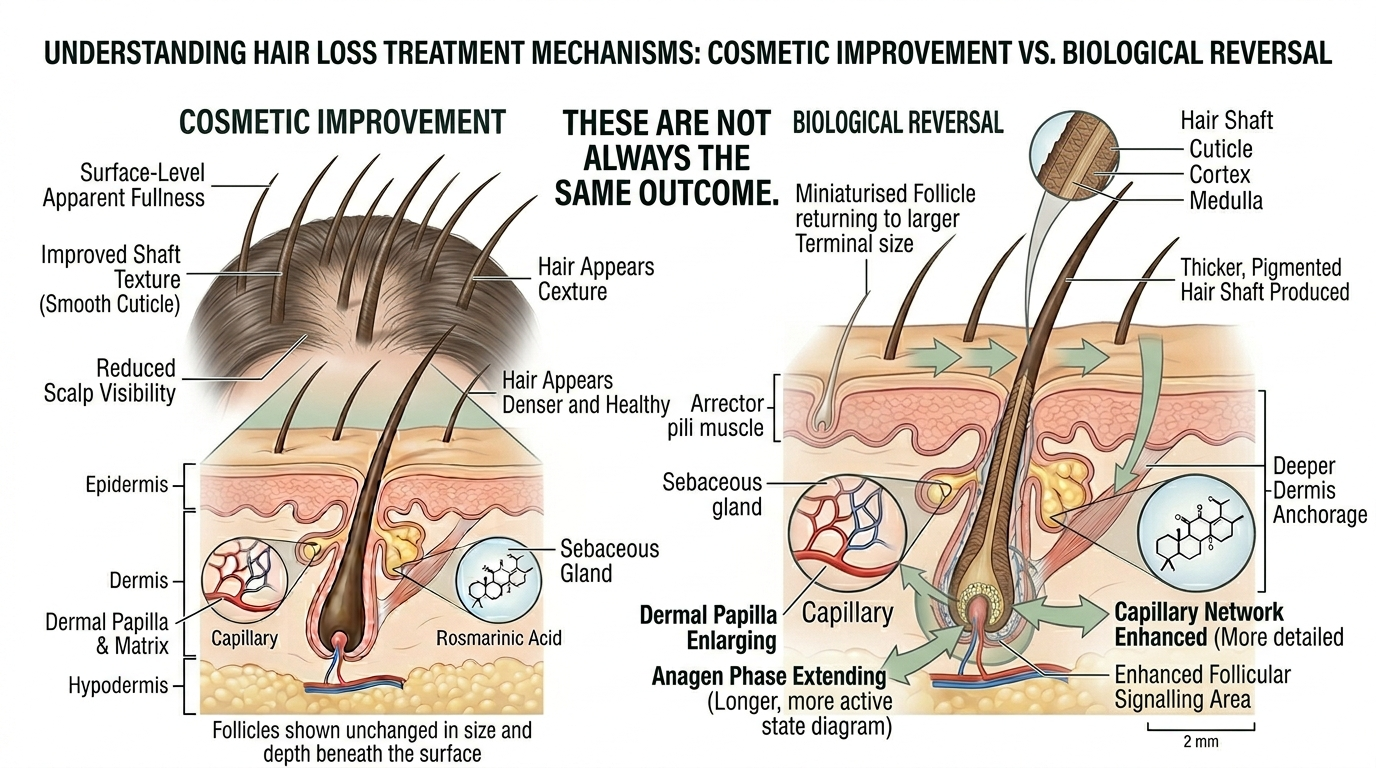
Cosmetic improvement and biological reversal are not identical
Some individuals report improvements in:
- scalp comfort
- hair texture
- perceived thickness
- cosmetic appearance
These experiences may be real without necessarily indicating major reversal of follicular miniaturisation.
Cosmetic improvement and biological restoration are not always the same thing.
More research is still needed
Current evidence surrounding rosemary oil remains limited compared with more extensively studied medical therapies.
Larger studies would be needed to better understand:
- long-term outcomes
- response variability
- optimal concentrations
- mechanisms of action
- which patients may respond best
At present, the evidence remains preliminary rather than definitive.
The evidence is interesting, but limited
Rosemary oil has shown some potentially positive findings in limited studies involving hair thinning, particularly androgenetic alopecia.
However, current evidence remains relatively modest, and online claims frequently exaggerate what has actually been demonstrated scientifically.
The available research suggests rosemary oil may influence the scalp environment and possibly improve hair density in some individuals over time, but it should not be viewed as a universally effective or fully proven solution for progressive hair loss.
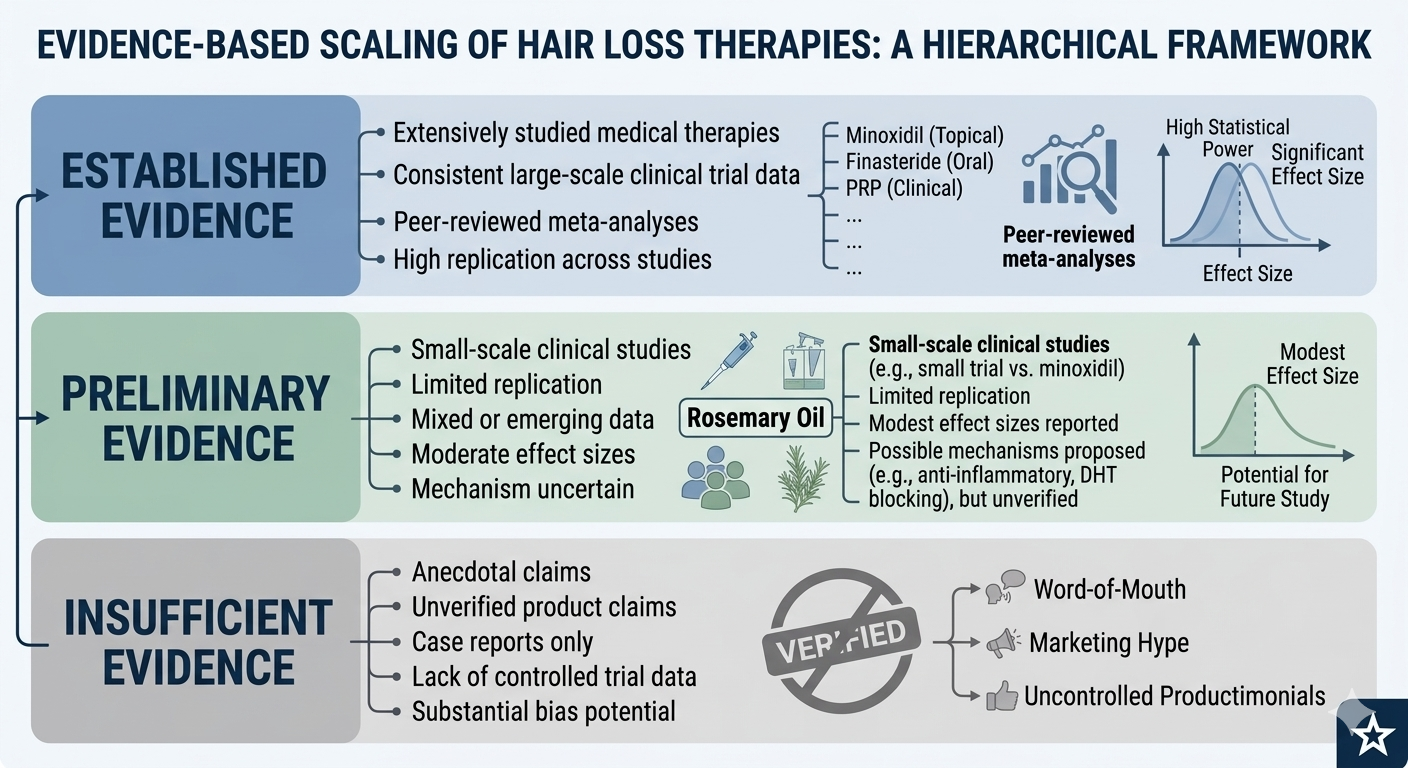
Understanding the difference between early evidence and established medical certainty is essential when evaluating widely promoted “natural” hair loss remedies.
Author: Dr. Priya Goswami
Medical review: Dr. Denis Broun
Next step
If you notice coverage changes without increased shedding, confirm what process is occurring.
Take the Hair Assessment to have a physician review your pattern, identify whether miniaturization is present, and determine appropriate staging and next steps.
Add Comment