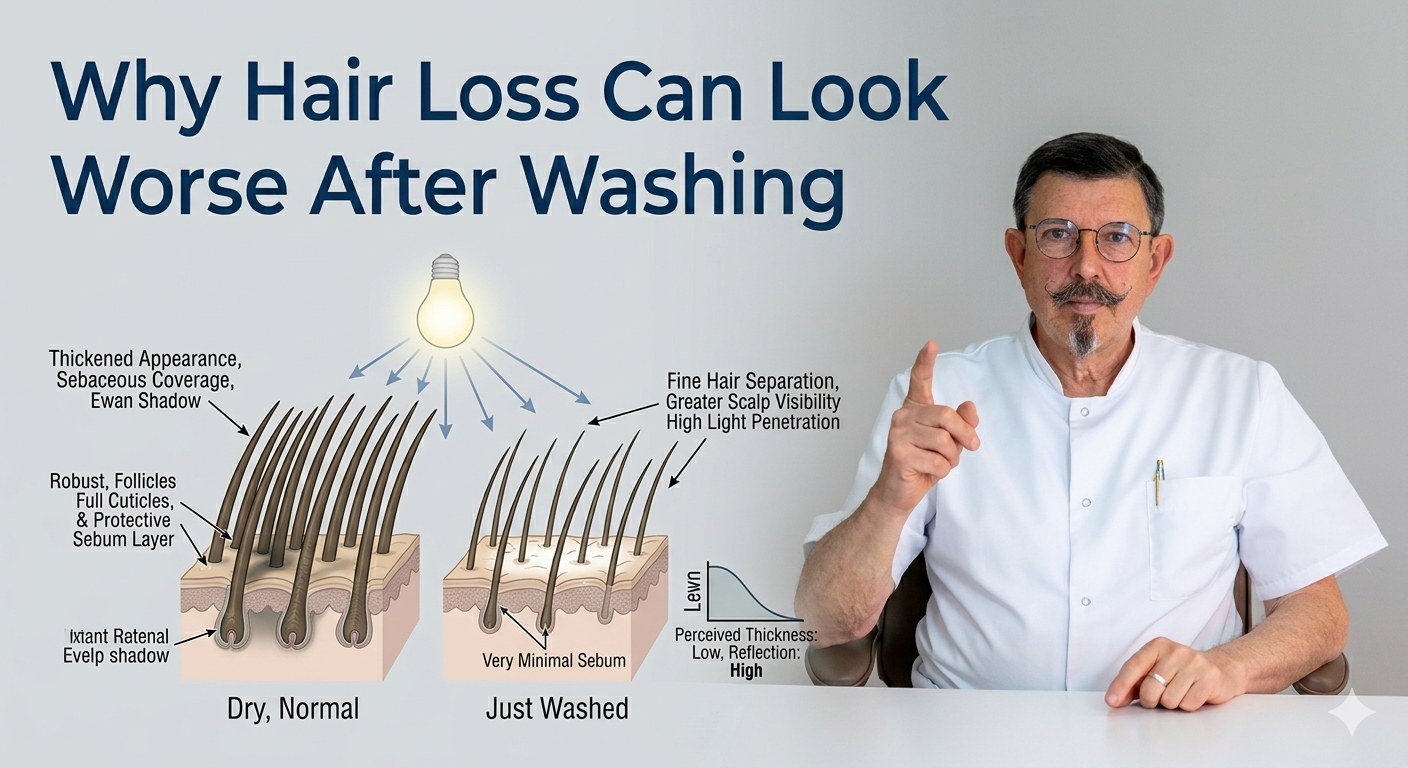
Many people feel alarmed when their hair appears thinner immediately after washing.
The scalp may suddenly seem more visible:
- near the crown
- along the part line
- at the temples
- under bathroom lighting
In many cases, this visual change is temporary and related to how wet or freshly cleaned hair behaves. However, washing can also reveal underlying thinning that is less noticeable when hair is dry and styled.
Understanding why hair loss often appears worse after washing helps explain the interaction between hair density, scalp visibility, and hair shaft behaviour.
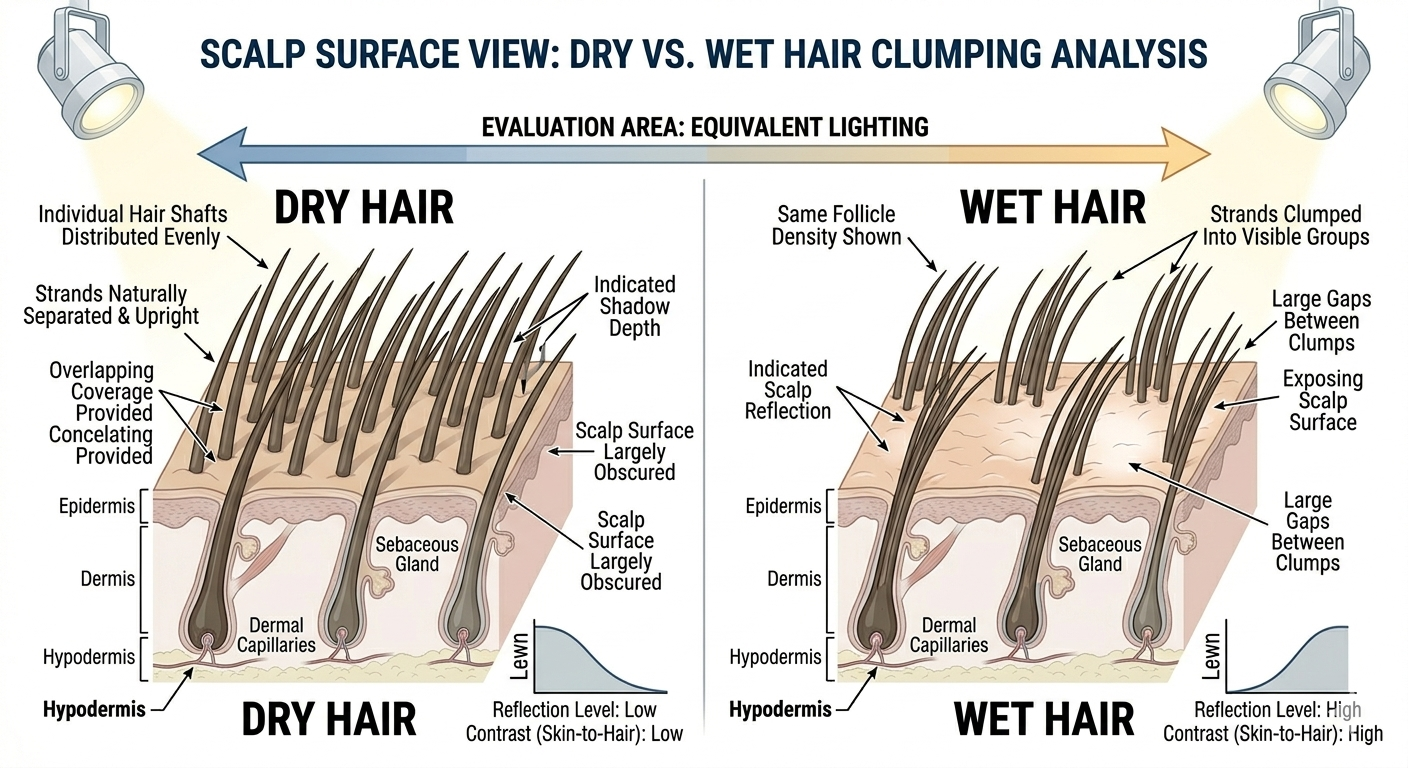
Wet hair separates into groups
Dry hair naturally creates volume and coverage.
When hair becomes wet:
- strands stick together
- hair separates into larger sections
- gaps between strands become more visible
This allows more scalp to show through, especially in areas where density has already started decreasing.
Water reduces hair volume
Hair fibres swell slightly when wet, but overall hairstyle volume often decreases.
Wet hair:
- lies flatter against the scalp
- loses lift at the roots
- reflects more light
- creates less shadow coverage
As a result, thinning areas become easier to see.
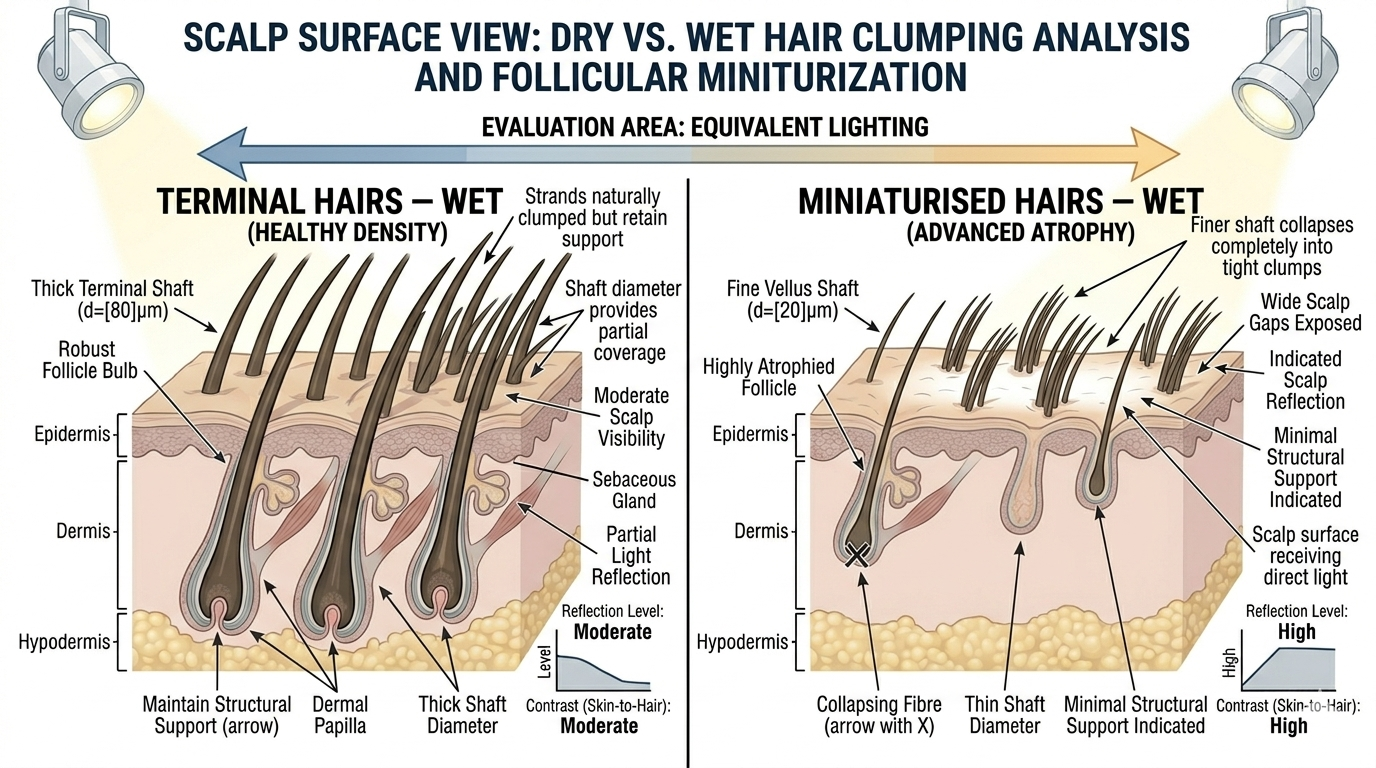
Fine hair clumps more easily
Miniaturised hairs are thinner and lighter.
These finer hairs:
- collapse more quickly when wet
- provide less structural support
- separate more visibly after washing
Even mild thinning may therefore appear much more obvious immediately after shampooing.
Clean hair can expose reduced density
Natural scalp oils sometimes help hair strands cling together in ways that temporarily increase coverage.
After washing:
- oil is removed
- strands become lighter and more separated
- scalp contrast may increase
This can make reduced density more noticeable until the hair fully dries and regains volume.
Bright bathroom lighting increases scalp visibility
Hair washing commonly occurs under strong overhead lighting.
Bathroom lights:
- illuminate the scalp directly
- increase reflection from wet skin
- exaggerate contrast between hair and scalp
This optical effect often makes thinning appear more severe than it actually is.
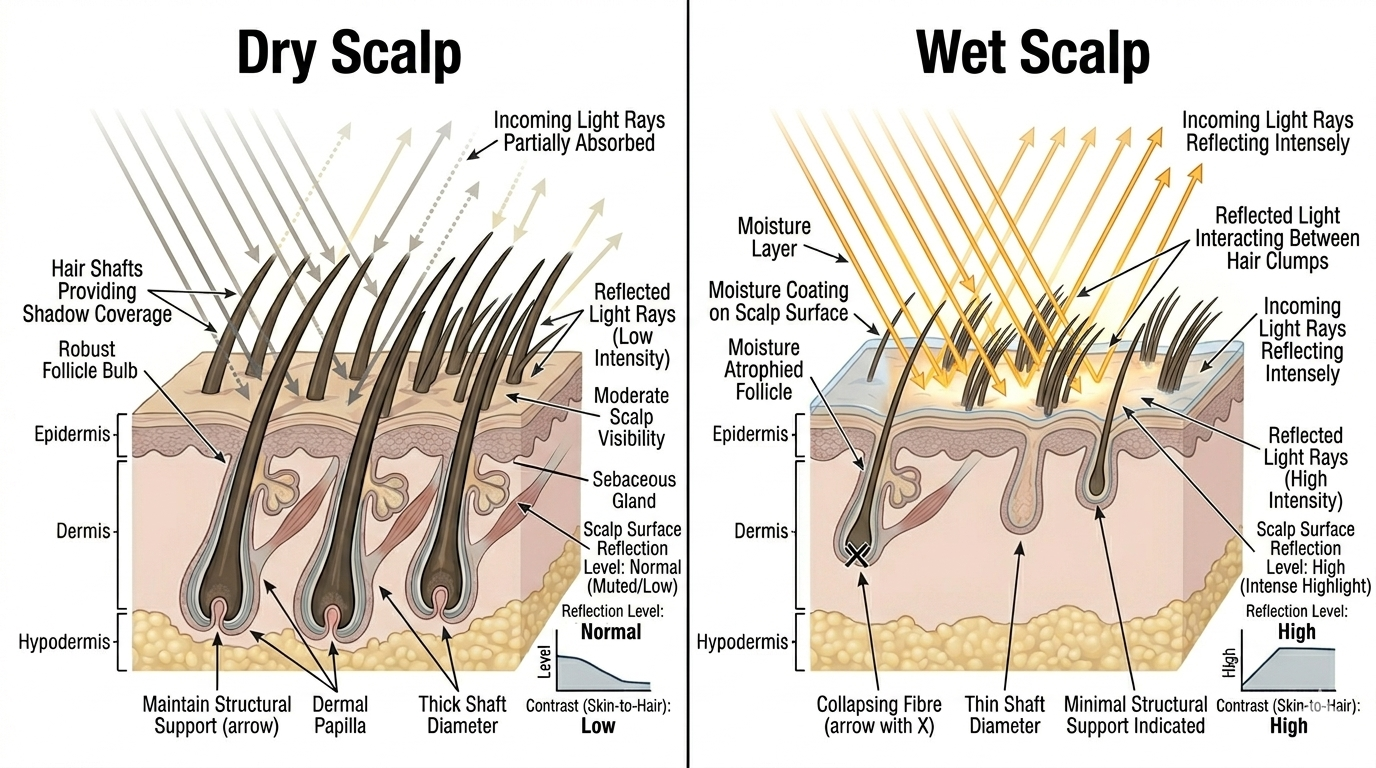
Wet scalp reflects more light
Moisture increases scalp shine.
A wet scalp:
- reflects overhead light more intensely
- creates brighter visible areas between hairs
- increases perceived thinning
This effect is especially noticeable in individuals with dark hair and lighter scalp skin.
Hair part lines often widen temporarily
After washing, hair naturally falls according to scalp contours and gravity.
This can temporarily:
- widen natural part lines
- expose the crown more clearly
- reveal directional growth patterns
Areas already affected by thinning may therefore seem dramatically more visible.
Conditioner can flatten the hair
Some conditioners and heavy hair products:
- weigh hair down
- reduce root lift
- increase strand separation
For people with fine or thinning hair, this may temporarily worsen scalp visibility after washing.
Drying method changes appearance
How hair dries significantly affects perceived density.
Hair may appear thinner if:
- air drying leaves it flat
- towel friction separates strands
- blow drying is avoided
- roots remain compressed
Conversely, volumising drying techniques may temporarily improve coverage appearance.
Shedding during washing can seem alarming
Hair that has naturally completed its cycle often sheds during washing.
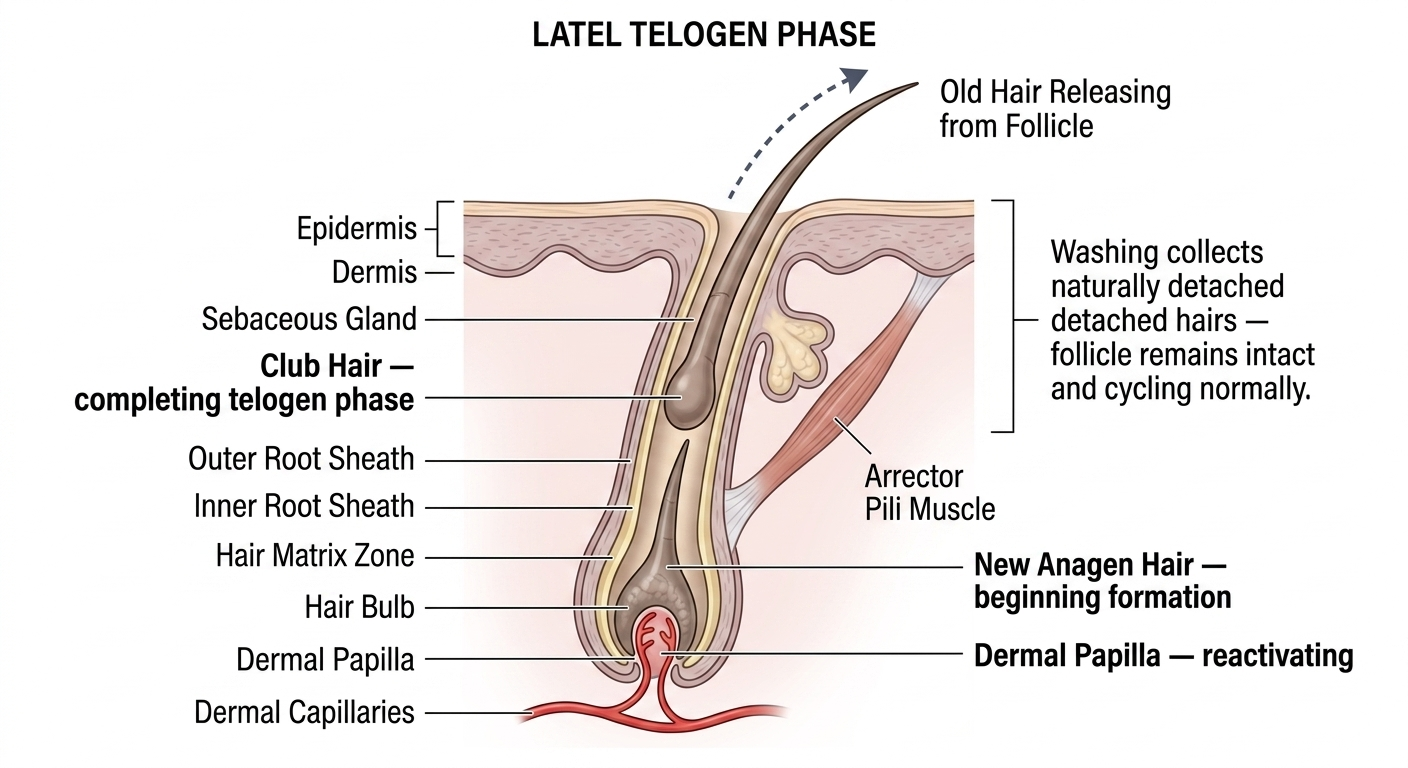
Because multiple loose hairs are collected at once:
- shedding may appear excessive
- normal daily loss can seem dramatic
Most healthy individuals shed approximately 50 to 100 hairs daily, though this varies considerably.
Washing does not usually cause hair loss
Normal shampooing does not typically cause permanent hair loss.
Washing mainly removes:
- hairs already detached from follicles
- loose telogen hairs nearing natural shedding
However, aggressive handling:
- vigorous scratching
- excessive heat
- harsh chemical treatments
may contribute to shaft breakage or scalp irritation.
Thinning may simply become easier to see
Hair loss often appears worse after washing not because washing suddenly increases hair loss, but because wet, flattened hair exposes the scalp more clearly.
Reduced volume, strand separation, increased scalp reflection, and bright lighting all contribute to greater visibility of underlying thinning.
For many individuals, washing temporarily removes the styling and texture effects that normally help conceal early density reduction.
Appearance changes do not always reflect sudden progression
A scalp that looks dramatically thinner after washing does not necessarily indicate rapid hair loss progression.
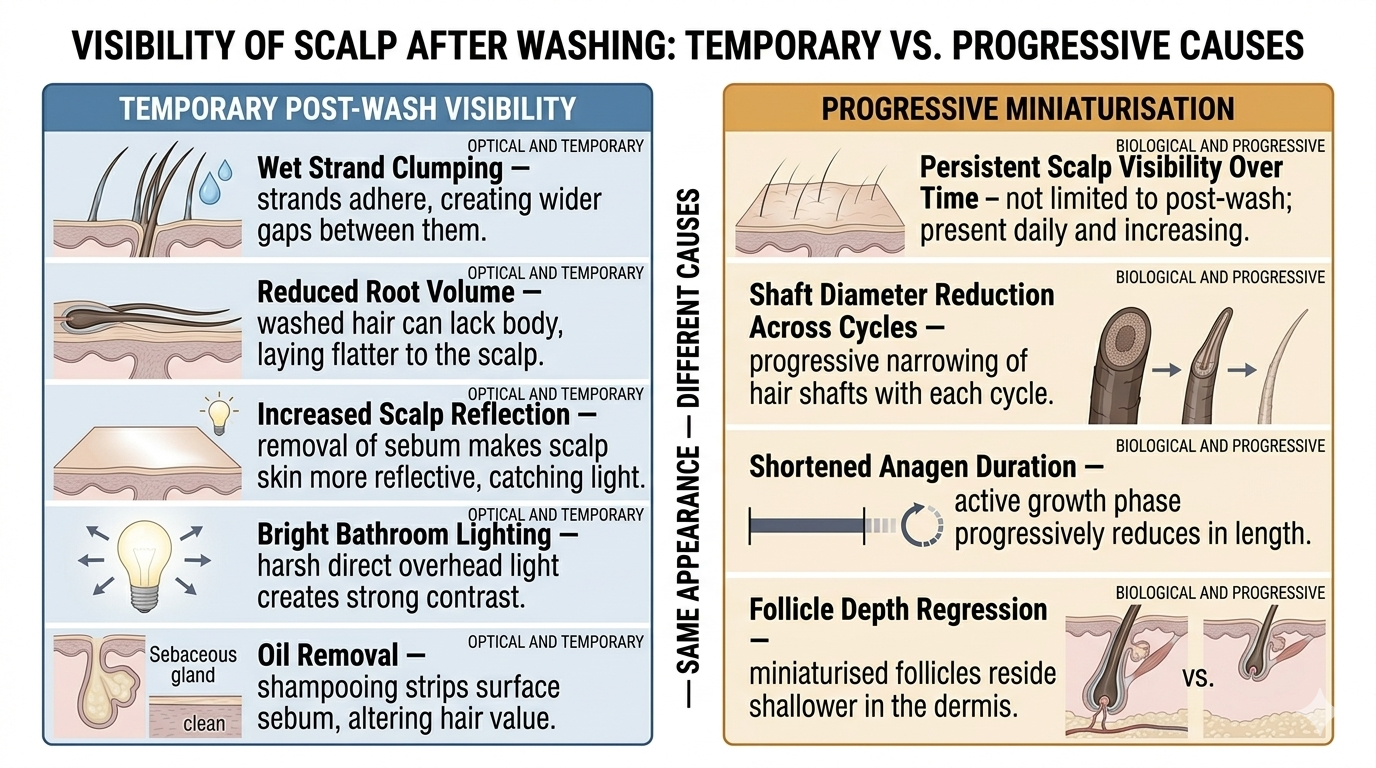
In many cases, the change reflects:
- temporary optical effects
- wet hair behaviour
- reduced volume
- lighting conditions
However, persistent increases in scalp visibility over time may still indicate gradual follicular miniaturisation and progressive thinning.
Author: Dr. Priya Goswami
Medical review: Dr. Denis Broun
Next step
If you notice coverage changes without increased shedding, confirm what process is occurring.
Take the Hair Assessment to have a physician review your pattern, identify whether miniaturization is present, and determine appropriate staging and next steps.
Add Comment