Hair thickness varies considerably between individuals. Some people naturally have dense, coarse hair with substantial volume, while others have finer hair that provides less scalp coverage even when completely healthy.
These differences are largely determined by genetics and the biological characteristics of the hair follicle. Hair thickness is not simply a cosmetic trait. It reflects the size, structure, and activity of the follicles producing the hair shafts.
Understanding why some people naturally have thicker hair requires examining how follicles develop and how they produce the hair fibre.
Hair thickness and hair density are different
Hair thickness and hair density are often confused, but they are not the same.
Hair thickness
Hair thickness refers to the diameter of individual hair shafts.
A thicker hair shaft provides:
- greater volume
- stronger scalp coverage
- increased visual density
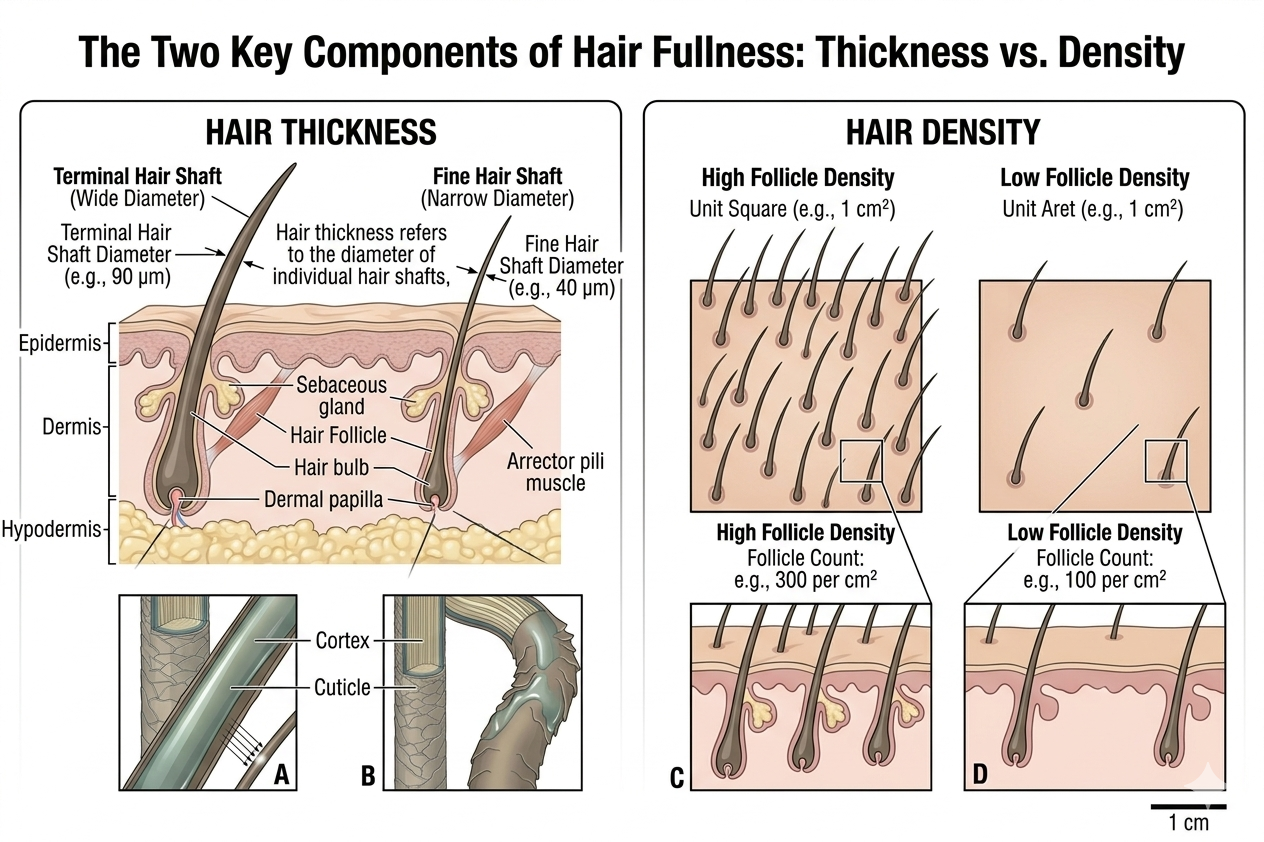
Hair density
Hair density refers to the number of follicles present within a given area of the scalp.
A person may therefore have:
- many fine hairs
- fewer thick hairs
- high density with thin fibres
- lower density with coarse fibres
Both factors influence how full the hair appears.
Follicle size determines hair thickness
The diameter of a hair shaft depends mainly on the size of the follicle producing it.
Larger follicles generate:
- thicker terminal hairs
- stronger keratin structures
- more substantial hair shafts
Smaller follicles produce:
- finer hairs
- softer fibres
- less visible scalp coverage
Follicle size is strongly influenced by inherited genetic traits.
Terminal hairs versus vellus hairs
Humans produce different types of hair.
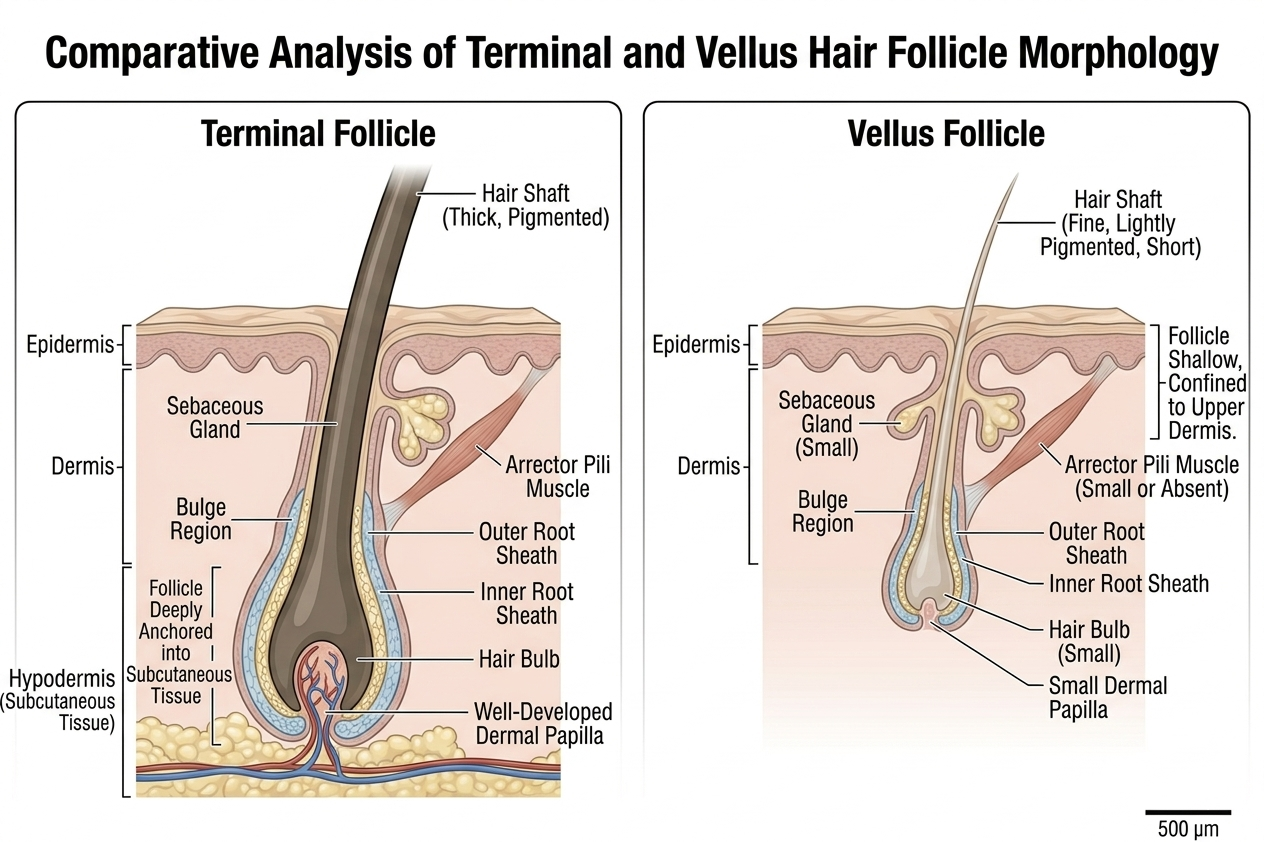
Terminal hairs
These are:
- thick
- pigmented
- long
- structurally robust
Terminal hairs form most scalp hair.
Vellus hairs
These are:
- very fine
- lightly pigmented
- short
- soft
Follicles producing terminal hairs are larger and more metabolically active than follicles producing vellus hairs.
Genetics plays the dominant role
Natural hair thickness is largely inherited.
Genes influence:
- follicle size
- follicle shape
- keratin production
- growth cycle duration
- hair shaft structure
These inherited traits explain why hair characteristics often run in families.
Different populations around the world also show variations in average hair diameter because of genetic diversity.
Keratin structure affects fibre thickness
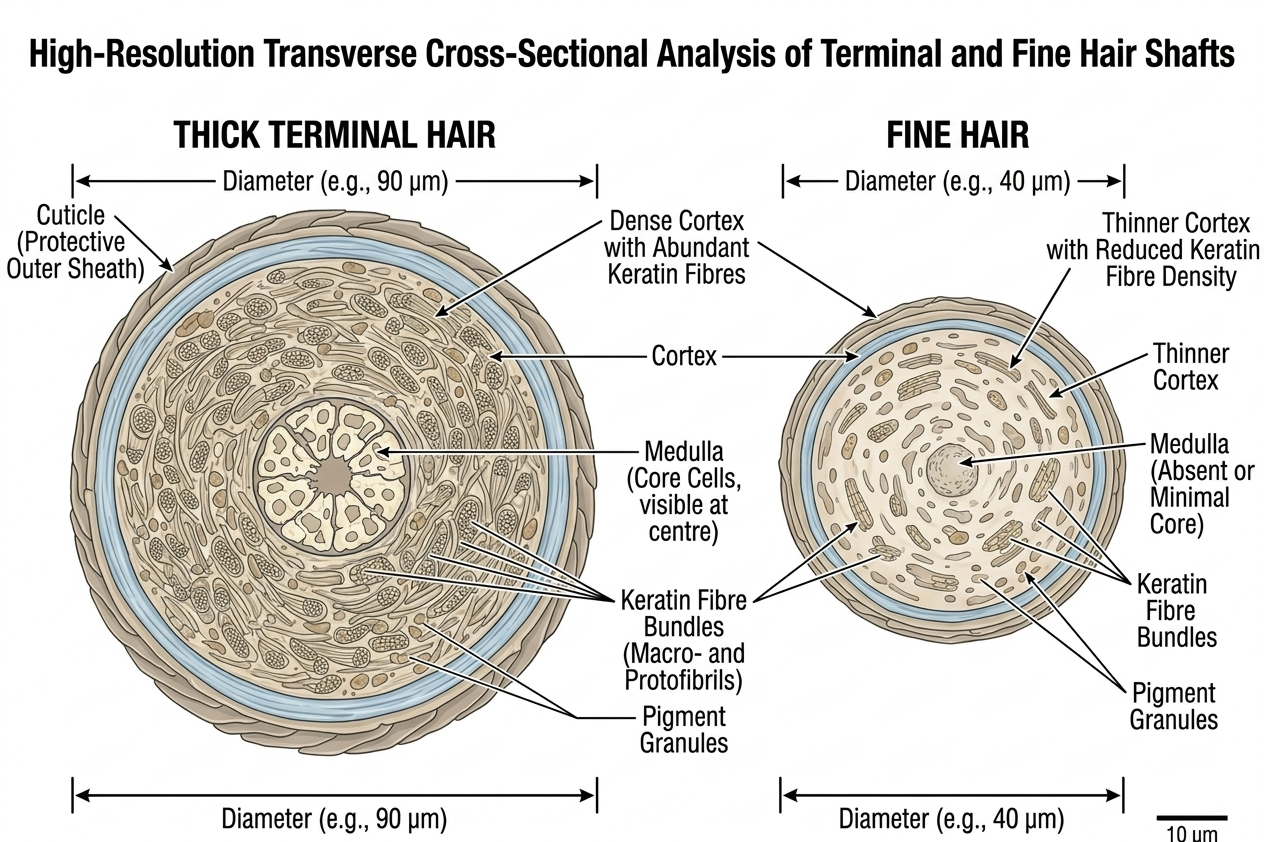
Hair shafts are composed mainly of keratin proteins.
The organisation and quantity of keratin within the cortex determine:
- fibre strength
- elasticity
- thickness
Thicker hairs contain more structural material within the cortex, giving them greater diameter and mechanical strength.
Hormones influence hair thickness
Hormones can significantly affect follicle behaviour.
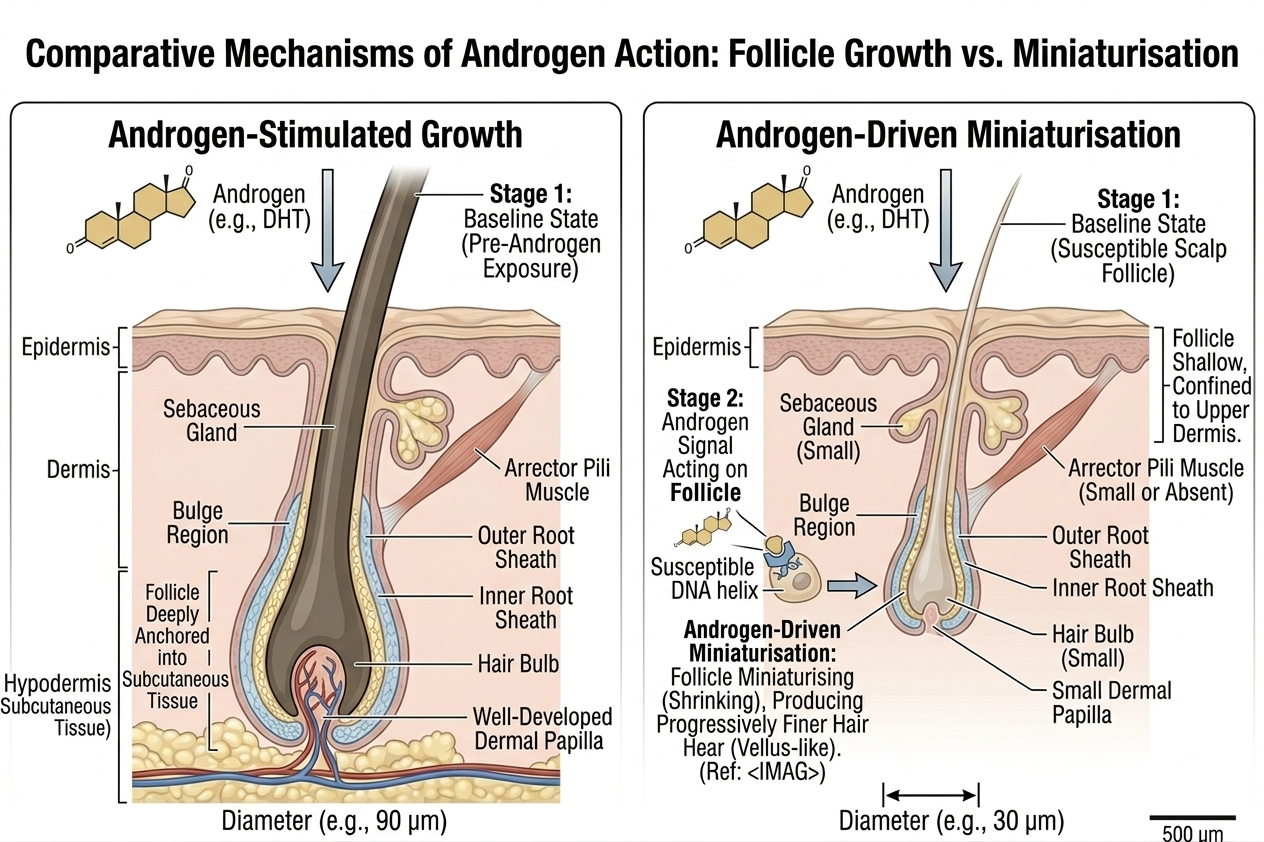
During puberty, androgen hormones stimulate certain follicles to enlarge and produce thicker terminal hairs, particularly in:
- beard areas
- body hair regions
- parts of the scalp
At the same time, genetically susceptible scalp follicles may gradually miniaturise under prolonged androgen influence in androgenetic alopecia.
Hair thickness changes with age
Hair thickness is not always constant throughout life.
With ageing:
- follicles may gradually become less active
- hair shafts may become finer
- growth phases may shorten
These changes can reduce overall hair volume even if follicle numbers remain stable.
This is one reason why hair may feel thinner over time.
Nutritional status influences hair quality
Although genetics determines baseline thickness, nutrition influences how well follicles function.
Hair follicles require:
- protein
- iron
- zinc
- vitamins
- energy supply
Severe nutritional deficiencies may temporarily produce:
- weaker hair shafts
- increased fragility
- reduced hair calibre
However, nutrition alone cannot fundamentally transform naturally fine hair into coarse hair because follicle size is genetically determined.
Ethnic and population differences
Average hair characteristics differ between populations.
Studies show variation in:
- hair shaft diameter
- curl pattern
- density
- growth cycle duration
These differences reflect inherited follicular biology rather than health status.
However, substantial variation exists within all ethnic groups.
Thick hair does not always mean healthier hair
Naturally thick hair is not necessarily biologically “better.”
Fine hair may still be:
- healthy
- strong
- normal in density
- structurally sound
Hair appearance is influenced by many factors besides shaft diameter, including:
- curl pattern
- density
- colour
- scalp contrast
- grooming practices
A genetically programmed characteristic
Natural hair thickness depends primarily on:
- follicle size
- keratin structure
- genetic programming
- hormonal influences
Large follicles produce thicker terminal hairs that create greater scalp coverage and volume.
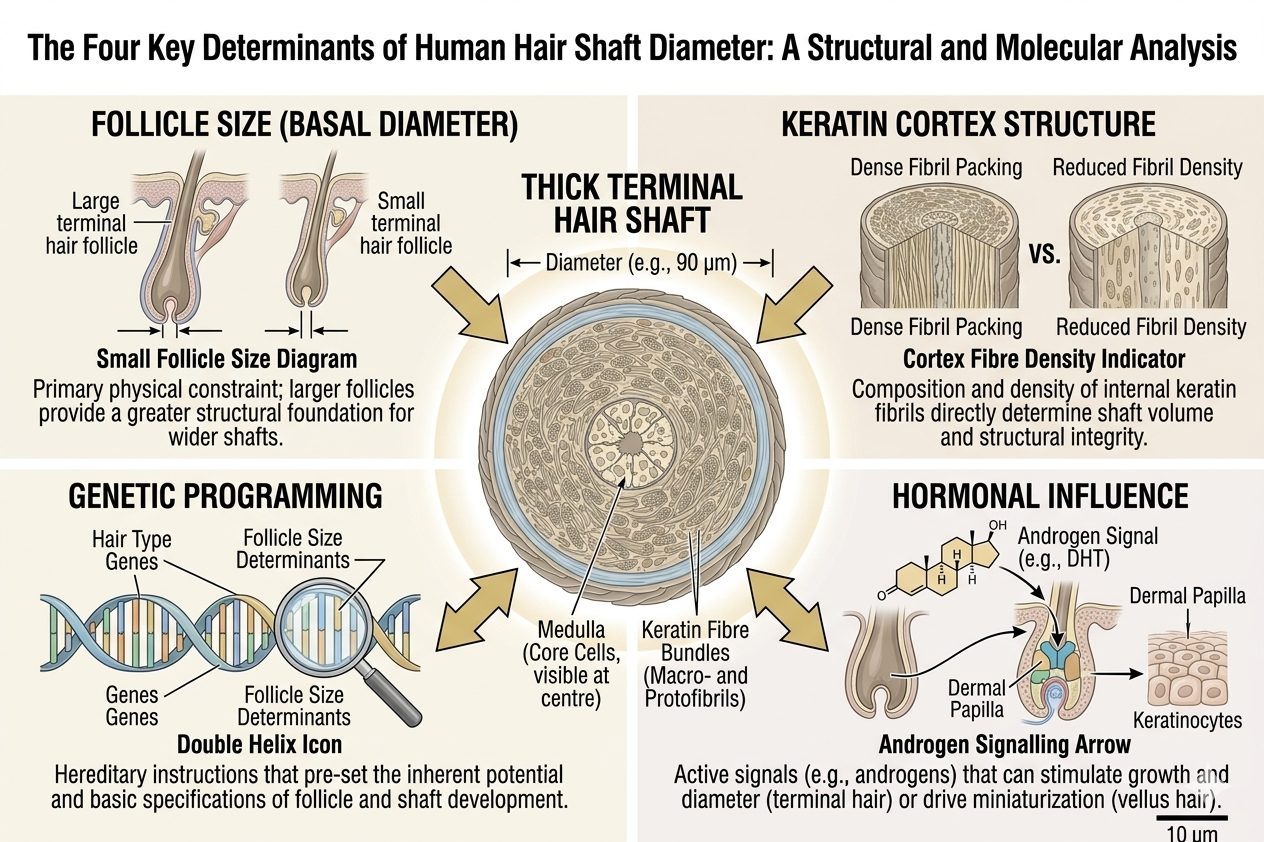
Although nutrition and health affect hair quality, the baseline thickness of hair is largely established biologically and inherited genetically.
Understanding these factors helps explain why hair varies so widely between individuals and why naturally fine or coarse hair is part of normal human variation.
Author: Dr. Priya Goswami
Medical review: Dr. Denis Broun
Next step
If you notice coverage changes without increased shedding, confirm what process is occurring.
Take the Hair Assessment to have a physician review your pattern, identify whether miniaturization is present, and determine appropriate staging and next steps.

Add Comment