Many men expect some change in their hair as they get older. The hairline may mature. Density may gradually decrease. Grey hairs appear. The texture can become finer or drier than before.
But not every change is simply “normal ageing”.
Some men experience slow, genetically driven male pattern hair loss. Others develop shedding after illness, medication changes, stress, weight loss, nutritional deficiency, or hormonal problems. In some cases, scalp disease is involved. And sometimes men delay assessment because they assume all thinning is inevitable with age.
The difficult part is knowing when to observe and when to seek treatment.
Hair loss exists on a spectrum. Some men are comfortable with gradual thinning and choose not to treat it. Others want to preserve density early. Neither approach is wrong. What matters is understanding what is happening biologically, what the realistic options are, and when delay may reduce future treatment success.
What age-related thinning usually looks like
The most common cause of hair thinning in men is androgenetic alopecia, also called male pattern hair loss.
This condition is influenced by genetics and hormones, particularly dihydrotestosterone, often shortened to DHT. Over time, susceptible follicles gradually shrink. The hairs produced become finer, shorter, and less pigmented. Eventually, some follicles stop producing visible hair altogether.
This process usually follows recognisable patterns:
- Recession at the temples
- Thinning at the crown
- Gradual reduction in overall density
- Widening visibility of the scalp under bright light
- Finer texture at the front or top of the scalp
For some men, this begins in the late teens or twenties. For others, it becomes noticeable much later. Age itself does not directly cause male pattern hair loss, but the condition becomes more common with age because the process is progressive.
The British Association of Dermatologists notes that male pattern hair loss is extremely common and typically develops gradually over years rather than suddenly.
Hair ageing versus male pattern hair loss
Hair naturally changes with age even without significant androgenetic alopecia.
Individual hair fibres may become thinner with time. Growth cycles can shorten slightly. The scalp may produce less oil. Grey hairs often feel coarser or more wiry because of structural changes in the shaft.
This type of ageing tends to produce mild overall reduction in volume rather than clear patterned recession.
Male pattern hair loss, by contrast, usually affects specific regions first. The temples and crown are particularly sensitive to DHT in genetically predisposed men.
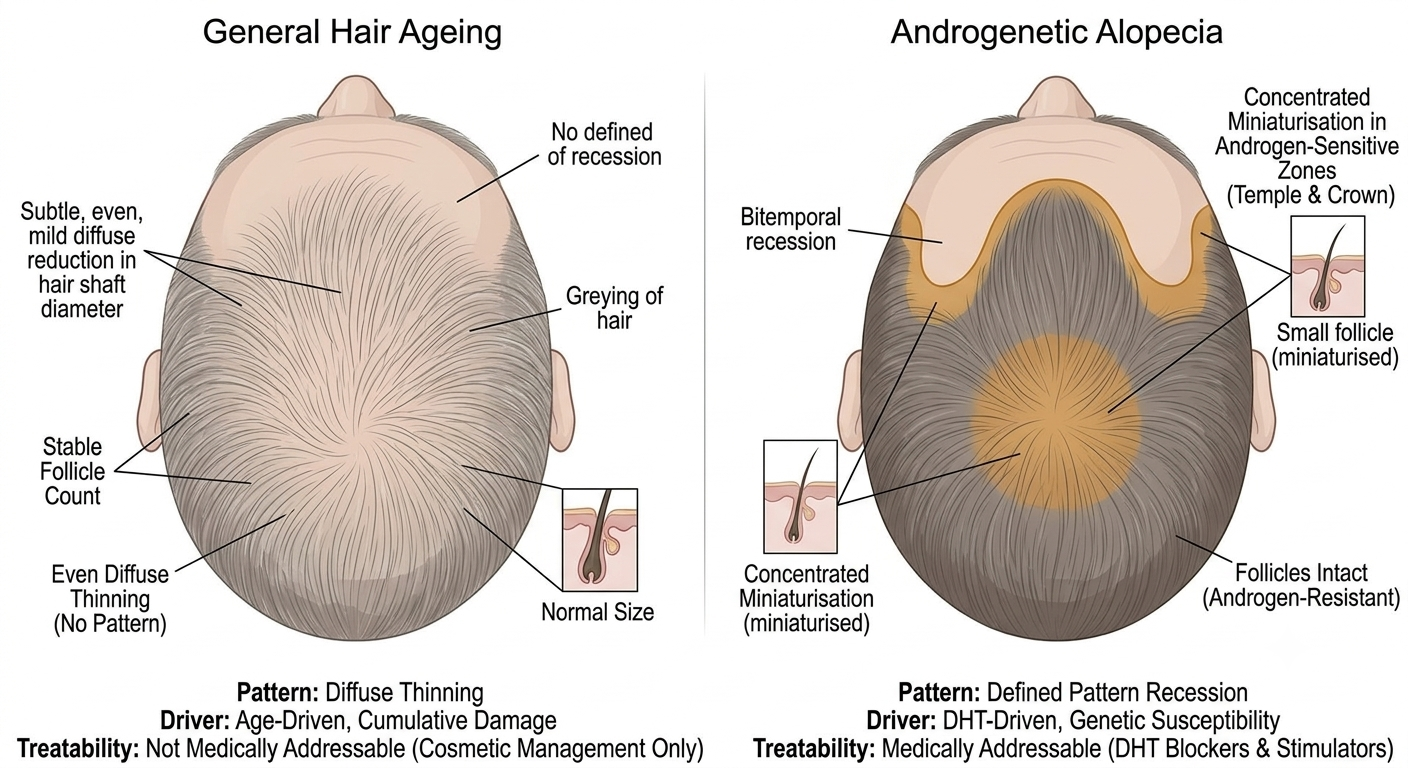
The distinction matters because androgenetic alopecia is potentially treatable, especially in earlier stages.
When thinning is probably worth monitoring
Not every man needs immediate treatment or urgent investigation.
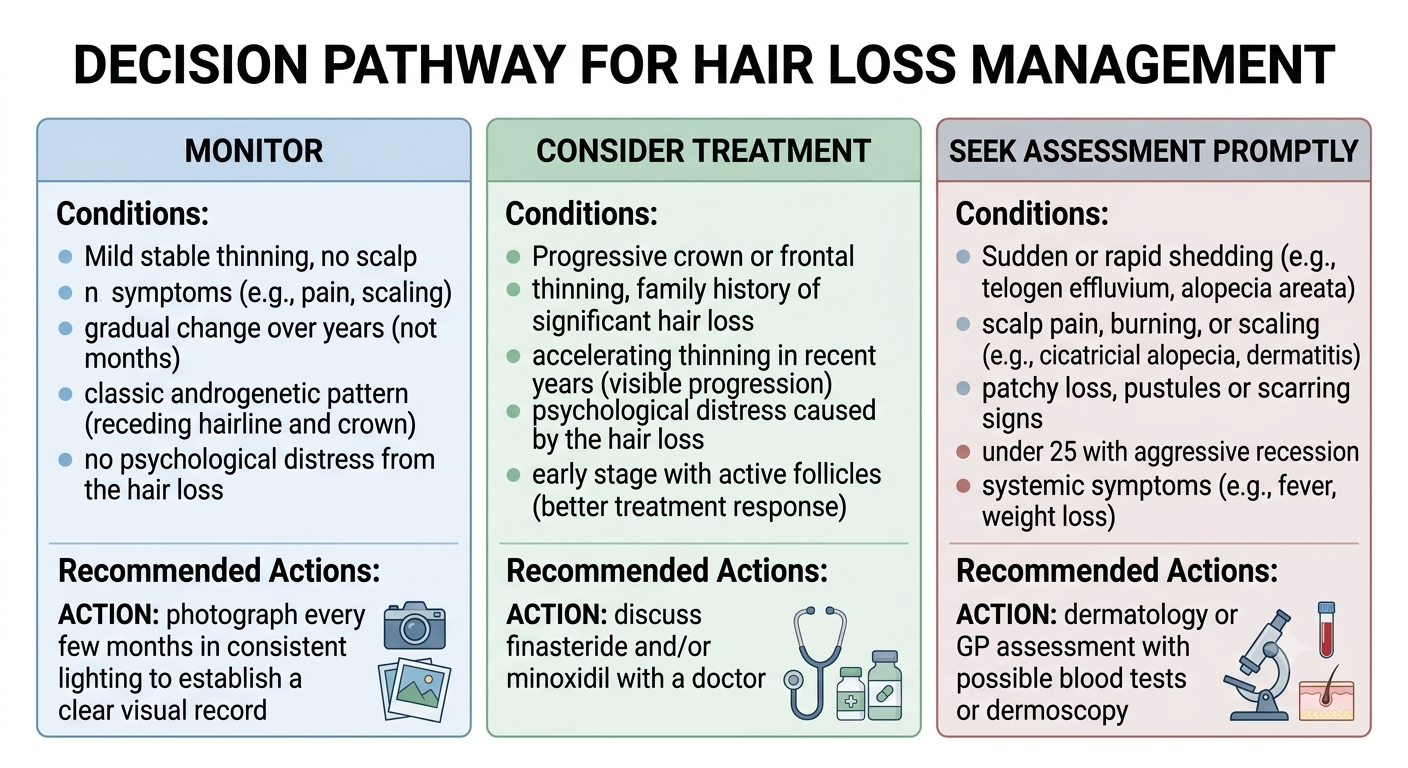
Monitoring may be reasonable when:
- The thinning is mild and stable
- There is no rapid shedding
- The scalp looks healthy
- The change has happened gradually over years
- There are no symptoms such as pain, burning, or itching
- The pattern resembles classic androgenetic alopecia
- The hair loss is not distressing to the person
In these situations, some men simply prefer observation. Taking photographs every few months in consistent lighting can help track whether the condition is actually progressing.
Many men overestimate daily fluctuations and underestimate long-term change. Hair often appears different depending on hair length, styling, lighting, humidity, and stress. Photographic comparison is more reliable than memory.
When to act earlier rather than later
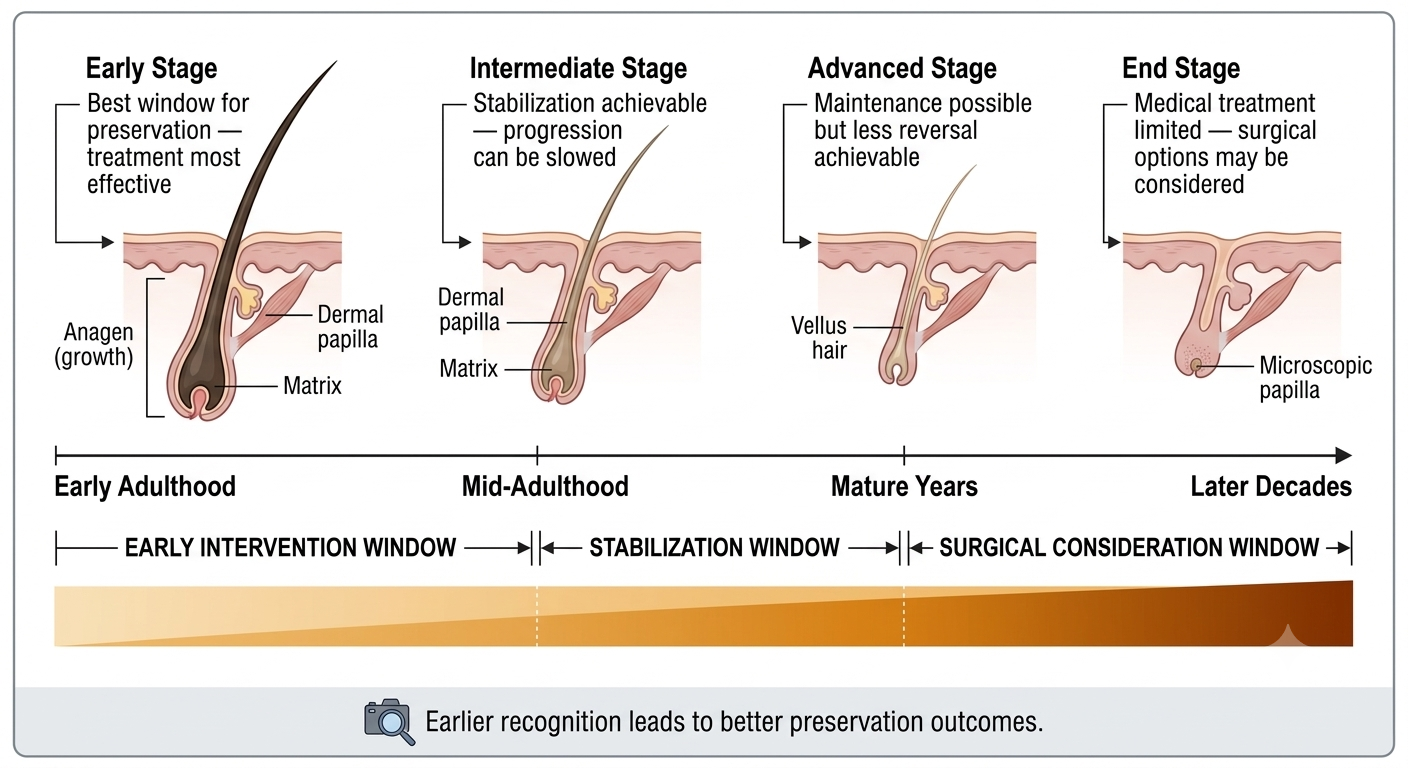
Earlier intervention tends to preserve more hair.
This is important because treatments for androgenetic alopecia usually work best at maintaining and thickening partially miniaturised follicles. They are less successful once follicles have become inactive for long periods.
A man may want to act earlier if:
- The crown is becoming visibly thinner
- The frontal hairline is receding progressively
- Family history suggests extensive hair loss
- Hair texture on top feels finer than before
- The scalp becomes increasingly visible in photographs
- Hair loss is causing psychological distress
- The thinning has accelerated in recent years
There is no medical rule that says treatment must start at a certain stage. But many men regret waiting until large areas have already thinned significantly.
Sudden thinning is not typical ageing
Rapid or diffuse shedding deserves attention.
Classic male pattern hair loss is usually slow. A man who notices dramatic shedding over weeks or a few months may have something else occurring alongside or instead of androgenetic alopecia.
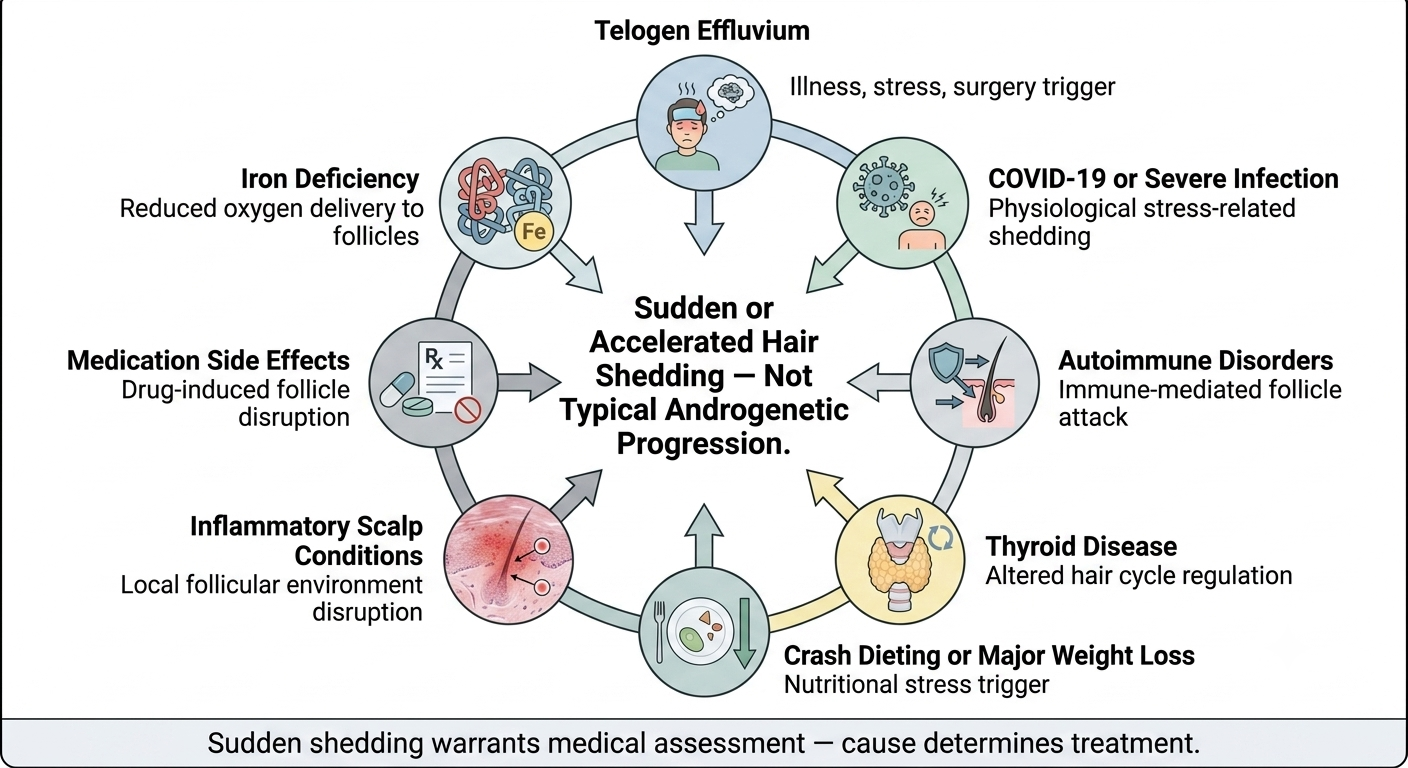
Possible causes include:
- Telogen effluvium after illness or stress
- Iron deficiency
- Thyroid disease
- Crash dieting or major weight loss
- Medication side effects
- Inflammatory scalp conditions
- Autoimmune disorders
- Recent surgery or severe infection
COVID-19, severe emotional stress, high fever, and major physiological stressors have all been associated with temporary shedding episodes in susceptible individuals.
If hair is falling out suddenly in large amounts, especially during washing or brushing, it is worth considering medical assessment rather than assuming it is ordinary ageing.
Symptoms that should not be ignored
Certain scalp symptoms are not typical of straightforward male pattern hair loss.
A dermatologist should assess hair thinning associated with:
- Pain or burning
- Persistent itching
- Redness or scaling
- Pustules
- Patchy bald spots
- Scarring appearance
- Loss of eyebrows or beard hair
- Tenderness
- Rapid recession over weeks
- Broken hairs or black dots
These signs may suggest inflammatory scalp disease, fungal infection, alopecia areata, traction injury, or scarring alopecia.
Scarring forms of alopecia are particularly important to identify early because untreated inflammation can permanently damage follicles.
The psychological side of age-related hair loss
Some men are largely unaffected by thinning. Others experience significant anxiety, avoidance of social situations, or loss of confidence.
The emotional response does not always match the degree of hair loss. Mild thinning can feel devastating to one person and irrelevant to another.
There is sometimes pressure on men to pretend hair loss does not bother them. But appearance changes can affect self-image at any age.
At the same time, aggressive online marketing around hair loss often exploits fear. Men are frequently sold expensive shampoos, supplements, scalp devices, and “miracle regrowth systems” with limited evidence.
A realistic approach matters. Some treatments have meaningful scientific support. Others mostly change the appearance or texture of hair temporarily.
Treatments with the strongest evidence
For androgenetic alopecia, two treatments have the strongest long-term evidence base.
Finasteride
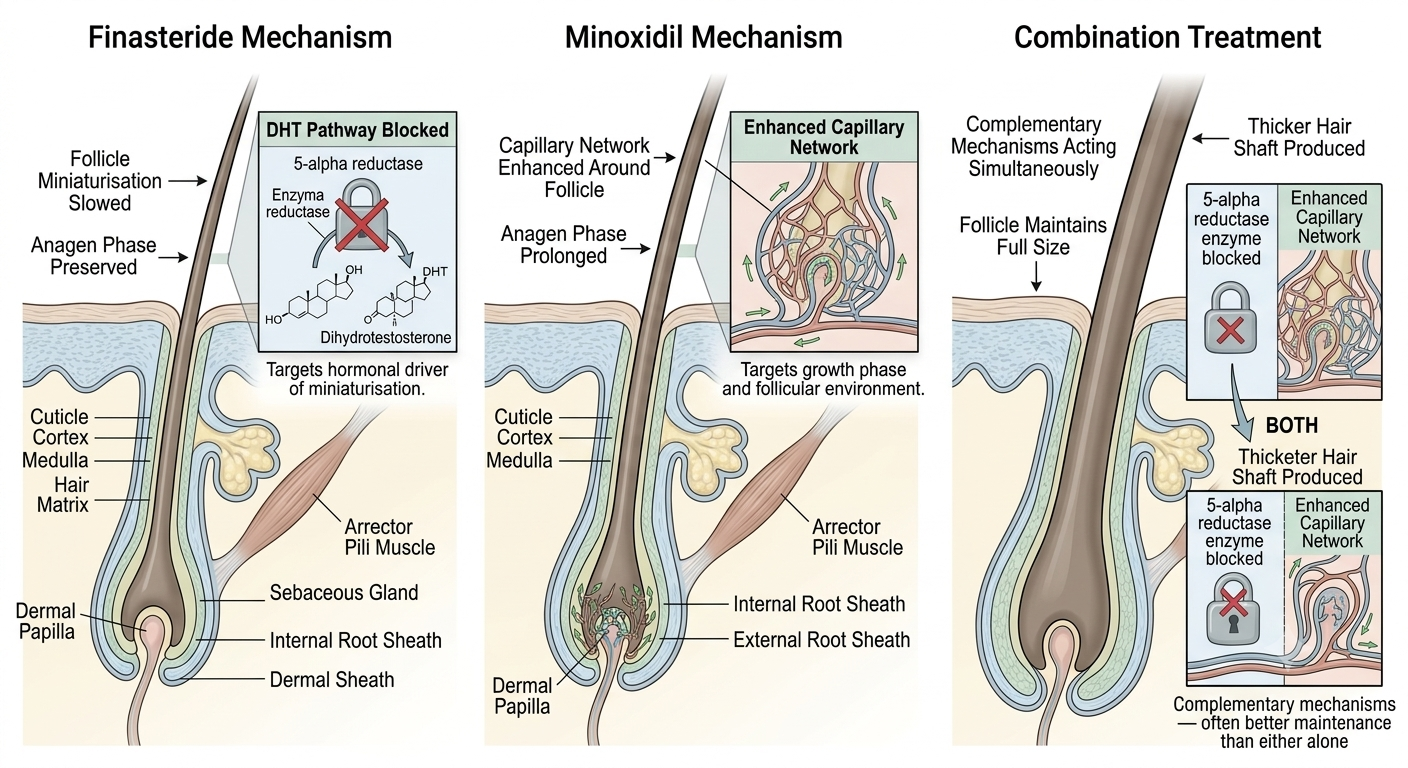
Finasteride is an oral prescription medicine that reduces conversion of testosterone to DHT.
By lowering scalp DHT levels, it can slow follicle miniaturisation and help preserve hair density in many men. Some men also experience visible thickening.
Treatment effects usually take several months to assess properly. If the medication is stopped, the benefit gradually fades over time.
Potential side effects can include sexual symptoms, breast tenderness, and mood changes in a minority of users. Debate continues around the frequency and persistence of these effects, but they should be discussed honestly before treatment begins.
Minoxidil
Minoxidil is a topical treatment applied to the scalp. It works differently from finasteride and does not target DHT directly.
It may help prolong the growth phase of hair follicles and improve density in some men. Results vary. Some people experience stabilisation rather than dramatic regrowth.
An initial increase in shedding can occur early in treatment as follicles shift cycling phases.
Topical minoxidil is available without prescription in some countries and prescription-only in others.
Combination treatment
Many dermatologists use finasteride and minoxidil together because they work through different mechanisms.
Combination treatment is not mandatory, but it often produces better maintenance than either treatment alone.
What about supplements?
Supplements are heavily marketed for men with thinning hair, but evidence is inconsistent unless a deficiency exists.
Iron, zinc, vitamin D, protein intake, and general nutritional status all matter for hair biology. But taking high-dose supplements without evidence of deficiency is unlikely to reverse classic male pattern hair loss.
Excess supplementation can also cause problems. Selenium toxicity, for example, has been linked to hair loss.
A blood test may be appropriate if symptoms or history suggest nutritional deficiency, thyroid disease, or another systemic issue.
Hair transplants and age
Hair transplantation can be effective in appropriately selected men, but timing matters.
A transplant does not stop future hair loss. If the surrounding native hair continues thinning, the overall appearance may become unnatural over time unless the long-term pattern is considered carefully.
This is one reason why very young men are often advised to think cautiously before rushing into surgery.
A good hair restoration surgeon assesses:
- Age
- Family history
- Current pattern
- Rate of progression
- Donor density
- Scalp health
- Expectations
- Likelihood of future loss
The goal is long-term planning, not simply lowering a hairline quickly.
Cosmetic approaches are valid too
Not every man wants medical treatment.
Some prefer shorter hairstyles that reduce contrast between hair and scalp. Others use hair fibres, volumising products, strategic cuts, or shaved styles.
These are reasonable options. Hair loss management is not only about preserving follicles. It is also about helping people feel comfortable with their appearance.
A realistic haircut can sometimes improve the visual effect more than chasing endless products.
Lifestyle factors and hair health
Lifestyle changes do not usually reverse established androgenetic alopecia on their own, but general health still matters.
Chronic sleep deprivation, smoking, extreme dieting, anabolic steroid use, severe stress, and poor nutrition may worsen overall hair quality or trigger shedding episodes.
Good scalp care also matters. Persistent dandruff, inflammation, or untreated dermatitis can make thinning appear worse and increase discomfort.
Gentle handling, appropriate washing, and avoiding constant traction or harsh chemical damage can help preserve fragile hair shafts even if they do not change follicle genetics.
When to see a dermatologist
Professional assessment is worth considering if:
- Hair loss began suddenly
- The pattern is unclear
- The scalp is symptomatic
- You are under 25 with aggressive recession
- Over-the-counter products are not helping
- You are considering prescription treatment
- You are considering surgery
- The hair loss is affecting mental wellbeing
- You are unsure whether the thinning is normal ageing or something else
A dermatologist may use dermoscopy, medical history, examination, and sometimes blood tests or scalp biopsy depending on the presentation.
The bottom line
Age-related thinning in men is common, but not all thinning is simply unavoidable ageing.
The most common cause is androgenetic alopecia, a gradual process driven by genetic sensitivity to DHT. Early stages are often easier to stabilise than advanced loss, which is why some men choose to act sooner rather than later.
Monitoring may be reasonable when thinning is mild and stable. But sudden shedding, scalp symptoms, patchy loss, or rapid progression deserve proper assessment.
The most important thing is realism. Treatments can help many men slow progression and preserve density, but no treatment perfectly restores adolescent hair. Good outcomes usually come from early recognition, sensible expectations, and consistent long-term management rather than panic buying or chasing miracle cures.
Author: Dr. Priya Goswami
Medical review: Dr. Denis Broun
Next step
If you notice coverage changes without increased shedding, confirm what process is occurring.
Take the Hair Assessment to have a physician review your pattern, identify whether miniaturization is present, and determine appropriate staging and next steps.
Add Comment