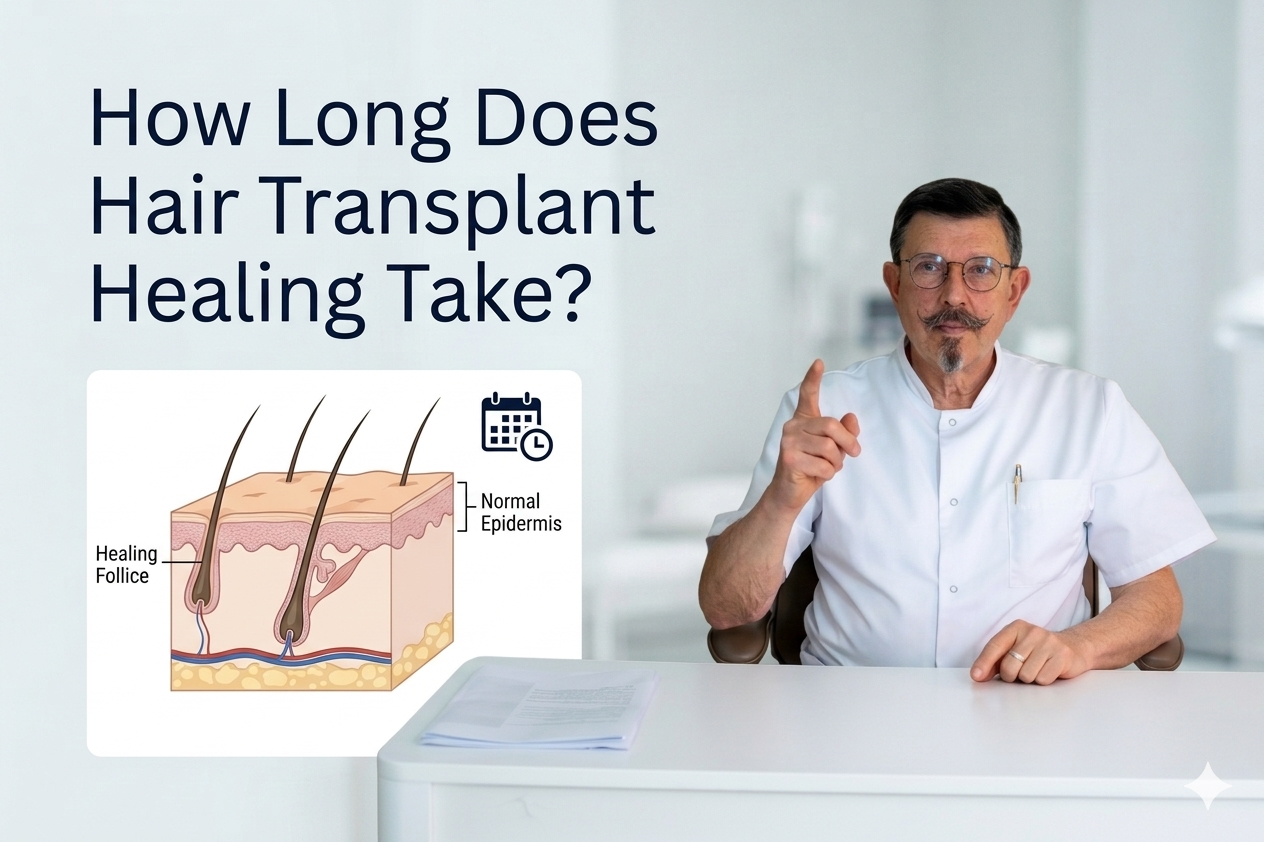
Hair transplant surgery is often discussed in terms of results. Before and after photos dominate advertising, usually focusing on the final hairline months later. What receives less attention is the healing process in between.
Healing after a hair transplant is gradual. The scalp changes week by week, and many stages that worry patients are actually expected parts of recovery.
People are often surprised by how normal it is to experience redness, crusting, temporary shedding, uneven growth, and periods where very little seems to happen at all.
Understanding the timeline matters because unrealistic expectations create unnecessary anxiety. Hair restoration is not an overnight cosmetic transformation. It is a slow biological process involving wound healing, follicle recovery, and hair cycling.
What happens during a hair transplant?
Modern hair transplantation usually involves one of two main techniques:
Follicular unit extraction, often called FUE
Follicular unit transplantation, often called FUT
In FUE, individual follicular units are removed and transplanted into recipient areas. In FUT, a strip of scalp is removed from the donor area and dissected into grafts.
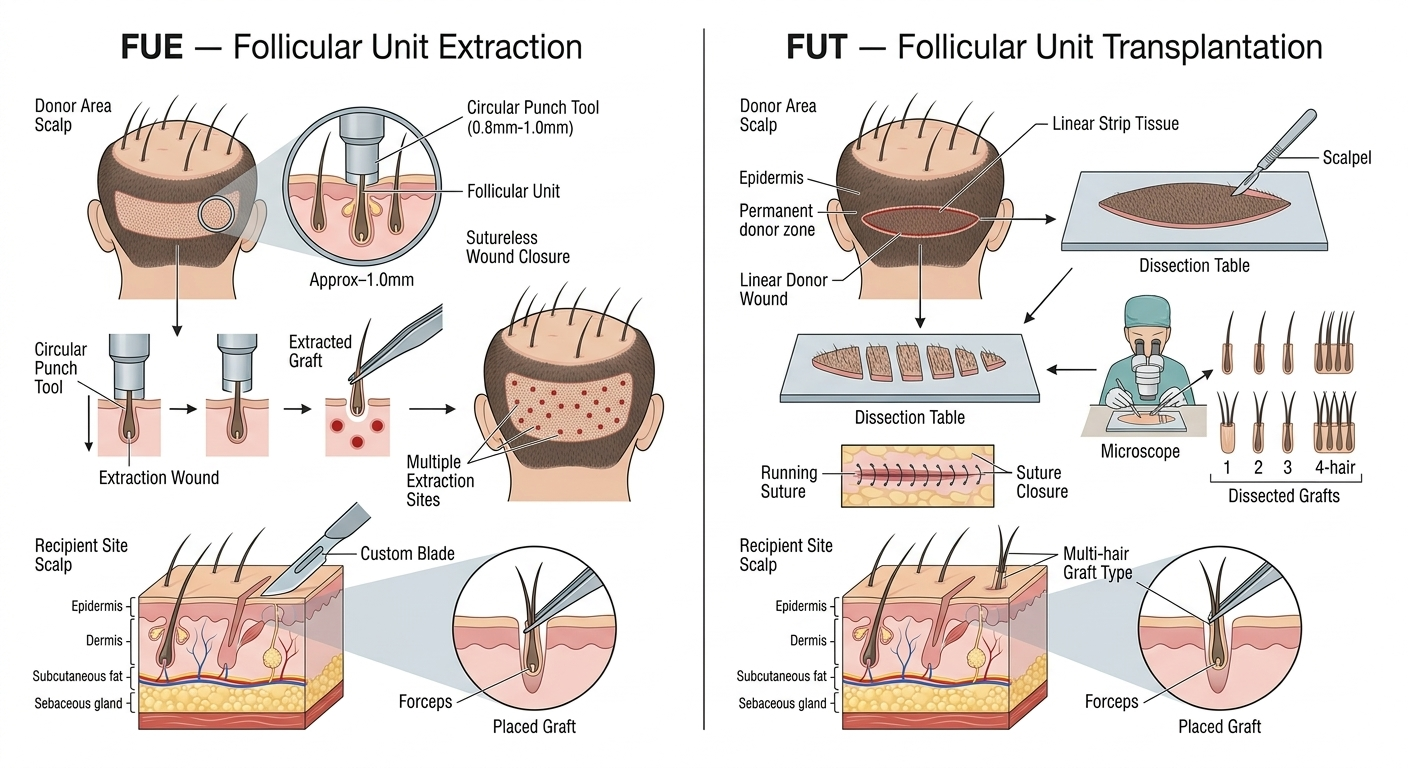
Both methods involve creating controlled injury to the scalp. Healing therefore occurs in both the donor area and the recipient area.
The visible appearance changes over time as the skin recovers and the transplanted follicles re-enter normal growth cycles.
The first few days after surgery
The immediate post-operative period is usually the most visibly dramatic.
Common features during the first few days include:
Redness
Swelling
Tiny scabs or crusts
Tenderness
Tightness
Mild oozing
Sensitivity around graft sites
Swelling often affects the forehead and around the eyes, especially between days two and four. This can look alarming but is usually temporary.
Patients are generally advised to avoid:
Heavy exercise
Excess sweating
Direct trauma to the scalp
Picking scabs
Alcohol excess
Smoking
Sun exposure
Following aftercare instructions matters because newly placed grafts are still vulnerable early on.
When are grafts considered secure?
This is one of the most common questions after transplantation.
While protocols vary slightly between clinics, grafts are generally considered increasingly stable after the first several days. By around 7 to 10 days, most grafts are substantially more secure within the scalp.
This does not mean the area is fully healed. It simply means accidental dislodgement becomes much less likely compared with the immediate post-operative phase.
Patients are still usually advised to handle the scalp gently during early recovery.
Scab formation is normal
Tiny crusts around grafts are expected during healing.
These crusts usually begin shedding gradually over the first one to two weeks. Aggressively scratching or picking them off can potentially disrupt healing or damage grafts prematurely.
Gentle washing routines are typically introduced according to the surgeon’s instructions.
The exact appearance varies depending on:
Skin type
Technique used
Number of grafts
Individual healing response
Some people heal with surprisingly little visible crusting. Others develop more pronounced scabbing.
Redness can last longer than expected
One thing patients often underestimate is how long redness may persist.
In fair or sensitive skin types, visible redness can continue for several weeks or occasionally longer. This does not necessarily mean something is wrong.
The duration varies according to:
Skin tone
Inflammation level
Number of grafts
Healing tendency
Pre-existing skin sensitivity
Some people can return socially within days. Others prefer longer recovery periods before feeling comfortable publicly.
The donor area heals separately
Attention usually focuses on the transplanted area, but the donor region also needs time to recover.
In FUE, tiny extraction wounds generally heal gradually over days to weeks. Small dot-like scars may remain but are often difficult to detect when hair is worn at moderate length.
In FUT, healing involves a linear scar where the strip was removed. Tightness or numbness may persist temporarily while the area recovers.
Donor area discomfort is often milder than patients expect, but recovery experiences vary significantly.
Shock loss can happen
This stage surprises many people emotionally.
Transplanted hairs commonly shed within the first several weeks after surgery. Existing nearby hairs may also temporarily shed in response to surgical stress. This is often called shock loss.
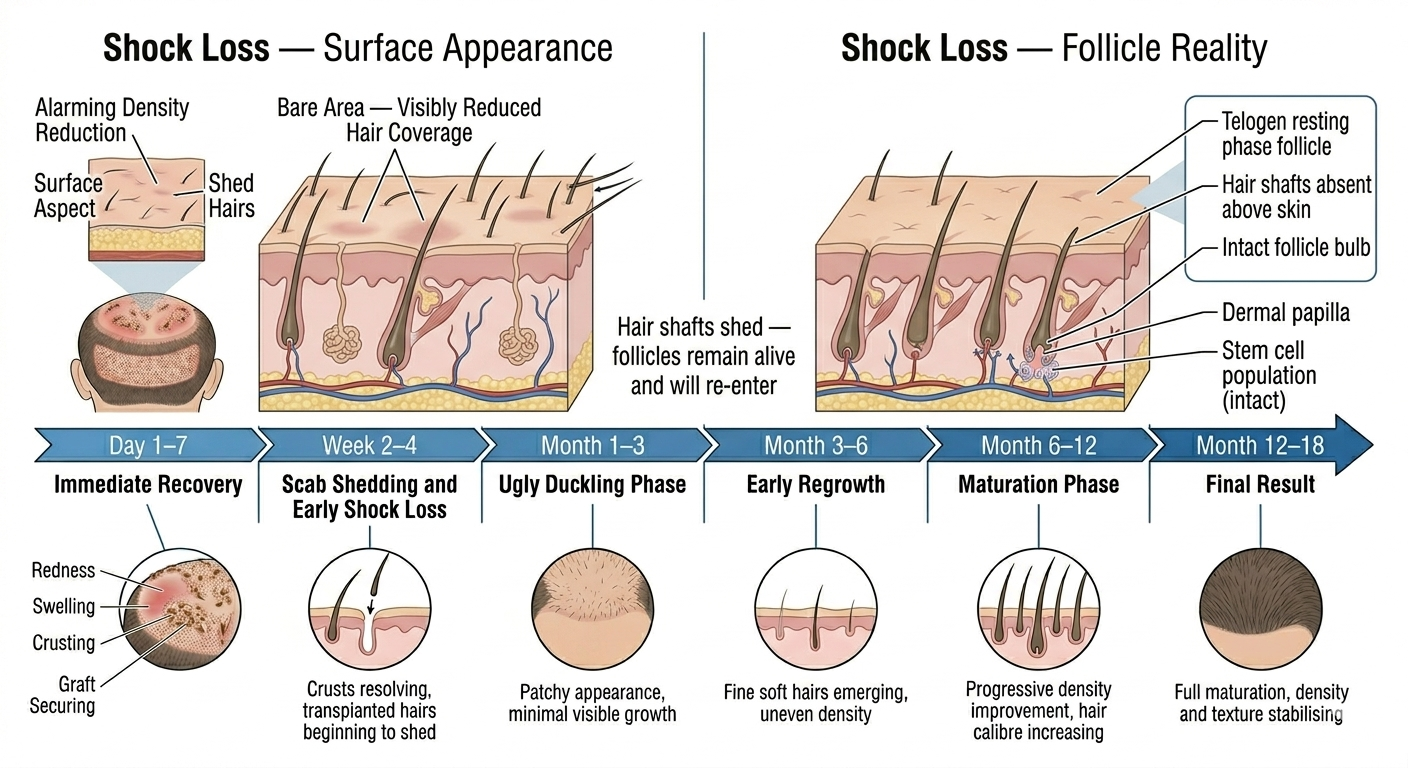
Patients sometimes panic at this point, believing the transplant has failed.
In most cases, the follicles themselves remain alive beneath the skin. The visible hair shafts fall out while the follicles transition into a resting phase before beginning new growth later.
Shock loss is usually temporary, though recovery timing varies.
The “ugly duckling phase”
Many surgeons informally describe a difficult cosmetic period occurring during the first one to three months.
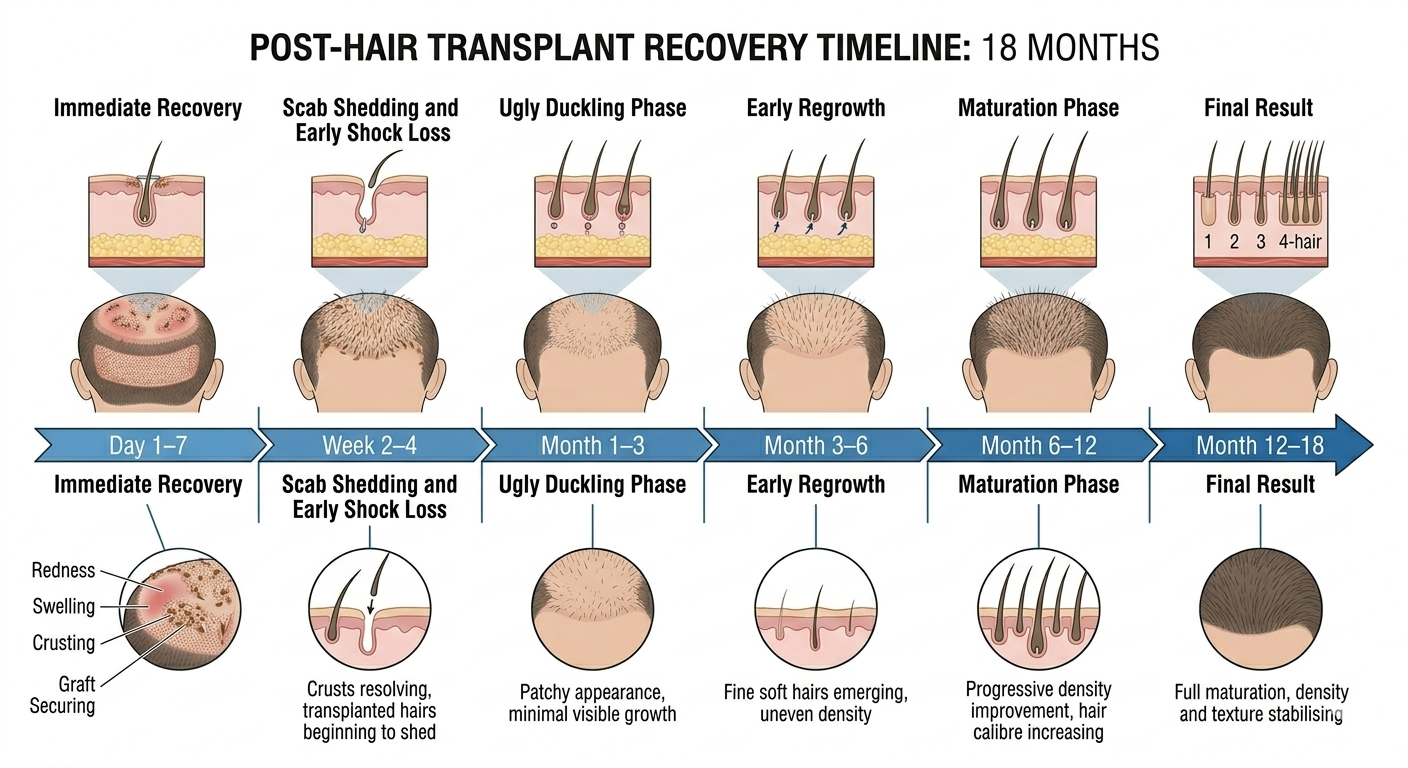
At this stage, patients may experience:
Patchy appearance
Persistent redness
Uneven density
Shedding
Temporary thinning
Folliculitis-like bumps
Little visible growth
Psychologically, this can be frustrating because the person has undergone surgery but does not yet see rewarding results.
This stage is common and usually temporary.
When does new hair start growing?
Meaningful regrowth usually begins gradually around three to four months after transplantation, though timing differs between individuals.
Early hairs may appear:
Fine
Soft
Uneven
Lighter in colour
Sparse
This does not represent the final result.
Transplanted follicles often mature progressively over many months. Hair calibre, density, and texture typically improve gradually rather than suddenly.
Six months is not the final result
At six months, many patients are encouraged because visible improvement often becomes more obvious.
But even at this stage:
Density may still be incomplete
Hair texture may still be maturing
Some follicles may only recently have entered active growth
This is why experienced surgeons usually advise patience before judging outcomes too early.
Final results can take 12 to 18 months
Hair transplantation is slow partly because normal hair biology is slow.
Many patients continue seeing improvement for a year or longer after surgery. Crown transplants, in particular, sometimes mature more slowly than frontal areas.
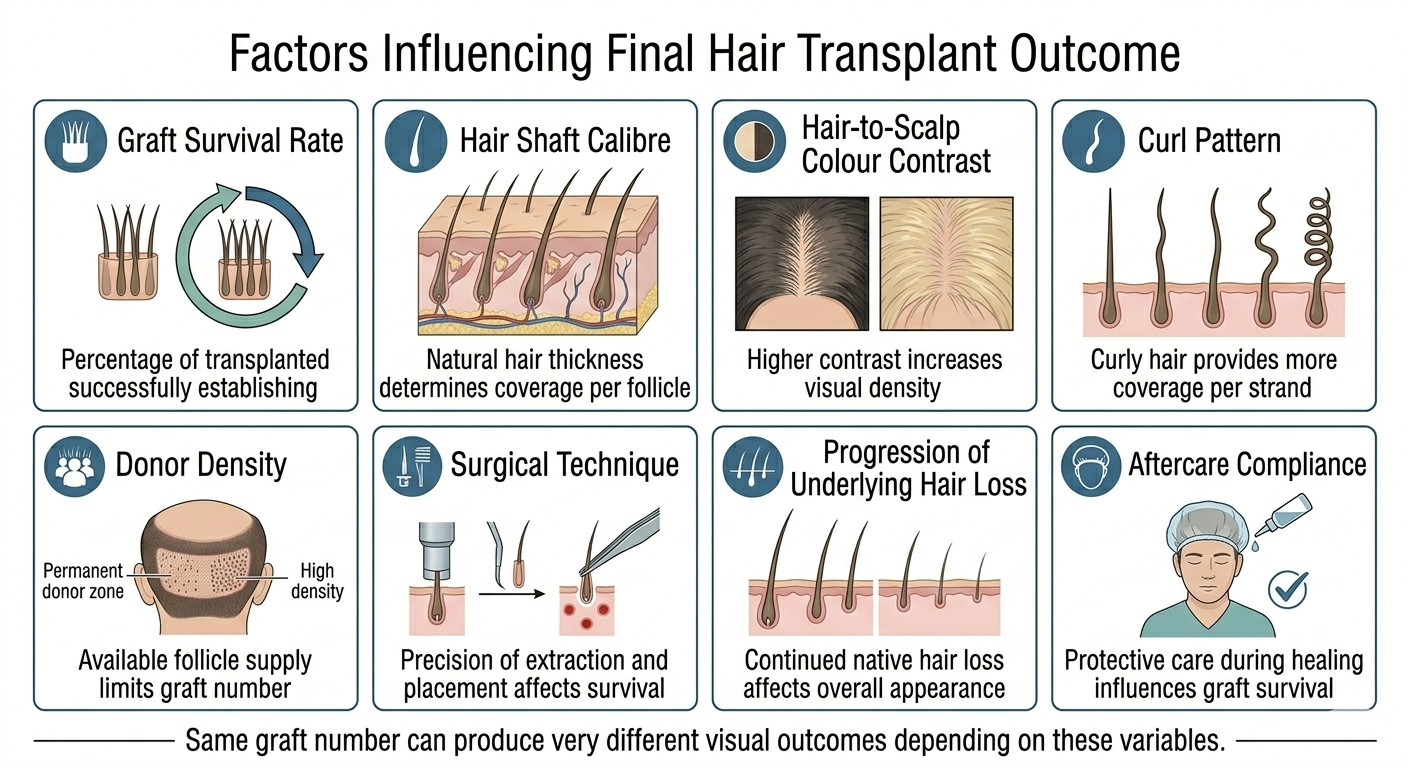
The final appearance depends on multiple factors:
Graft survival
Hair calibre
Hair colour contrast
Curl pattern
Donor density
Surgical technique
Progression of underlying hair loss
Two people receiving the same graft number may achieve very different visual outcomes.
Itching during healing is common
Mild itching often occurs during recovery as the scalp heals.
This may result from:
Crusting
Dryness
Healing skin
Nerve recovery
Inflammation
Scratching aggressively is discouraged because it can irritate healing tissue.
Persistent severe itching, spreading redness, pus, or significant pain should be assessed medically.
Temporary numbness can occur
Altered sensation is not unusual after transplantation.
Some patients experience:
Numbness
Tingling
Tightness
Reduced sensitivity
This is generally temporary and reflects nerve irritation or healing responses within the scalp.
Recovery may take weeks or occasionally months depending on the procedure and individual healing patterns.
Hair transplants do not stop future hair loss
This is another critical point.
A transplant redistributes follicles. It does not cure androgenetic alopecia itself.
Men and women may continue losing non-transplanted hair over time unless underlying pattern loss is medically managed.
This is why surgeons often discuss treatments such as:
Finasteride
Minoxidil
Low level laser therapy
Medical scalp management
without relying on surgery alone.
Healing complications are possible
Most transplants heal without major problems, but complications can occur.
Potential issues include:
Infection
Folliculitis
Poor graft growth
Visible scarring
Prolonged redness
Persistent numbness
Unnatural hair direction
Shock loss affecting surrounding hair
Risk varies depending on surgical technique, aftercare, scalp health, smoking status, and surgeon experience.
Psychological recovery matters too
Hair transplantation affects more than the scalp.
Some patients feel emotionally vulnerable during recovery because appearance temporarily worsens before improving. Others become fixated on daily monitoring of growth progress.
This can create anxiety, especially when social media promotes unrealistic timelines or heavily filtered results.
Patience is genuinely important in transplantation because follicle biology cannot be rushed.
When to contact the clinic
Patients should seek medical review if healing involves:
Increasing pain
Spreading redness
Pus
Fever
Strong odour
Significant bleeding
Sudden swelling worsening after initial improvement
Areas of skin breakdown
Most post-operative symptoms are mild and expected, but concerning changes should not be ignored.
The bottom line
Hair transplant healing takes far longer than many people expect. Initial skin healing occurs over days to weeks, but visible cosmetic recovery unfolds gradually over months.
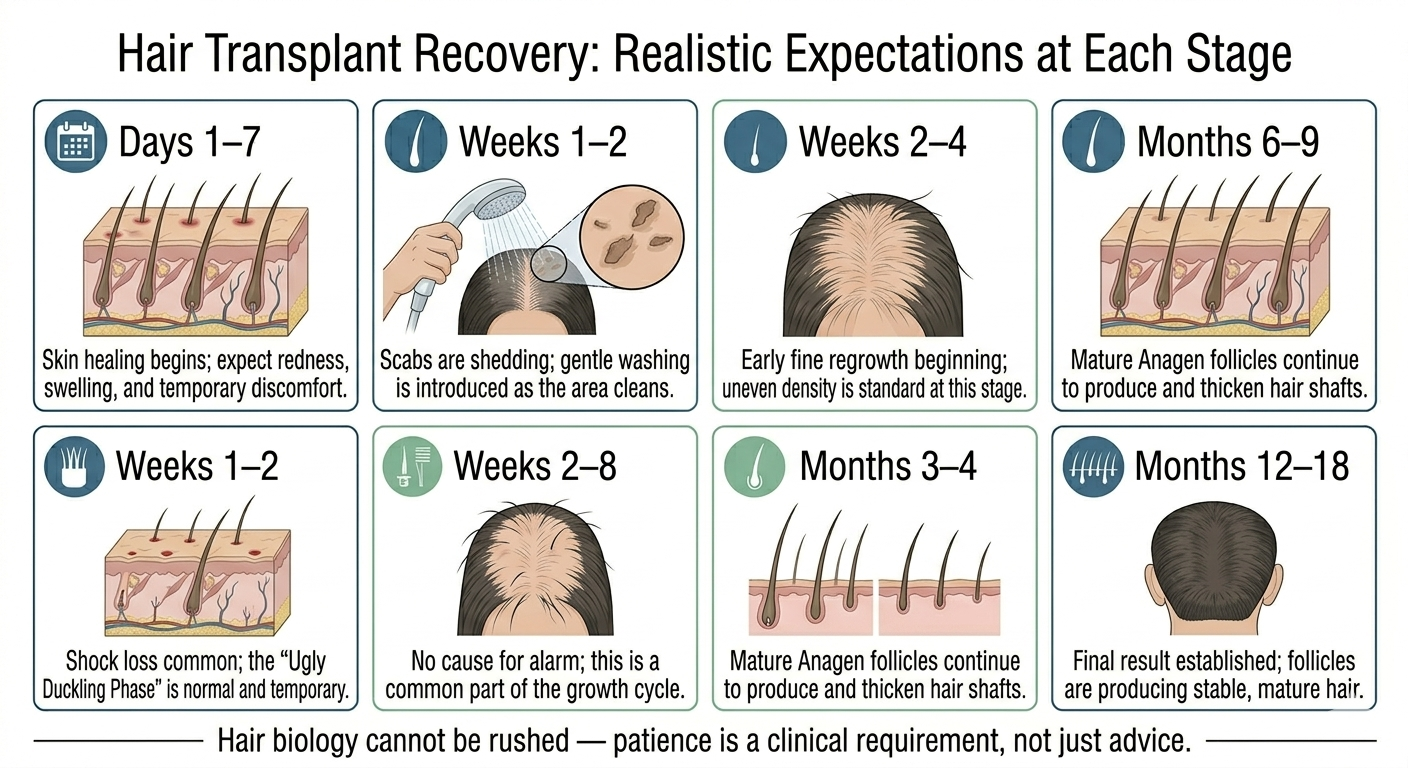
Redness, scabbing, swelling, temporary shedding, and uneven early growth are all common parts of the process. New hair growth typically begins several months after surgery, while final maturation may continue for 12 to 18 months.
The most successful recoveries usually involve realistic expectations, careful aftercare, and understanding that hair restoration depends on slow biological cycles rather than immediate cosmetic transformation.
Author: Dr. Priya Goswami
Medical review: Dr. Denis Broun
Next step
If you notice coverage changes without increased shedding, confirm what process is occurring.
Take the Hair Assessment to have a physician review your pattern, identify whether miniaturization is present, and determine appropriate staging and next steps.
Add Comment