Finasteride is one of the most widely used medical treatments for male pattern hair loss. Many men start treatment hoping to slow thinning, maintain density, or reduce further recession. Some continue treatment for years. Others eventually stop because of side effects, cost, family planning, personal preference, or uncertainty about long term use.
A common question follows soon after discontinuation. What actually happens to the hair?
The short answer is that finasteride only works while it is being used. Once treatment stops, the biological effects gradually fade, and hair loss usually resumes over time. The speed and degree of this change can vary from person to person.
For some men, changes are subtle at first. For others, increased shedding becomes noticeable within months.
How finasteride maintains hair
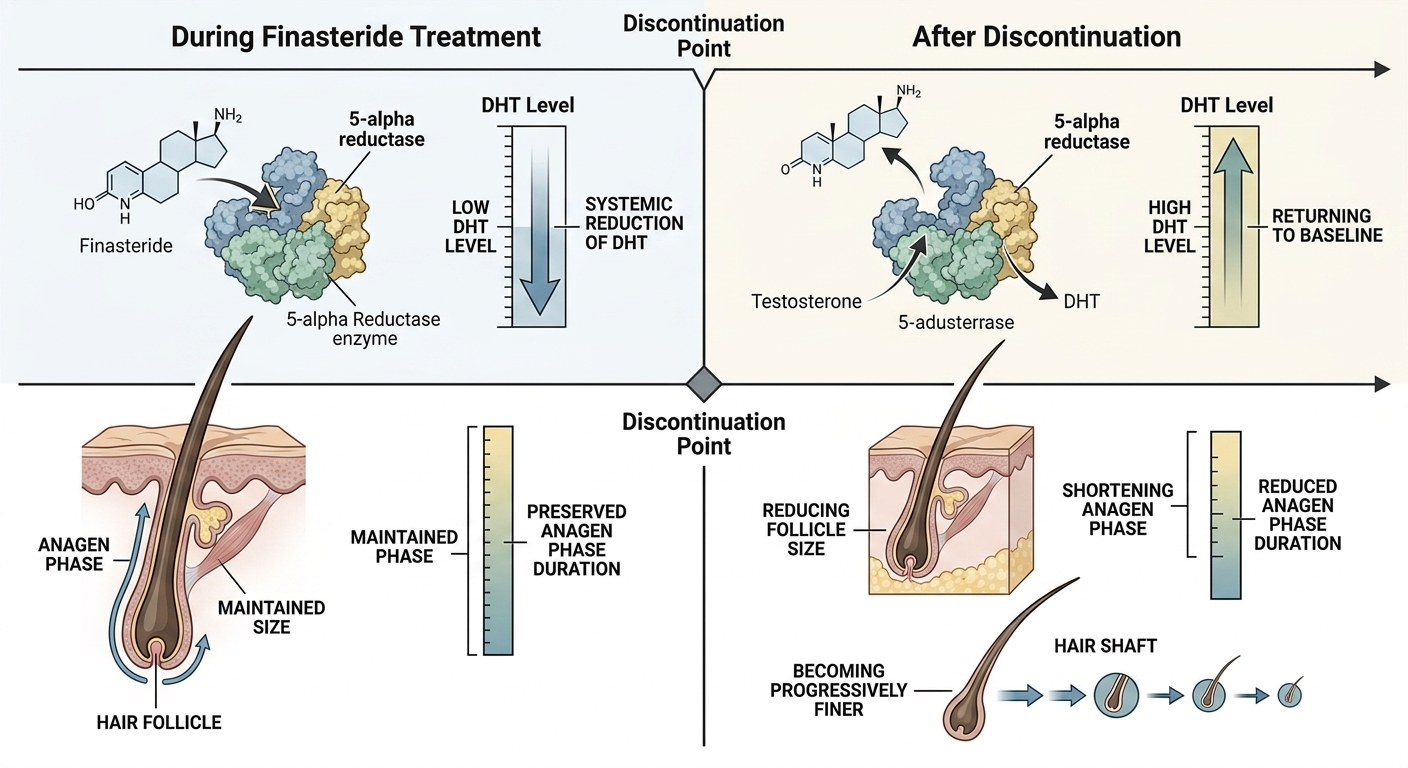
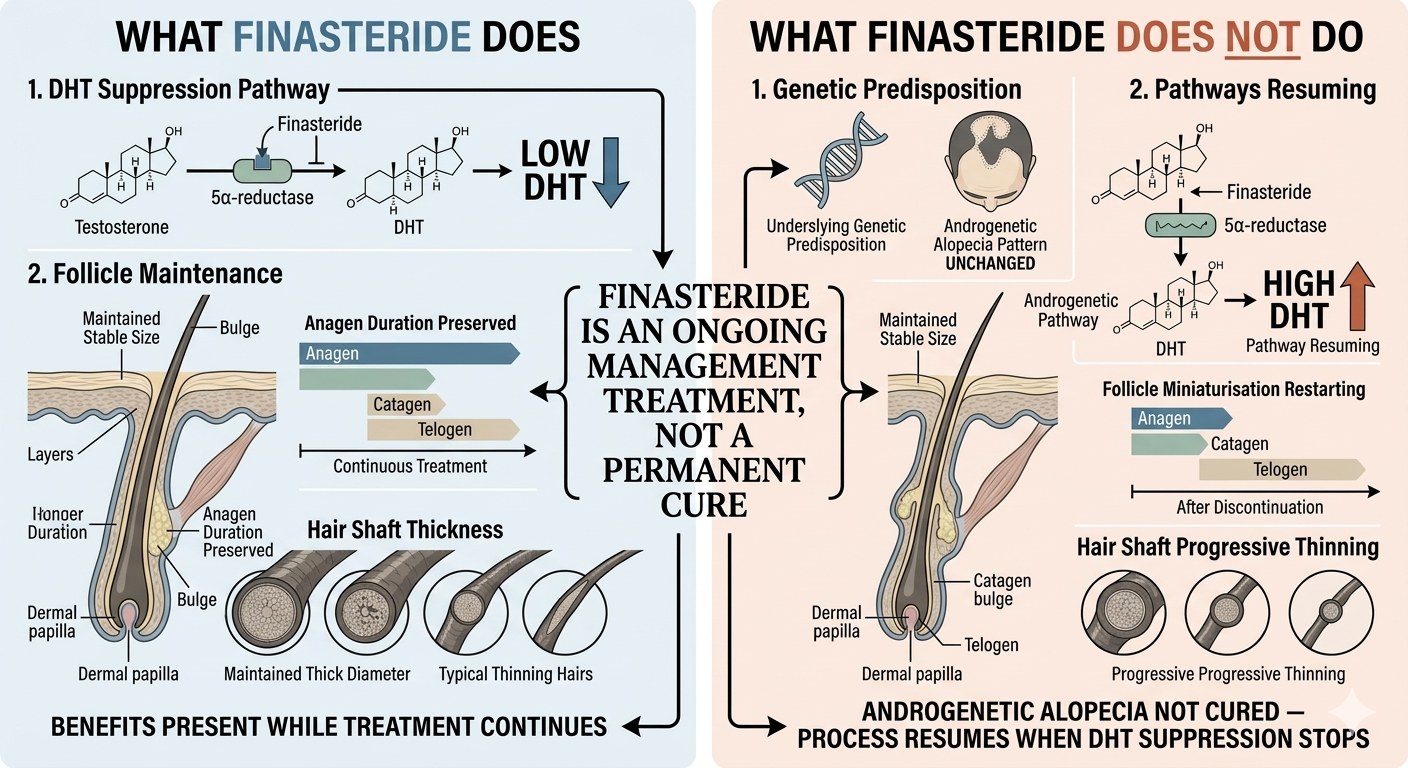
Finasteride works by lowering levels of dihydrotestosterone, or DHT. DHT is an androgen hormone involved in androgenetic alopecia, also known as male pattern hair loss.
In genetically susceptible hair follicles, DHT contributes to progressive miniaturisation. Over time, hairs become thinner, shorter, and less visible. Eventually, some follicles stop producing visible hair altogether.
By reducing DHT levels, finasteride can slow or partially interrupt this process. It does not permanently change the underlying genetic tendency toward androgenetic alopecia. Instead, it suppresses one of the hormonal drivers while treatment continues.
This distinction matters. Finasteride manages hair loss. It does not cure it.
What happens when finasteride is stopped
When finasteride is discontinued, DHT levels gradually return toward baseline. As this happens, hair follicles once again become exposed to the hormonal environment associated with androgenetic alopecia.
Most studies and clinical observations suggest that the benefits gained during treatment are gradually lost over time after discontinuation.
Men who maintained hair density while taking finasteride often begin experiencing renewed thinning. Men who regrew some hair may notice that the regrown hairs become thinner again or disappear.
The process is usually gradual rather than immediate.
How quickly does hair loss return?
There is no single timeline that applies to everyone, but many men notice increased shedding or visible thinning within several months after stopping treatment.
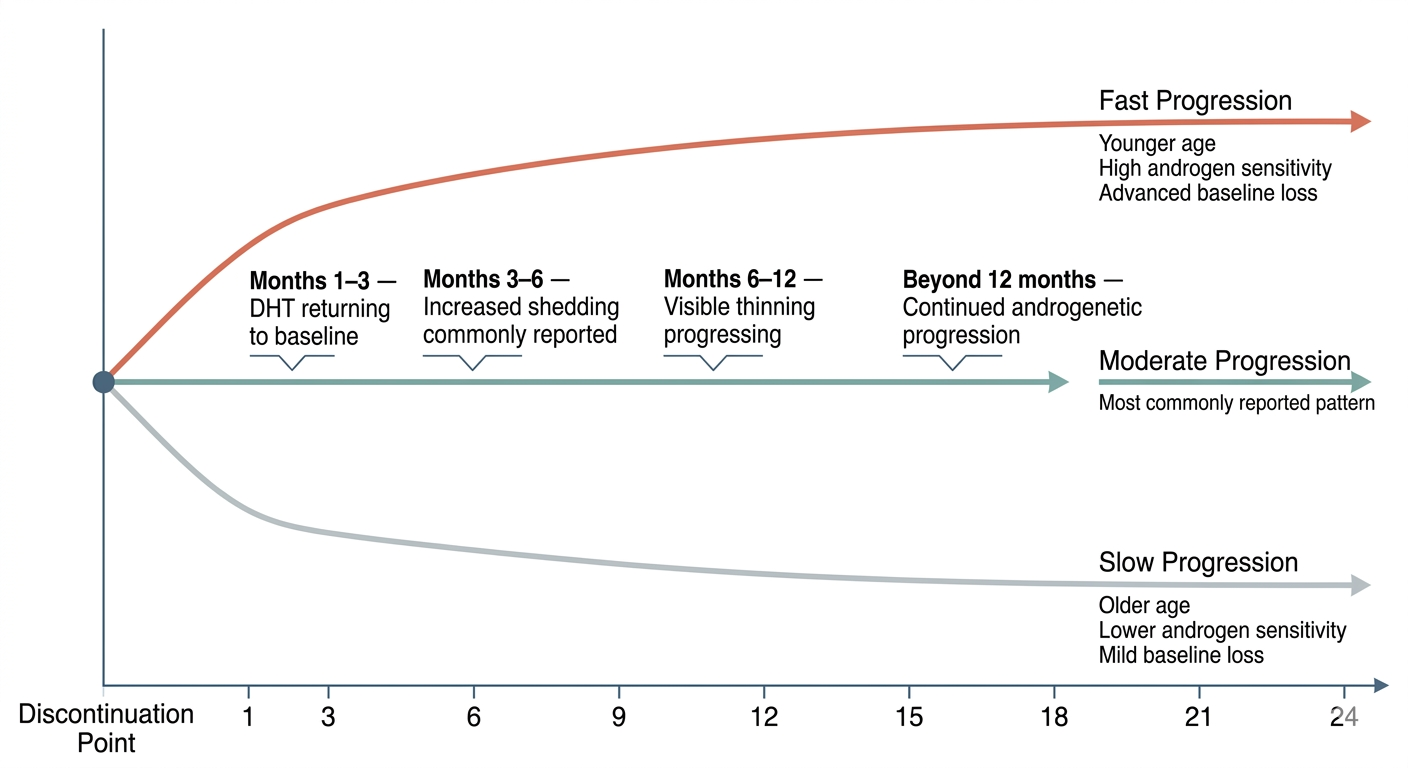
In some cases, hair may appear relatively stable initially before progressive loss becomes more noticeable later. The rate depends on factors such as:
- Age.
- Genetic predisposition.
- Duration of treatment.
- Baseline severity of hair loss.
- Sensitivity to androgens.
- Other scalp or medical conditions.
Some men lose hair rapidly after discontinuation. Others experience slower progression.
The important point is that stopping finasteride generally means the underlying androgenetic process is no longer being actively suppressed.
Will hair return to the exact pre treatment state?
Not necessarily exactly, but many men eventually lose the maintenance benefits they achieved during treatment.
Some clinicians describe this as “catching up” to the natural progression that would likely have occurred without treatment. This is a simplified explanation rather than a precise biological rule, but it reflects the idea that androgenetic alopecia usually continues once DHT suppression stops.
The pattern may not unfold in a perfectly predictable way. Hair density changes gradually, and ageing itself also affects hair characteristics over time.
Does stopping finasteride cause a shedding phase?
Some men report increased shedding after discontinuation.
This can feel alarming, especially if hair had remained stable for years during treatment. In many cases, this shedding likely reflects follicles re entering the miniaturisation process rather than a separate disease mechanism.
Hair naturally cycles through growth, transition, and resting phases. Hormonal changes affecting follicles can alter this balance.
Not every man experiences dramatic shedding, but increased hair fall after stopping finasteride is commonly reported in clinical practice.
Is discontinuation hair loss permanent?
In androgenetic alopecia, miniaturisation tends to progress over time unless treatment continues.
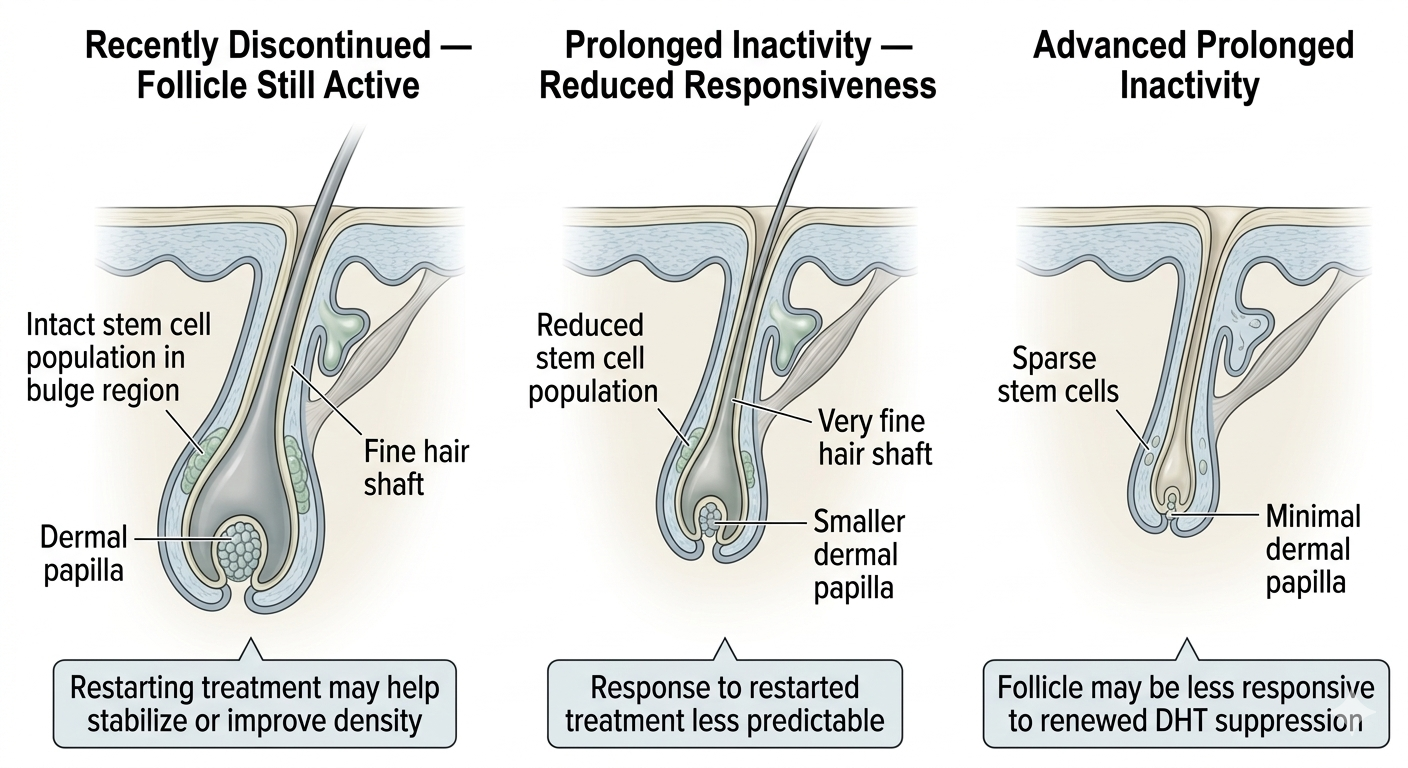
If hair follicles remain active but miniaturised, restarting treatment may help stabilise or improve density again in some men. However, follicles that have been inactive for prolonged periods may become less responsive.
This is why early treatment often produces better outcomes than attempting to reverse advanced longstanding hair loss.
No doctor can guarantee recovery after discontinuation related shedding.
Can stopping finasteride worsen hair loss beyond baseline?
There is limited evidence that finasteride permanently accelerates androgenetic alopecia beyond its natural course after discontinuation.
However, men often perceive post discontinuation hair loss as unusually severe because the contrast feels dramatic after years of stability. A man who maintained hair successfully for several years may suddenly notice progression that would otherwise have occurred more gradually over time.
Psychologically, this can feel like “rebound” hair loss even if the process reflects resumed androgen driven miniaturisation.
At present, there is no strong evidence that stopping finasteride causes a separate destructive hair disease in most users.
Why some men choose to stop treatment
Discontinuation decisions vary widely.
Some men stop because they are satisfied with their appearance and no longer prioritise treatment. Others stop because of cost, inconvenience, uncertainty, or changing life priorities.
Some discontinue because of side effects or concern about them.
Reported side effects may include reduced libido, erectile dysfunction, ejaculatory changes, breast tenderness, mood changes, or anxiety about long term hormonal effects. Not every reported symptom is necessarily caused by finasteride, but these concerns are clinically relevant and deserve proper discussion.
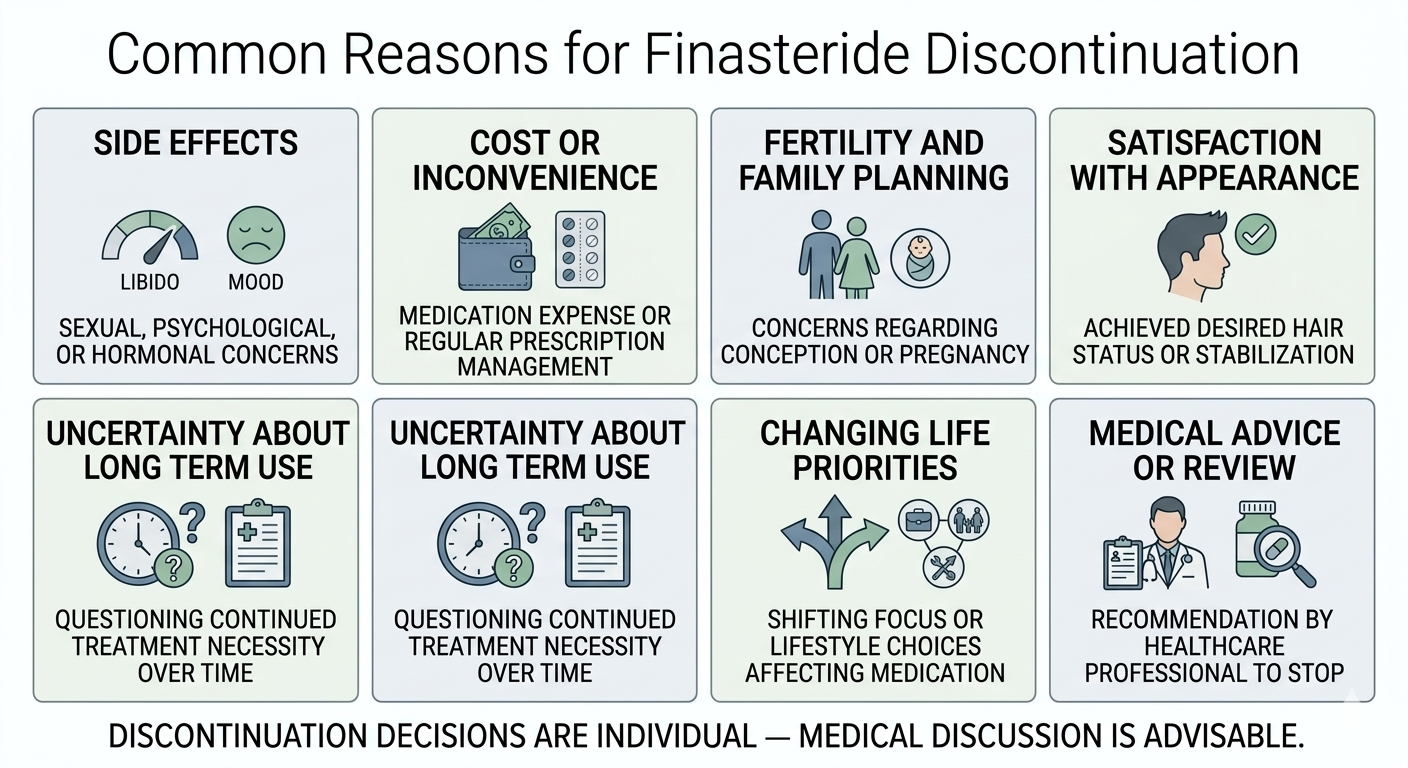
For men experiencing troubling symptoms, discontinuation may feel appropriate even if hair loss resumes later.
What about fertility and family planning?
Some men stop finasteride temporarily while trying to conceive.
Current evidence does not show universal infertility caused by finasteride, but some studies suggest possible effects on semen parameters in certain individuals. Because of this uncertainty, some fertility specialists recommend discontinuation during conception attempts, particularly if fertility problems already exist.
Again, decisions are individual rather than universal.
Can topical finasteride change discontinuation outcomes?
Topical finasteride aims to reduce scalp DHT exposure while potentially lowering systemic absorption compared with oral treatment.
However, topical finasteride still affects DHT biology and is not completely free from systemic exposure. If treatment is stopped, androgenetic hair loss can still continue.
Long term comparative evidence between oral and topical discontinuation outcomes remains limited.
Are there ways to transition off finasteride?
Some men consider gradual tapering, alternate day dosing, or switching to other therapies before discontinuation.
Evidence supporting specific tapering strategies is limited. Finasteride does not usually require tapering for safety reasons in the way some other medicines do.
However, clinicians sometimes individualise discontinuation plans depending on patient goals, side effects, and psychological concerns about abrupt stopping.
Alternative approaches may include topical minoxidil, low level laser therapy, camouflage fibres, hairstyle adjustments, or simply accepting natural progression.
The emotional side of stopping treatment
Hair loss can affect self image, confidence, ageing perception, and social comfort. For some men, discontinuing finasteride is emotionally easy. For others, fear of renewed hair loss causes considerable stress.
It is important to approach these decisions realistically.
Finasteride often helps maintain hair only while treatment continues. Stopping treatment does not mean failure. It simply means the biological process of androgenetic alopecia is no longer being actively managed by that medication.
For some men, that trade off is acceptable. For others, continued treatment feels worthwhile.
When to seek medical advice
A doctor should ideally be involved if:
- Hair shedding becomes sudden or severe.
- Hair loss appears patchy rather than patterned.
- Scalp symptoms such as pain, redness, scaling, or inflammation develop.
- Sexual, psychological, or hormonal symptoms occur during or after treatment.
- You are uncertain whether hair changes represent androgenetic alopecia or another condition.
A proper assessment matters because not all hair loss is caused by male pattern baldness.
In conclusion
Finasteride does not permanently stop androgenetic alopecia. It suppresses part of the hormonal pathway involved in hair follicle miniaturisation while treatment continues.
After discontinuation, DHT levels return toward baseline, and hair loss usually resumes gradually over time. Many men lose some or most of the maintenance benefits achieved during treatment, although the timeline and severity vary between individuals.
Stopping finasteride is a personal decision that should balance cosmetic goals, side effect concerns, fertility considerations, psychological wellbeing, and long term expectations.
For men considering discontinuation, realistic expectations are important. Finasteride is best understood as an ongoing management treatment rather than a permanent cure for hair loss.
Author: Dr. Priya Goswami
Medical review: Dr. Denis Broun
Next step
If you notice coverage changes without increased shedding, confirm what process is occurring.
Take the Hair Assessment to have a physician review your pattern, identify whether miniaturization is present, and determine appropriate staging and next steps.
Add Comment