Hair loss in men is often associated with gradual thinning that develops over many years. In some situations, however, hair shedding may increase suddenly and become noticeable over a short period of time. This type of change can be unexpected and may cause understandable concern.
Sudden hair shedding usually reflects a disturbance in the hair growth cycle rather than permanent damage to the hair follicle. Hair follicles continuously move through phases of growth, transition, and rest. When a larger number of follicles enter the resting phase at the same time, shedding may become more apparent.
Several biological and environmental factors can influence this process.
The normal rhythm of hair growth
Each hair follicle on the scalp follows a repeating cycle.
During the growth phase, known as the anagen phase, the follicle actively produces a hair shaft. This phase can last several years and is responsible for the length and thickness of the hair.
After the growth phase, the follicle enters a brief transitional stage known as the catagen phase, lasting approximately two to three weeks, during which the follicle shrinks and detaches from its blood supply. It then enters the resting phase, called the telogen phase, which typically lasts around three months. At the end of this stage, the hair is released and a new growth cycle begins.
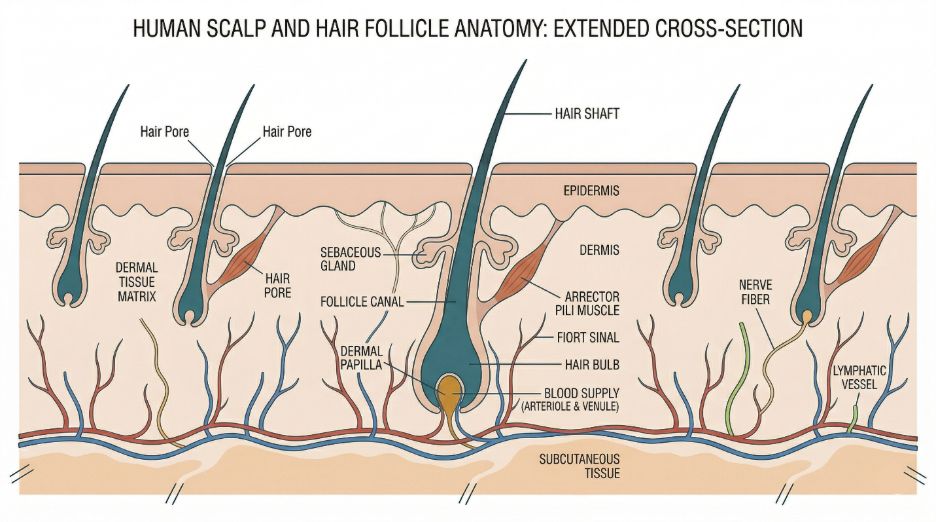
Because follicles cycle independently, the scalp normally sheds hair gradually throughout the day.
When shedding becomes noticeable
Sudden shedding often occurs when many follicles shift into the resting phase of the hair cycle at roughly the same time.
When this happens, a larger number of hairs are released several months later as the resting phase ends. This process can lead to noticeable shedding during washing, brushing, or styling.
Although the amount of shedding may appear significant, the follicles themselves usually remain alive beneath the skin.
Telogen effluvium
One of the most common explanations for sudden hair shedding is a condition known as telogen effluvium.
In telogen effluvium, a disruption of the hair growth cycle causes an unusually large number of follicles to enter the resting phase simultaneously. Because the resting phase typically lasts several months, shedding often becomes noticeable two to three months after the triggering event.
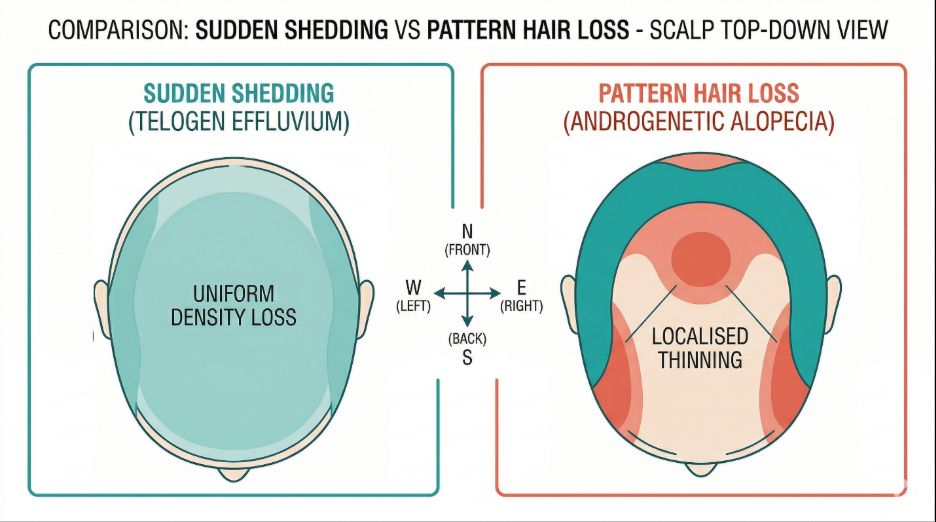
The shedding is usually diffuse, meaning it occurs across the entire scalp rather than in specific patches or patterns.
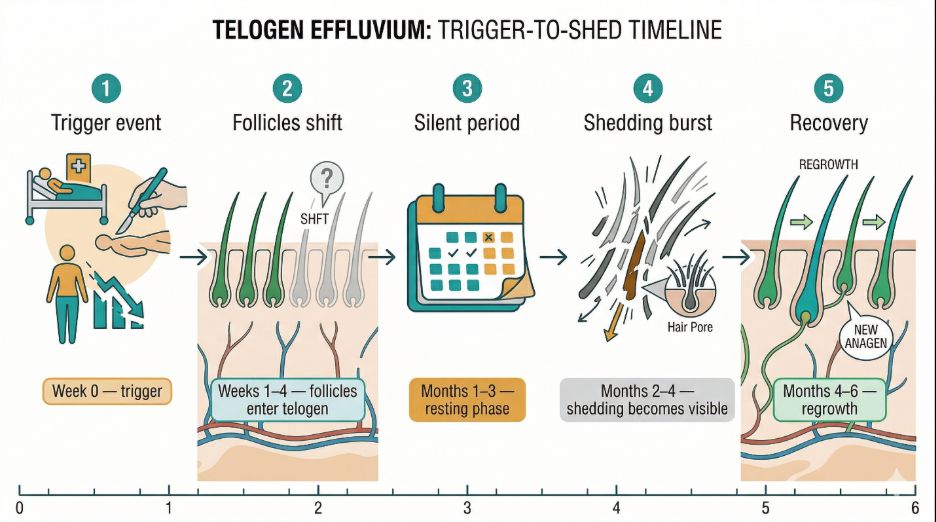
As the hair cycle returns to its usual rhythm, follicles typically resume producing new hair.
Physical stress on the body
Several forms of physical stress can influence the behaviour of hair follicles.
Severe illness, high fever, major surgery, or significant injury can temporarily disrupt the normal rhythm of the hair cycle. When the body directs its resources toward recovery from these events, hair follicles may shift into the resting phase.
The resulting shedding often appears several months after the original event.
Because the follicles remain intact, hair growth usually resumes once the body has recovered.
Emotional stress
Psychological stress can also influence the behaviour of hair follicles.
While the exact biological mechanisms continue to be studied, it is recognised that significant emotional stress may affect the hair growth cycle in some individuals.
In such cases, hair shedding may develop gradually after periods of intense stress or major life changes.
As with other forms of telogen effluvium, the follicles usually remain capable of producing new hair once the growth cycle stabilises.
Illness and infection
Certain illnesses may influence hair growth by affecting the physiological balance of the body.
High fever, systemic infections, and other medical conditions can alter the hair cycle and lead to temporary shedding. The hair loss usually becomes noticeable several months after the illness has occurred.
This delay reflects the time required for hairs in the resting phase to be released from the follicle.
Once the body returns to normal health, hair follicles typically resume their usual cycle.
Nutritional factors
Hair follicles require a steady supply of nutrients to maintain normal growth.
Rapid weight loss, significant dietary changes, or deficiencies in certain nutrients may influence how follicles behave. When the body experiences nutritional stress, the hair growth cycle may temporarily shift toward the resting phase.
This shift can lead to increased shedding.
When nutritional balance is restored, the hair cycle often gradually returns to normal.
Medication-related shedding
Some medications can influence the timing of the hair growth cycle.
In certain cases, medications may cause follicles to enter the resting phase prematurely, leading to shedding several months after the medication was introduced. Drug categories known to trigger this include anticoagulants such as heparin and warfarin, certain antihypertensives including beta-blockers, retinoids, hormonal treatments, and a range of oncology drugs. Chemotherapy agents in particular can also disrupt the anagen phase directly, causing more rapid and pronounced shedding.
Not everyone taking a medication will experience this effect, but the possibility is recognised with a number of treatments. The timing of the shedding relative to the start of a medication can provide useful clues about its cause.
Chemical and toxic exposure
Exposure to certain toxic substances can also trigger sudden hair shedding. Heavy metals such as thallium, arsenic, and mercury are recognised causes, and exposure may occur through occupational contact, contaminated water, or ingestion. Industrial solvents and harsh chemical hair treatments can similarly impair follicle function.
Where chemical or toxic exposure is suspected, identifying and removing the causative agent is an important step in allowing the hair cycle to normalise. Recovery may still take several months given the delayed nature of telogen shedding.
Distinguishing sudden shedding from pattern hair loss
Sudden hair shedding differs from androgenetic alopecia, the most common form of male pattern hair loss.
In androgenetic alopecia, thinning develops gradually as certain follicles become smaller and produce thinner hair over time. The process typically affects the temples and crown and progresses slowly over many years.
Sudden shedding, by contrast, usually occurs across the entire scalp and may appear relatively quickly after a disruption of the hair cycle.
Recognising this difference helps clarify why the pattern and timing of hair loss are important when evaluating changes in hair growth.
Understanding episodes of shedding
Sudden hair shedding often reflects a temporary shift in the hair growth cycle rather than permanent damage to hair follicles.
When the underlying trigger resolves, the follicles usually remain capable of producing new hair during the next growth phase.
Because the hair cycle unfolds over several months, recovery may take time. New hairs gradually emerge as the follicles return to their normal rhythm.
Understanding the biology of the hair cycle helps explain why episodes of sudden shedding can occur and why they often improve once the balance of the hair growth cycle is restored.
Author: Dr. Priya Goswami
Medical review: Dr. Denis Broun
Next step
If you notice coverage changes without increased shedding, confirm what process is occurring.
Take the Hair Assessment to have a physician review your pattern, identify whether miniaturization is present, and determine appropriate staging and next steps.
Add Comment