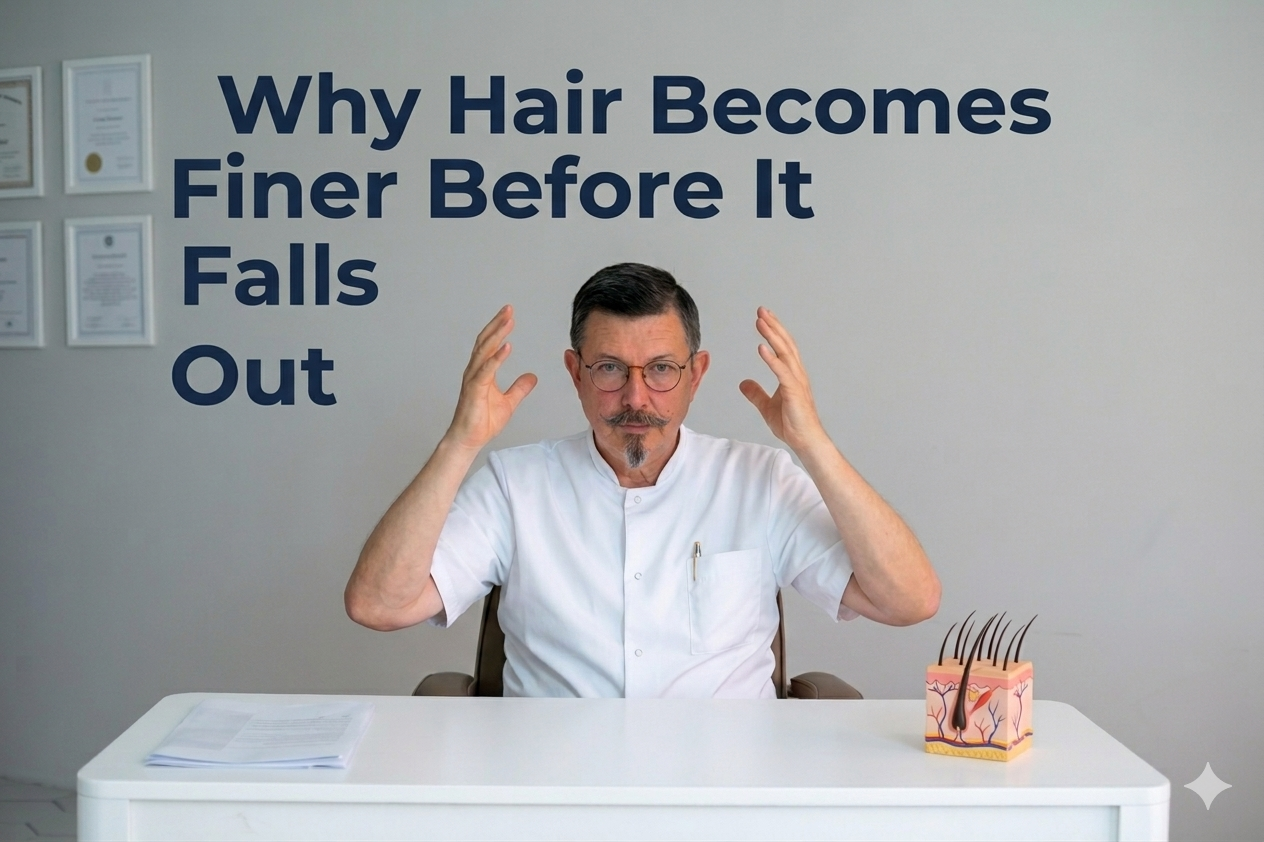
One of the most common early signs of progressive hair thinning is a gradual change in hair thickness.
Many people notice that their hair:
- feels softer
- appears thinner
- loses density
- becomes harder to style
- shows more scalp under light
Often, these changes begin long before obvious baldness develops.
In many forms of progressive hair loss, especially androgenetic alopecia, follicles do not suddenly stop producing hair. Instead, they gradually produce finer and weaker fibres over multiple growth cycles.
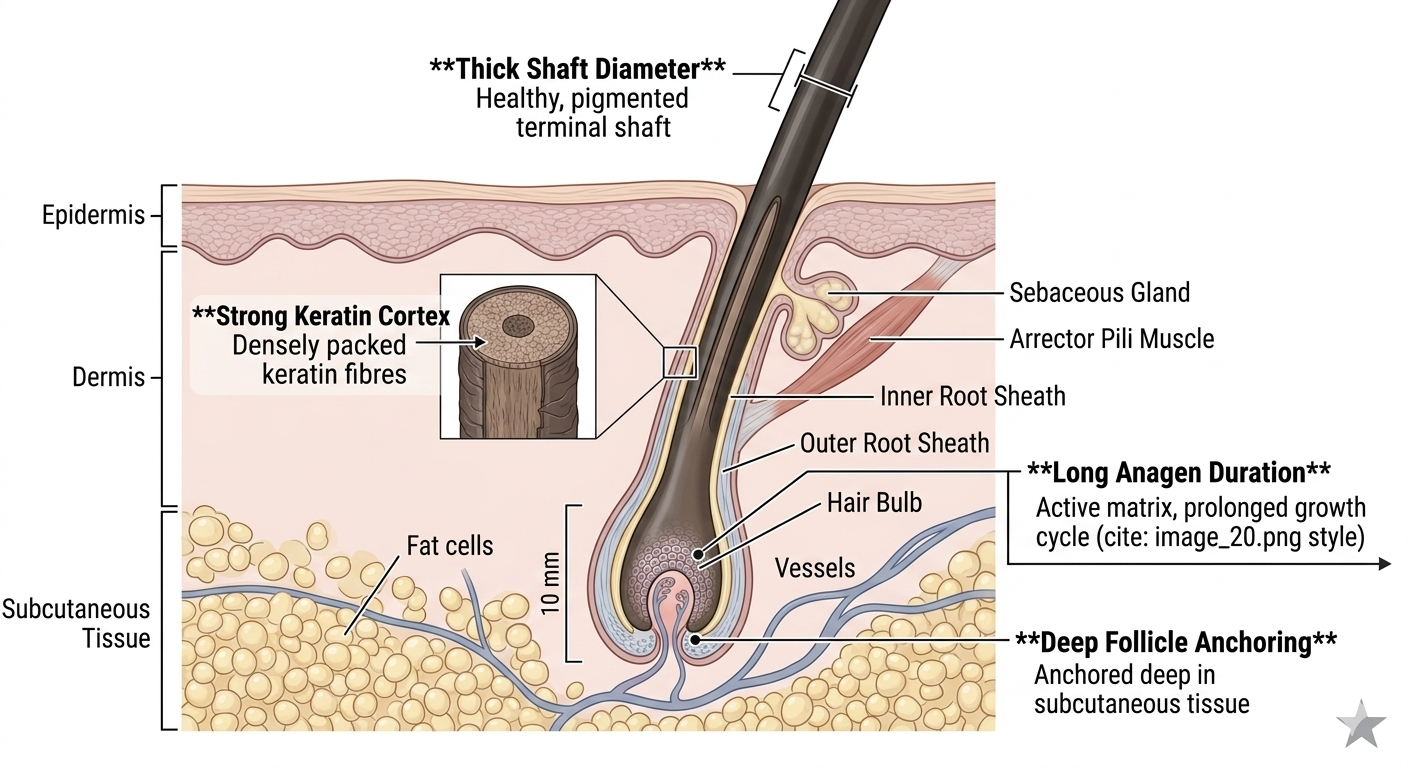
Hair follicles normally produce terminal hairs
Healthy scalp follicles typically generate terminal hairs.
Terminal hairs are:
- thick
- pigmented
- long
- structurally strong
These fibres provide:
- scalp coverage
- volume
- texture
- protection from ultraviolet exposure
The appearance of full hair density depends heavily on the production of these robust terminal hairs.
Follicles can gradually shrink over time
In progressive thinning conditions, susceptible follicles undergo a process known as miniaturisation.
During miniaturisation:
- the follicle becomes smaller
- the hair bulb reduces in size
- growth phases shorten
- shaft diameter decreases
This transformation usually occurs gradually over many hair cycles.
Fine hairs represent partial follicle activity
A miniaturised follicle may still remain biologically active.
Instead of producing thick terminal hairs, it begins producing fibres that are:
- thinner
- shorter
- softer
- less pigmented
These finer hairs provide significantly less scalp coverage.
Hair often becomes finer before visible loss occurs
Because follicles continue producing hair during early miniaturisation:
- visible bald areas may not appear immediately
- overall density declines slowly
- texture changes develop gradually
Many people first notice:
- reduced ponytail thickness
- flatter hairstyles
- increased scalp visibility under bright light
before obvious shedding becomes severe.
Shaft diameter decreases progressively
Miniaturisation is usually progressive rather than sudden.
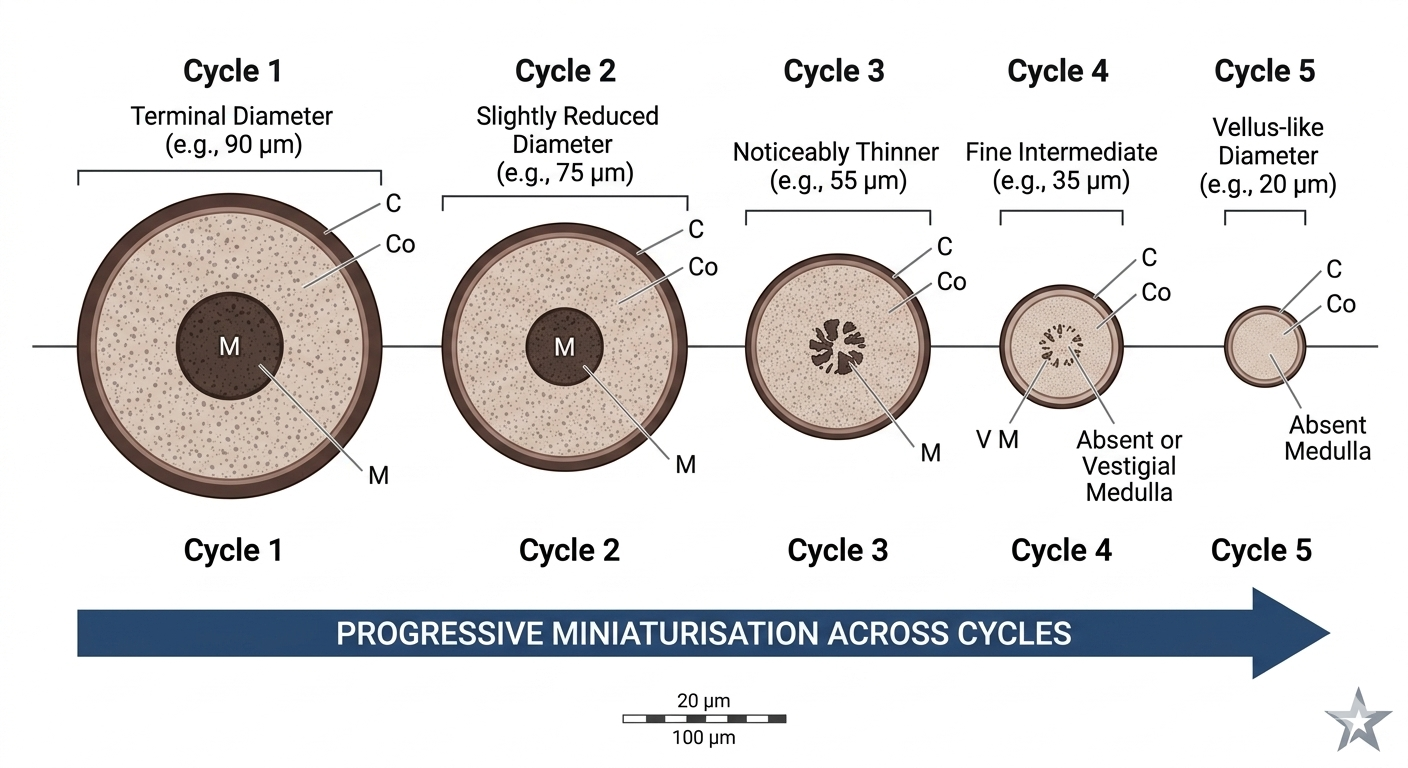
Each growth cycle may produce hair that is:
- slightly thinner
- slightly weaker
- slightly shorter
Over years, these cumulative changes reduce visible fullness substantially.
Growth phases become shorter
Healthy scalp follicles often remain in the growth phase for several years.
Miniaturised follicles:
- exit the growth phase earlier
- spend more time resting
- produce shorter hairs overall
Shorter growth cycles contribute to the appearance of reduced density and finer texture.
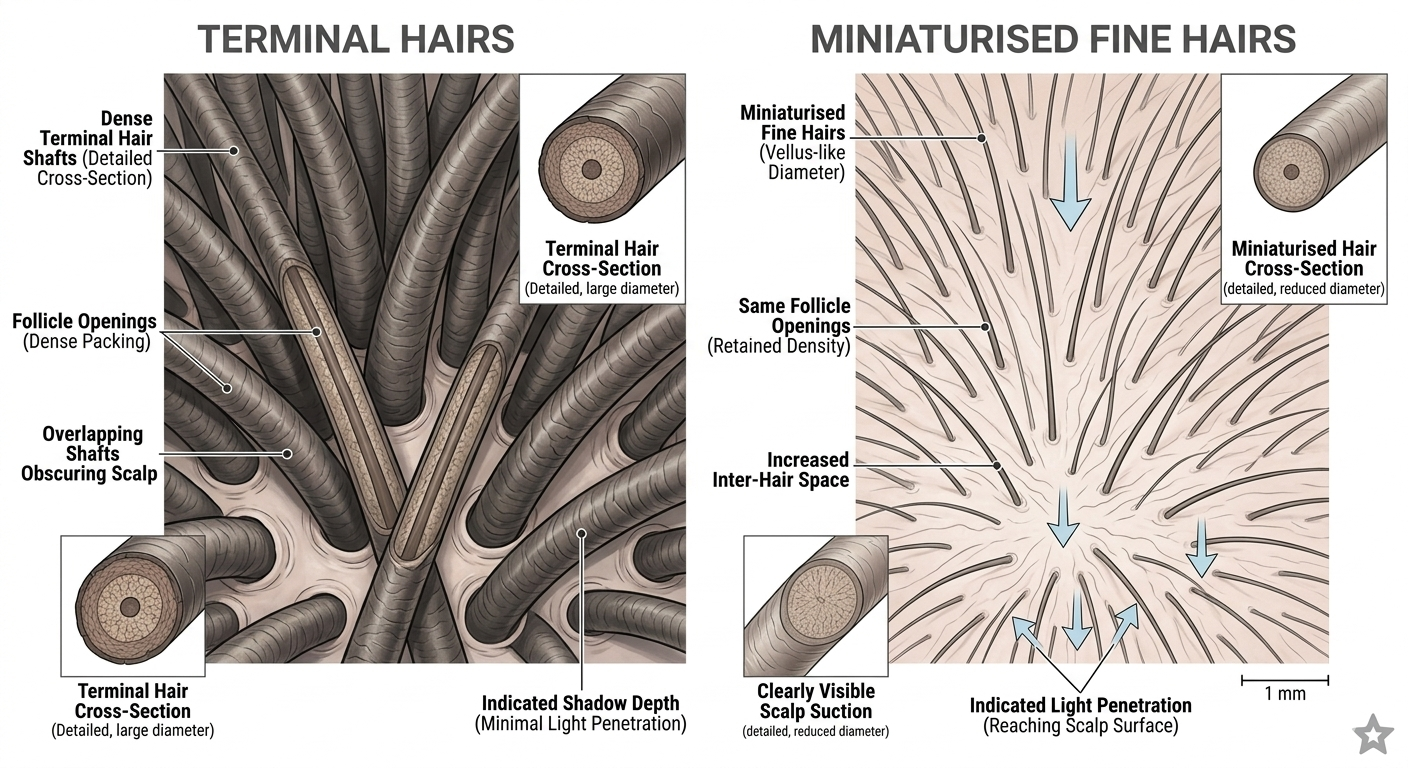
Fine hairs provide weaker coverage
Thick hairs naturally overlap and create shadow depth across the scalp.
Fine hairs:
- occupy less space
- separate more easily
- reflect light differently
- expose more scalp between strands
Even when many hairs remain present, reduced shaft thickness can make the scalp appear noticeably thinner.
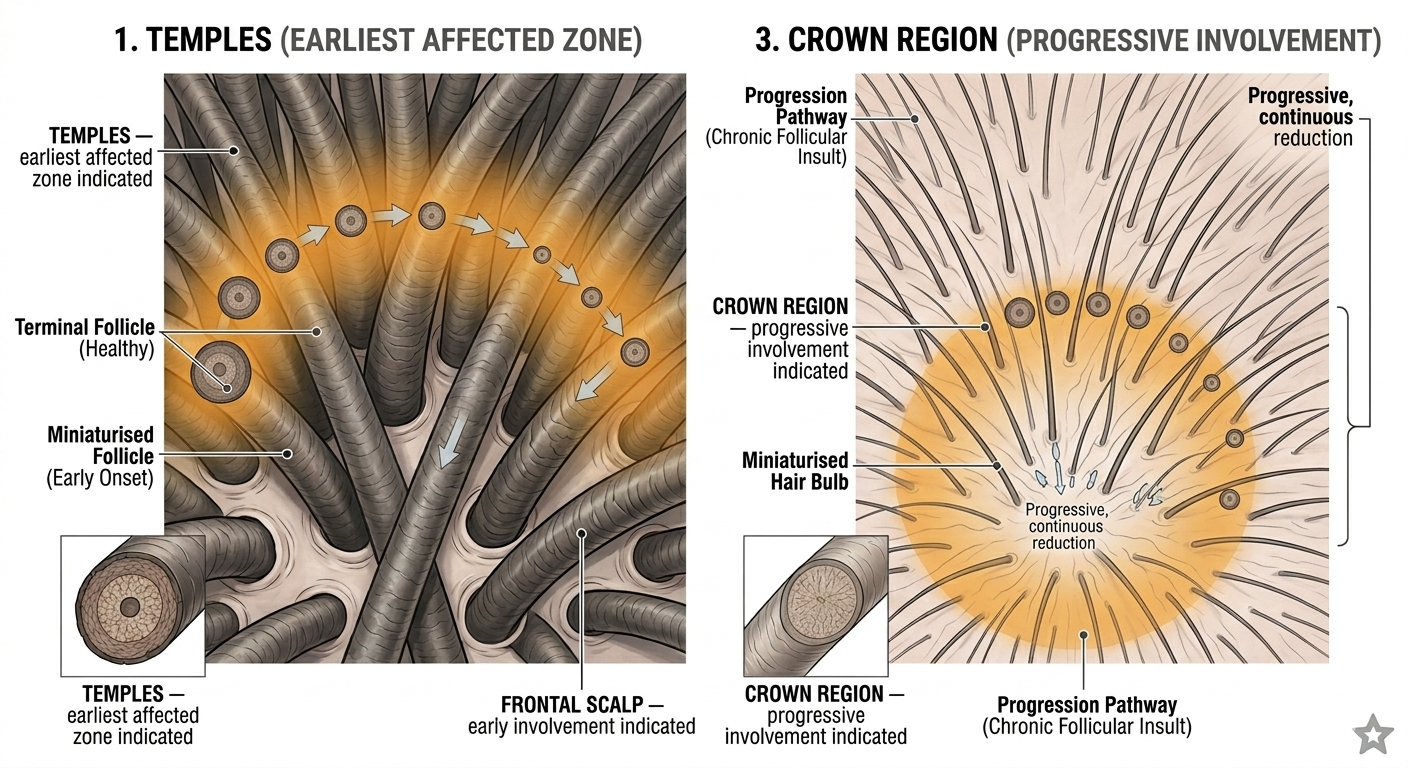
The process commonly begins in specific regions
Miniaturisation often starts gradually in areas genetically sensitive to androgen-related signals, including:
- the temples
- frontal scalp
- crown region
These areas may show finer hairs before major recession or visible baldness occurs.
Hormonal sensitivity plays a central role
In androgenetic alopecia, genetically susceptible follicles respond differently to hormonal signalling.
Over time, these signals influence:
- follicle size
- growth duration
- shaft production
- cycling behaviour
This slowly alters the quality of the hair produced.
Fine hairs may become increasingly fragile
Miniaturised hairs are often:
- weaker structurally
- more prone to breakage
- less resistant to heat and friction
- more difficult to style
This can amplify the appearance of thinning further.
Not all fine hair indicates permanent loss
Temporary conditions such as:
- telogen effluvium
- nutritional stress
- illness
- hormonal fluctuations
may also produce temporarily finer regrowth hairs.
However, progressive miniaturisation typically develops slowly over repeated cycles and persists over time.
Scalp visibility increases as fibres become finer
As shaft thickness decreases:
- more light reaches the scalp
- scalp reflection increases
- volume declines
- part lines widen
This explains why thinning may become visible even before large numbers of hairs disappear completely.
Follicles weaken before they stop functioning
Hair often becomes finer before it falls out because progressive follicular miniaturisation gradually weakens the hair-producing capacity of the follicle.
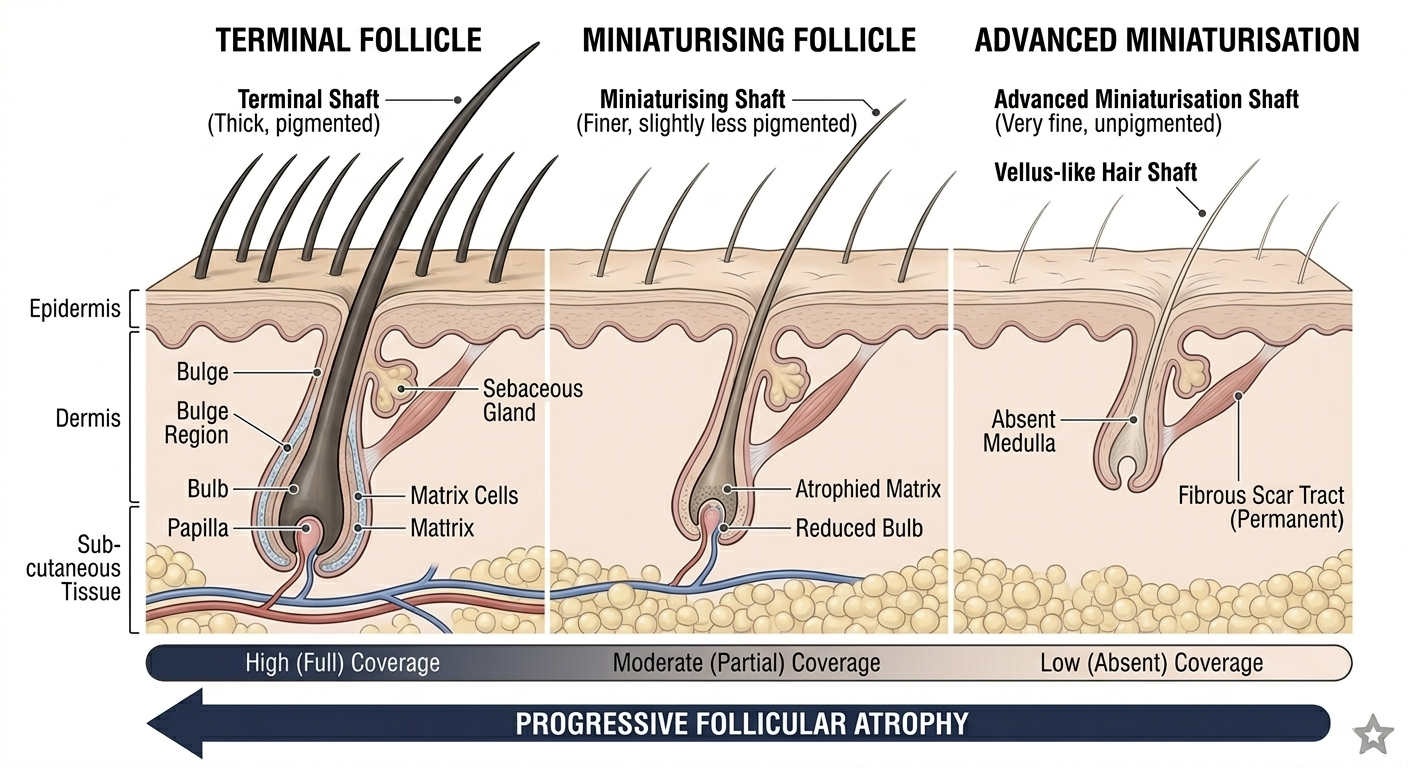
Instead of suddenly ceasing activity, affected follicles continue generating increasingly thin and fragile fibres over multiple growth cycles. These finer hairs provide less coverage, less volume, and less structural support, leading to the gradual cosmetic changes associated with early hair thinning.
For many individuals, reduced shaft thickness is the earliest visible stage of progressive follicular decline.
Author: Dr. Priya Goswami
Medical review: Dr. Denis Broun
Next step
If you notice coverage changes without increased shedding, confirm what process is occurring.
Take the Hair Assessment to have a physician review your pattern, identify whether miniaturization is present, and determine appropriate staging and next steps.
Add Comment