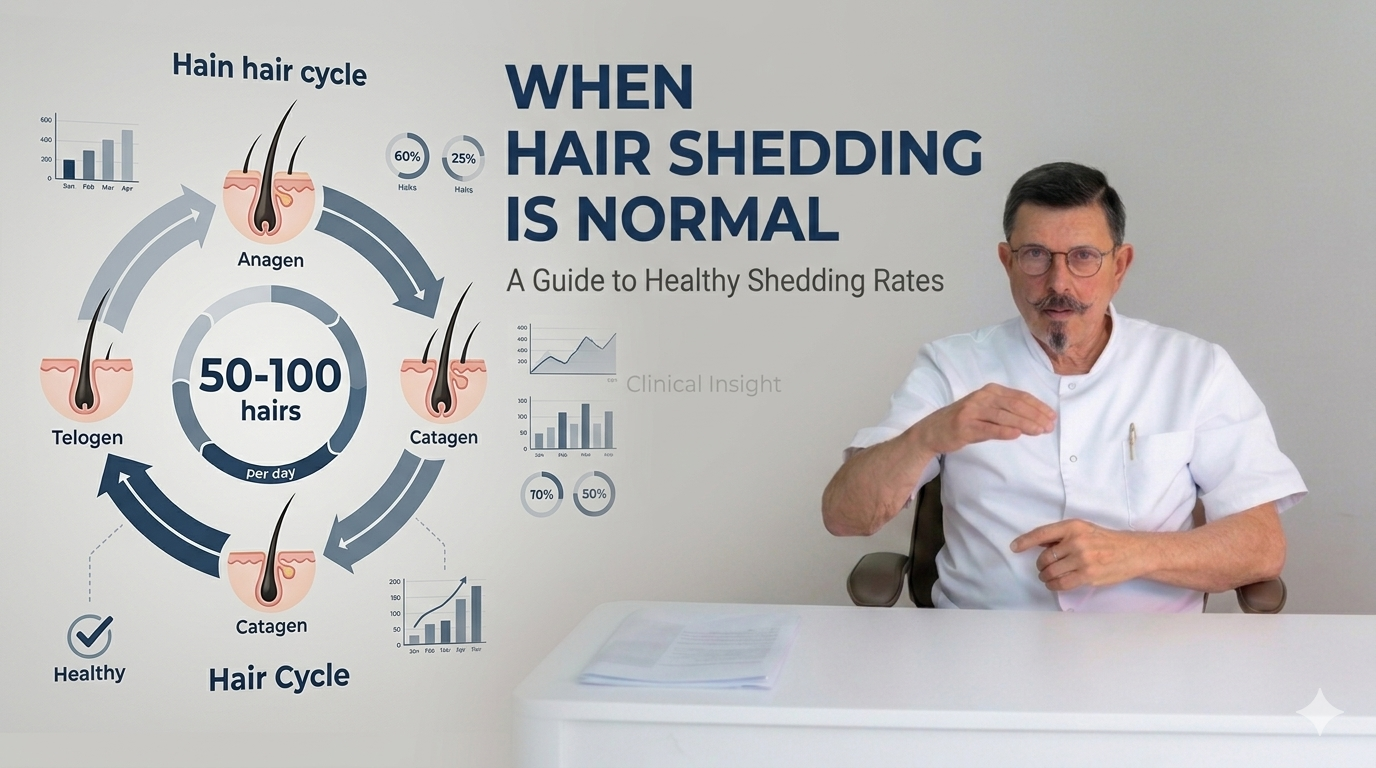
Many people notice changes in hair texture before they notice obvious hair loss.
Hair may begin to feel:
- softer
- finer
- flatter
- more fragile
- less dense
- harder to style
These texture changes are often an early sign that the biology of the hair follicle is beginning to shift.
In common forms of progressive hair thinning, the follicle gradually changes the type of hair it produces. The process develops slowly over repeated growth cycles, altering the structure, thickness, and behaviour of the hair shaft long before large bald areas appear.
Hair texture depends on follicle activity
Hair texture is determined by several biological factors, including:
- follicle size
- shaft diameter
- curl pattern
- cuticle structure
- oil production
- growth cycle duration
When follicle behaviour changes, hair texture changes as well.
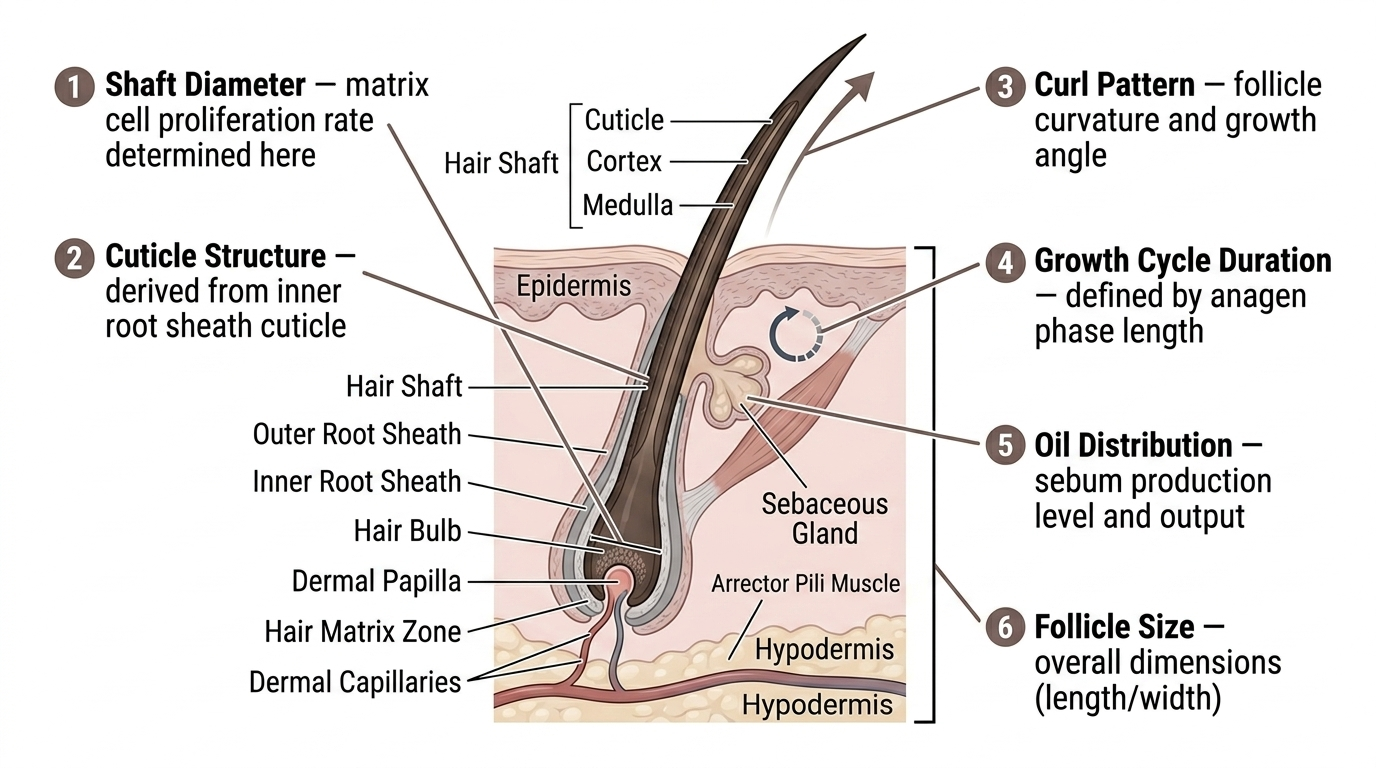
Even subtle alterations inside the follicle can produce visible differences in how hair feels and behaves.
Thinning hair often becomes finer first
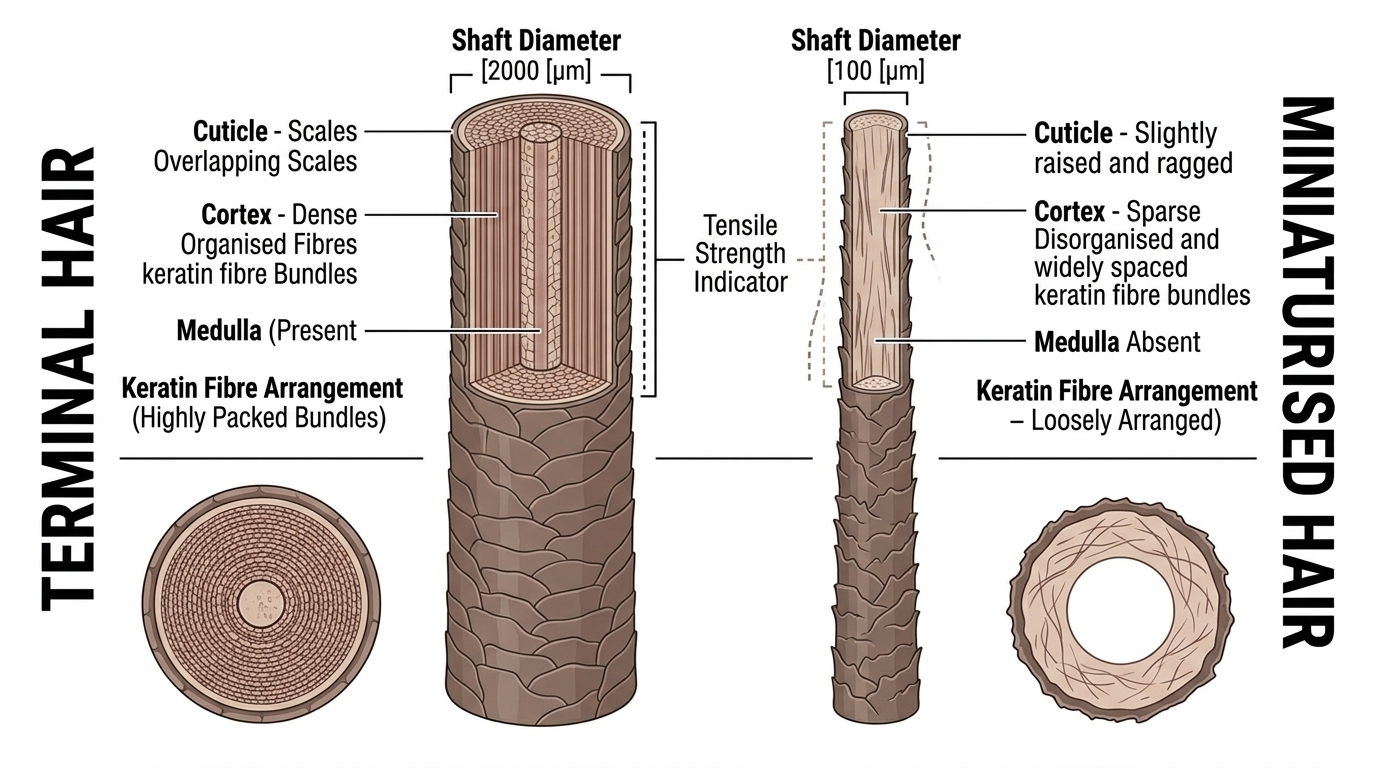
One of the earliest changes during androgenetic alopecia is a gradual reduction in shaft diameter.
Affected follicles begin producing:
- thinner hairs
- shorter hairs
- less pigmented hairs
- weaker fibres
This process is called miniaturisation.
The hair may still grow, but it no longer has the same thickness or strength as before.
Finer hair changes overall texture
As more follicles produce thinner hairs:
- volume decreases
- scalp coverage reduces
- hair collapses more easily
- styling becomes more difficult
Hair may begin to feel:
- wispy
- limp
- silky
- uneven in thickness
even when overall hair counts remain relatively normal.
Curl patterns may change
Hair thinning can also alter curl structure.
Some individuals notice:
- curls becoming looser
- waves flattening
- previously straight hair becoming irregular
- uneven texture across different scalp areas
These changes occur because the follicle shape and growth behaviour influence how the shaft forms as it emerges from the scalp.
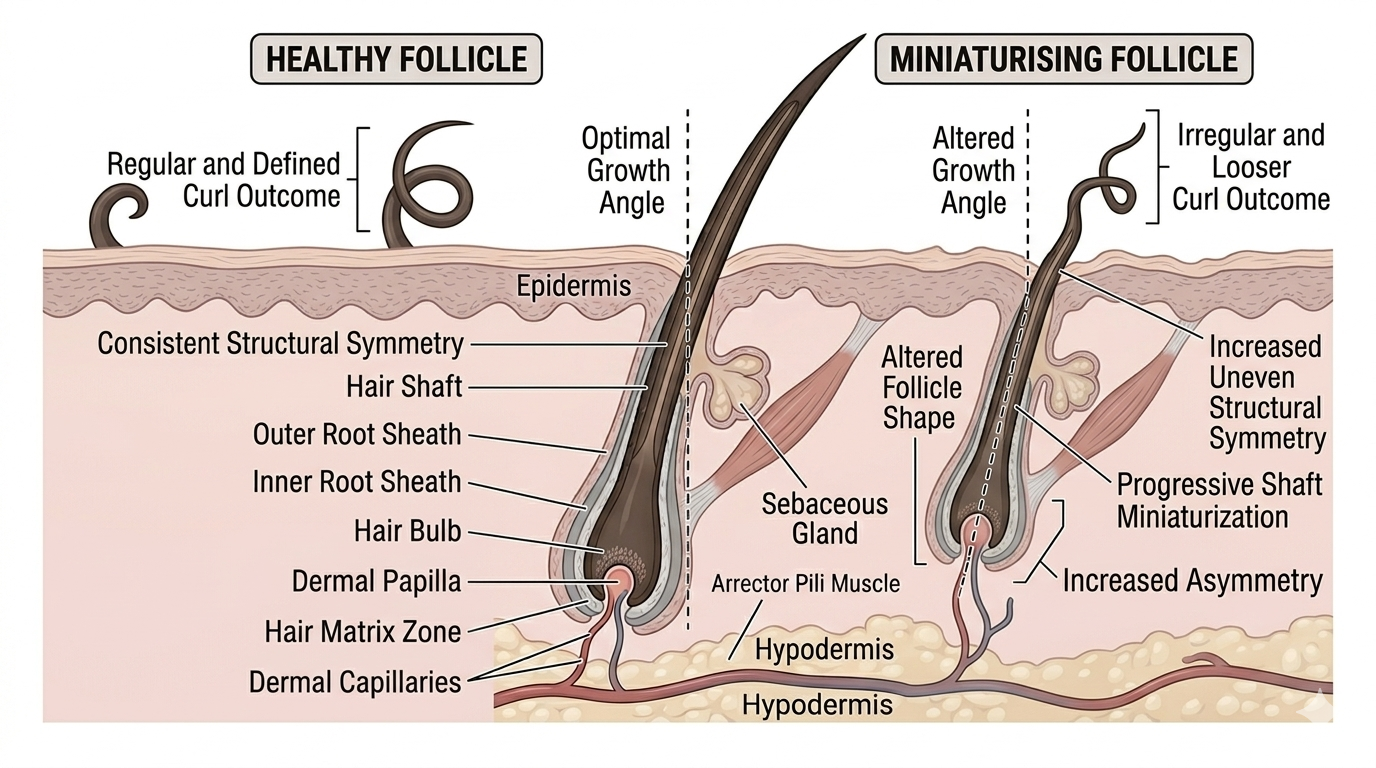
Miniaturised follicles may produce hairs with altered structural symmetry.
Hair becomes more fragile
Thinner hairs are mechanically weaker.
As shaft diameter decreases:
- tensile strength falls
- breakage risk increases
- environmental damage becomes more noticeable
Hair may therefore seem:
- dry
- brittle
- frizzy
- difficult to manage
even if the underlying problem originates within the follicle itself.
Shorter growth phases affect texture
Healthy scalp follicles remain in active growth for several years.
During progressive thinning:
- growth phases shorten
- hairs stop elongating sooner
- final strand length decreases
Shorter hairs often contribute to:
- reduced fullness
- uneven layering
- increased flyaway appearance
which further alters texture perception.
Oil distribution changes
Hair texture is also influenced by scalp oil distribution.
When hair density decreases:
- sebum spreads differently across the scalp
- finer hairs become coated more easily
- hair may appear greasy faster
Some people notice alternating dryness and oiliness as thinning progresses.
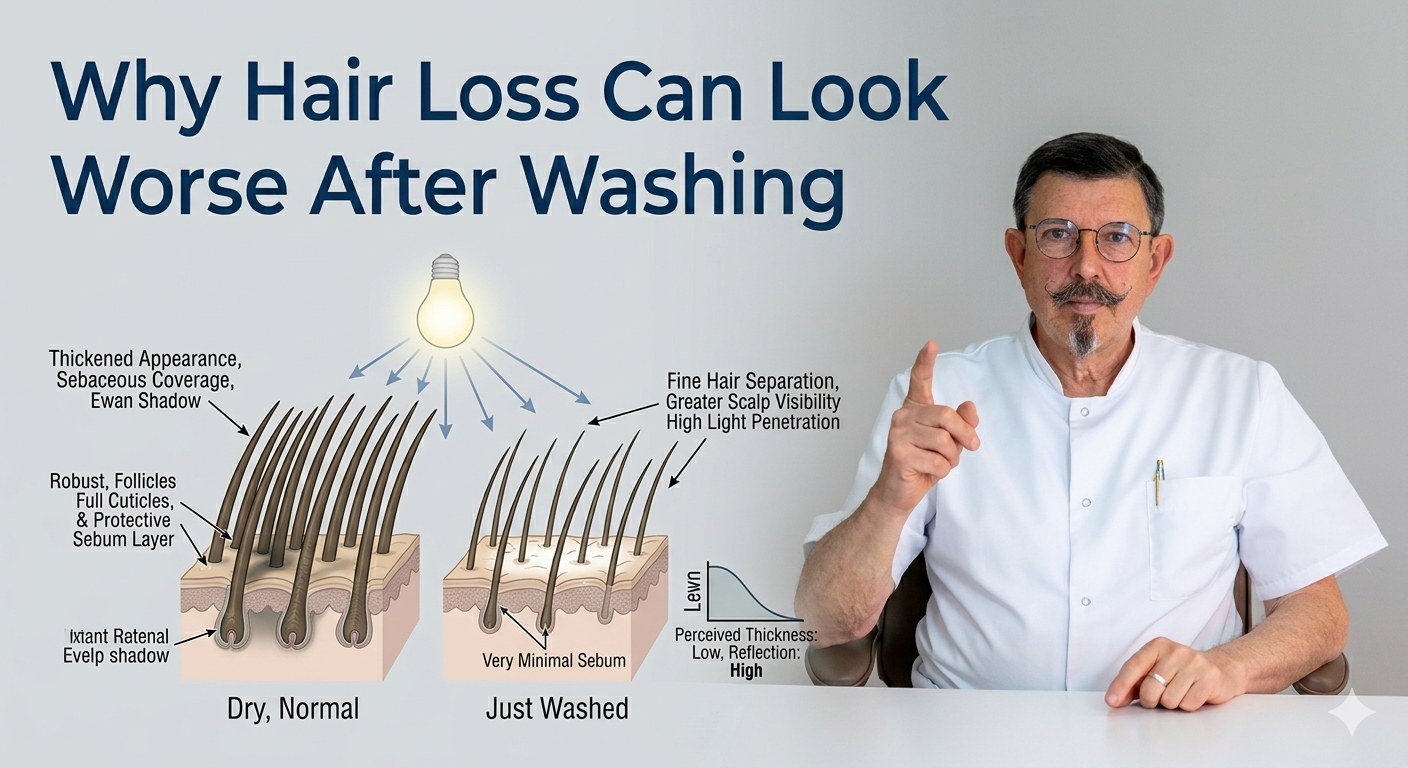
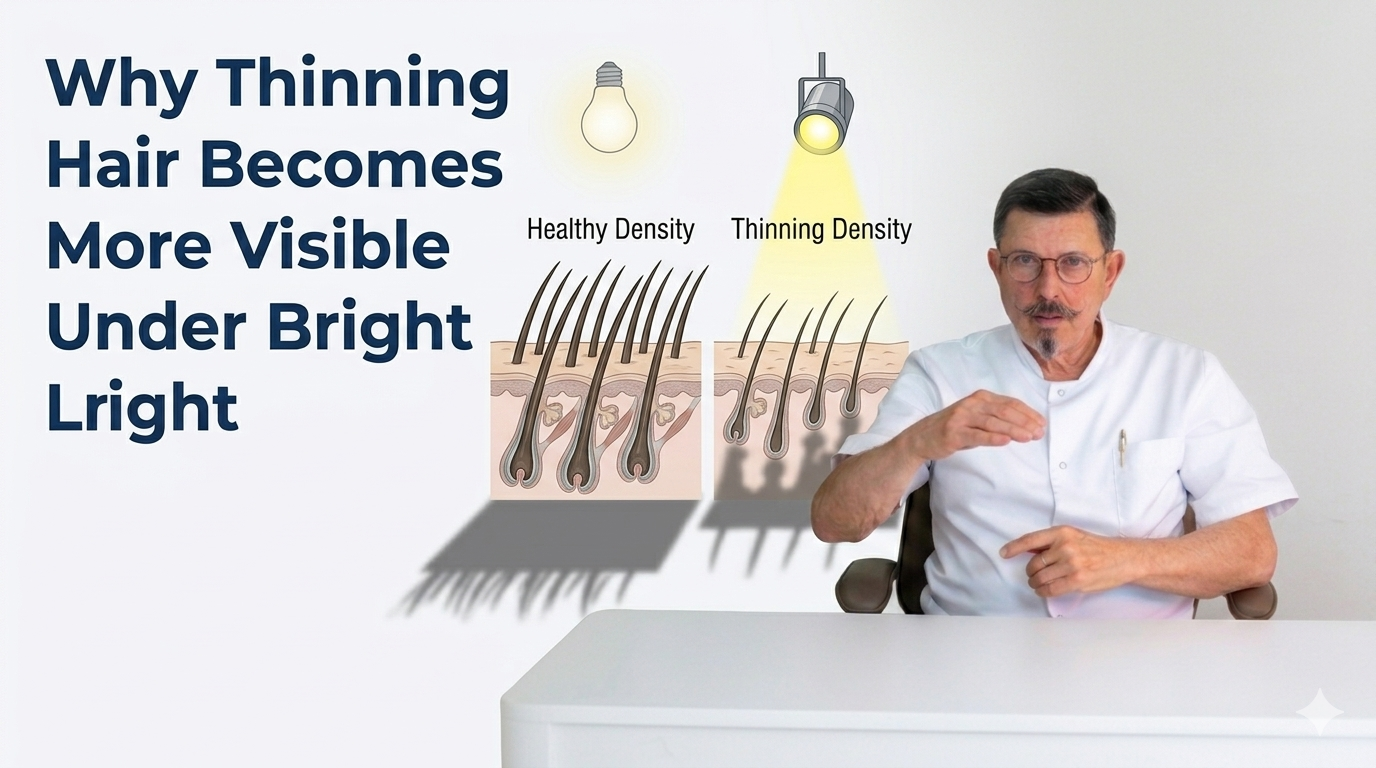
The scalp becomes more visible
As texture changes and density falls:
- hair reflects light differently
- separation between strands becomes more visible
- scalp contrast increases
This can make hair appear thinner even before major shedding occurs.
Bright lighting often reveals these changes earlier than normal indoor conditions.
Different scalp areas may feel different
Hair thinning usually progresses unevenly.
Some regions may retain thick terminal hairs while others contain miniaturised hairs.
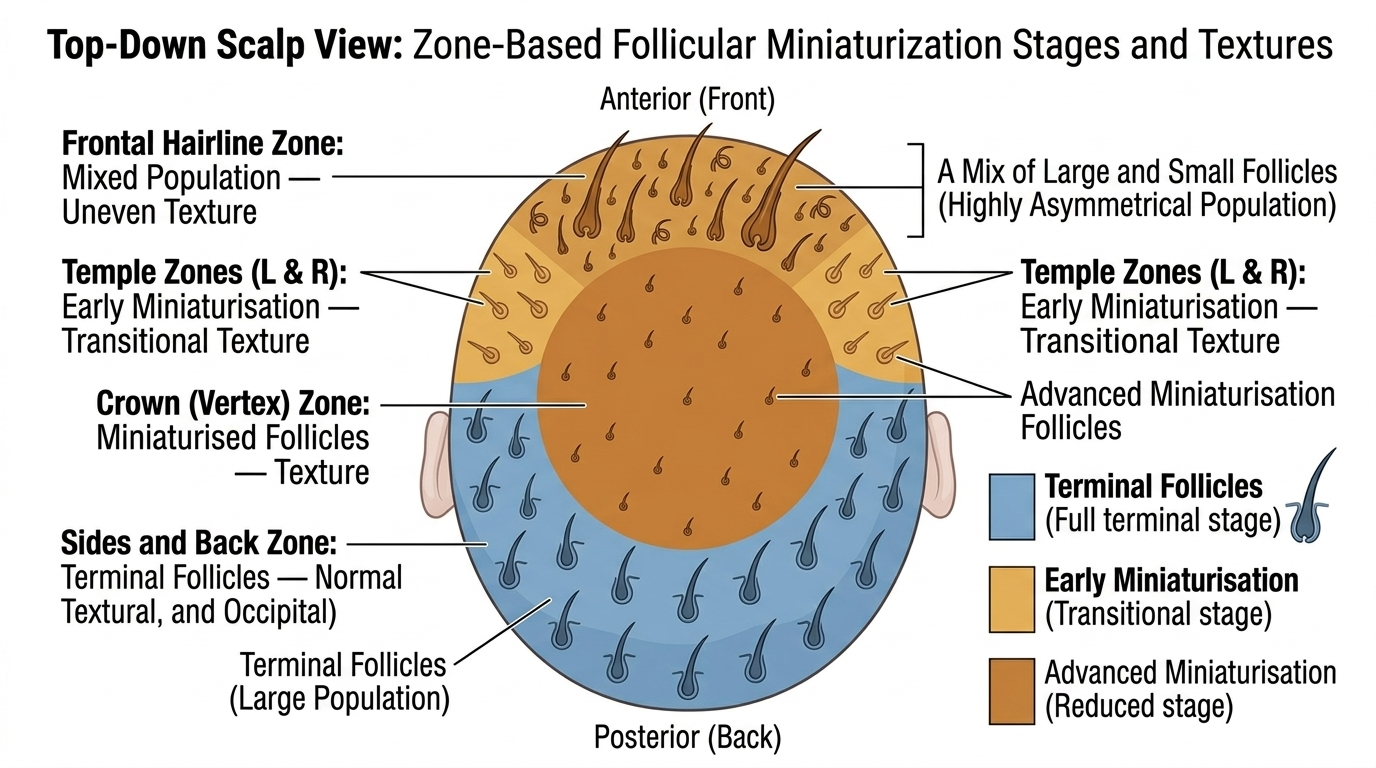
This creates variation in texture across the scalp, especially:
- at the crown
- along the frontal hairline
- near the temples
People often describe this as hair becoming “inconsistent” or “patchy in texture.”
Ageing contributes to texture changes
Natural ageing also affects the structure of the hair shaft.
With age:
- hair fibre production slows
- pigment decreases
- lipid content changes
- cuticle integrity weakens
These age-related changes can combine with follicle miniaturisation to produce more noticeable texture differences.
Stress and illness may temporarily affect texture
Temporary shedding conditions such as telogen effluvium may also alter hair texture.
After major stress, illness, or hormonal shifts:
- regrowing hairs may initially emerge finer
- texture may feel uneven during recovery
- density may fluctuate temporarily
In many cases, texture improves once normal cycling resumes.
Hair texture changes are often an early sign
Texture changes frequently appear before visible baldness develops.
Because miniaturisation progresses gradually, many people first notice:
- reduced styling control
- flattening at the roots
- softer strands
- less fullness
months or years before substantial thinning becomes obvious.
Recognising these early signs may help identify progressive hair loss sooner.
Texture reflects follicle health
Hair texture changes during thinning because the follicle itself is gradually changing.
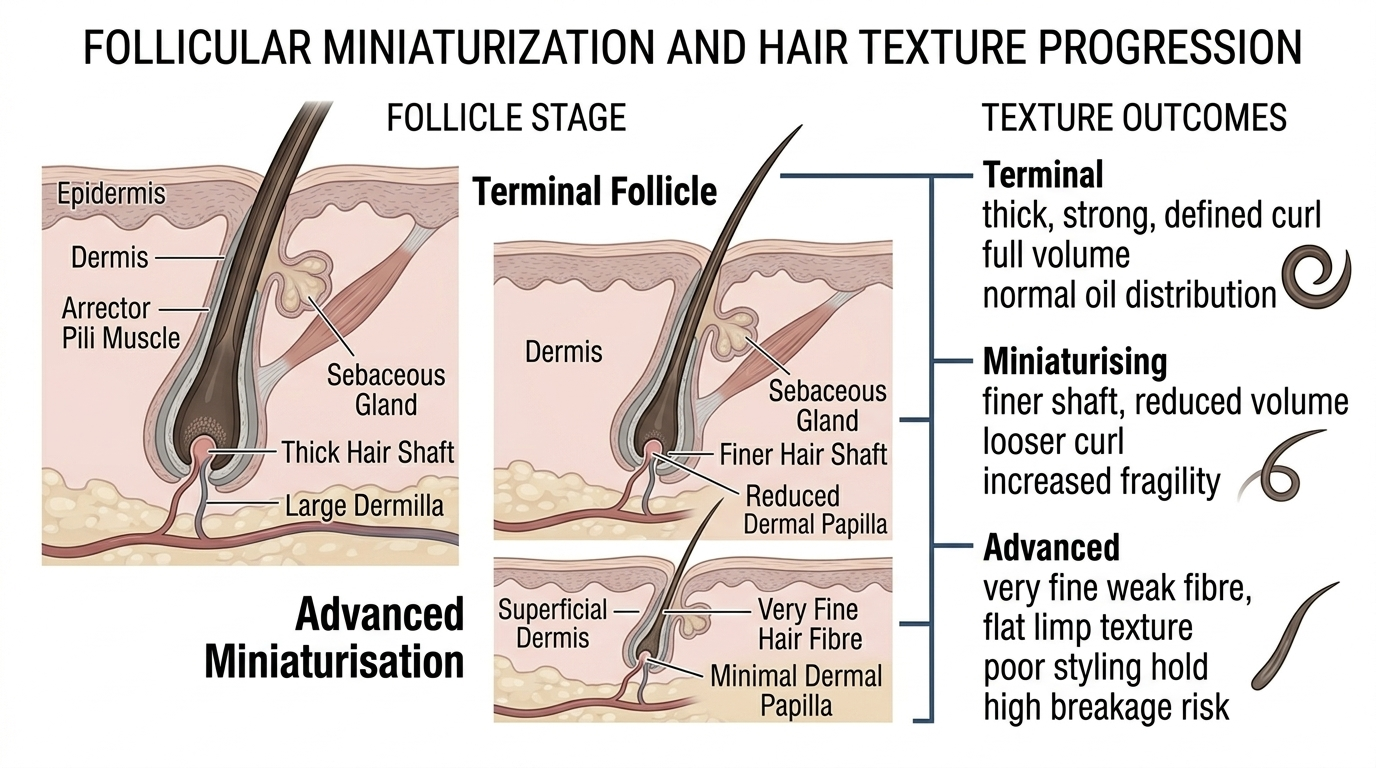
As follicles miniaturise, they produce hairs that are thinner, shorter, weaker, and structurally different from previous growth cycles. These changes affect how hair feels, behaves, reflects light, and responds to styling.
For many individuals, altered texture is one of the earliest visible signs that follicular activity is beginning to decline.
Author: Dr. Priya Goswami
Medical review: Dr. Denis Broun
Next step
If you notice coverage changes without increased shedding, confirm what process is occurring.
Take the Hair Assessment to have a physician review your pattern, identify whether miniaturization is present, and determine appropriate staging and next steps.
Add Comment