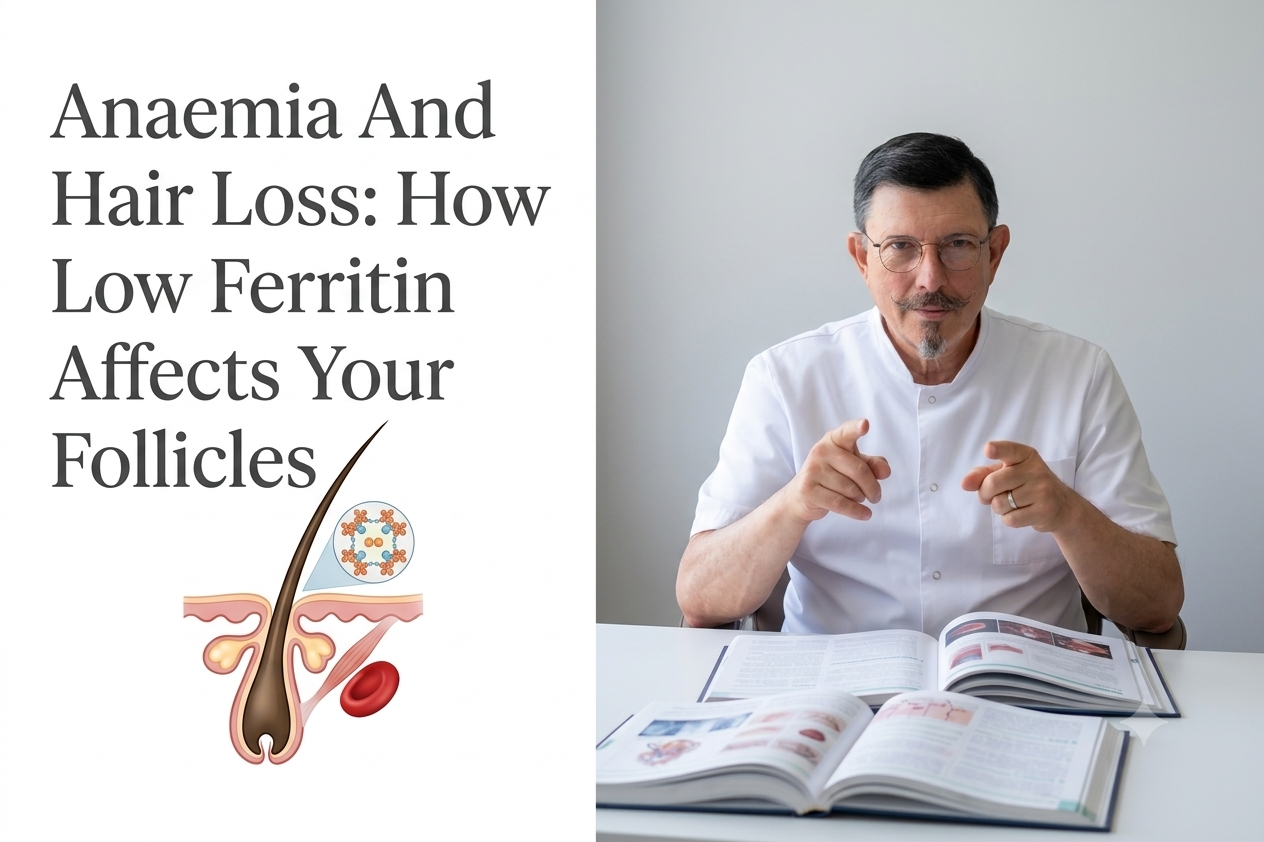
Hair follicles are among the most metabolically active structures in the body. They require energy, oxygen, nutrients, and tightly regulated growth signals to maintain normal cycling. When the body lacks sufficient iron, follicles may become affected surprisingly early.
This is one reason hair shedding is commonly discussed in relation to anaemia and low ferritin levels.
But the relationship is more complicated than many online discussions suggest.
Not every person with low iron develops hair loss. Not every person with hair loss has iron deficiency. Ferritin thresholds are debated. And hair shedding itself can result from many overlapping causes.
Still, iron status remains one of the most important medical factors doctors evaluate in diffuse hair thinning, especially in women.
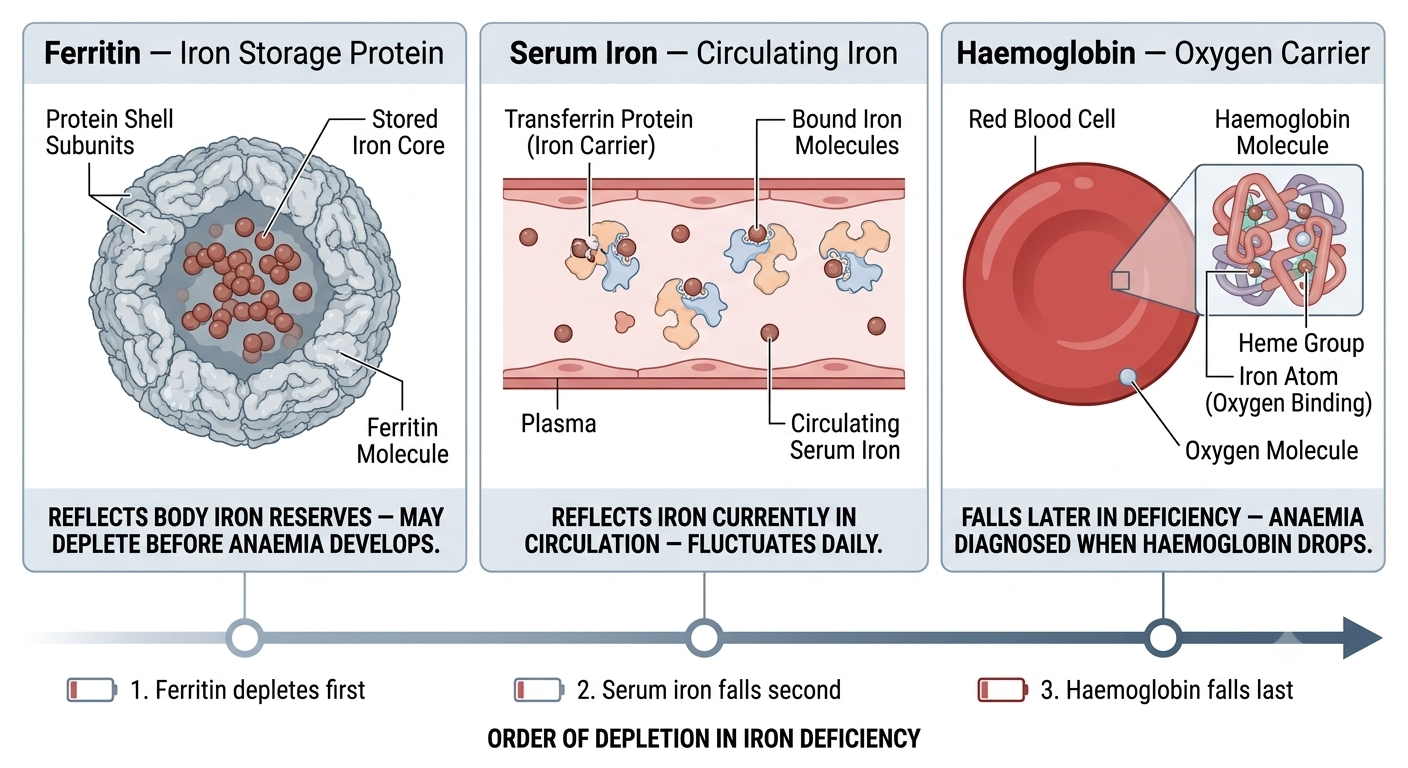
Ferritin and iron are not exactly the same thing
People often use “iron” and “ferritin” interchangeably, but they are not identical.
Ferritin is a protein that stores iron within the body. Ferritin levels help estimate overall iron reserves rather than measuring circulating iron directly.
Someone may have:
Low ferritin before developing anaemia
Normal haemoglobin but depleted iron stores
Hair shedding despite only mild laboratory abnormalities
This is one reason ferritin testing is frequently included during evaluation of unexplained diffuse hair loss.
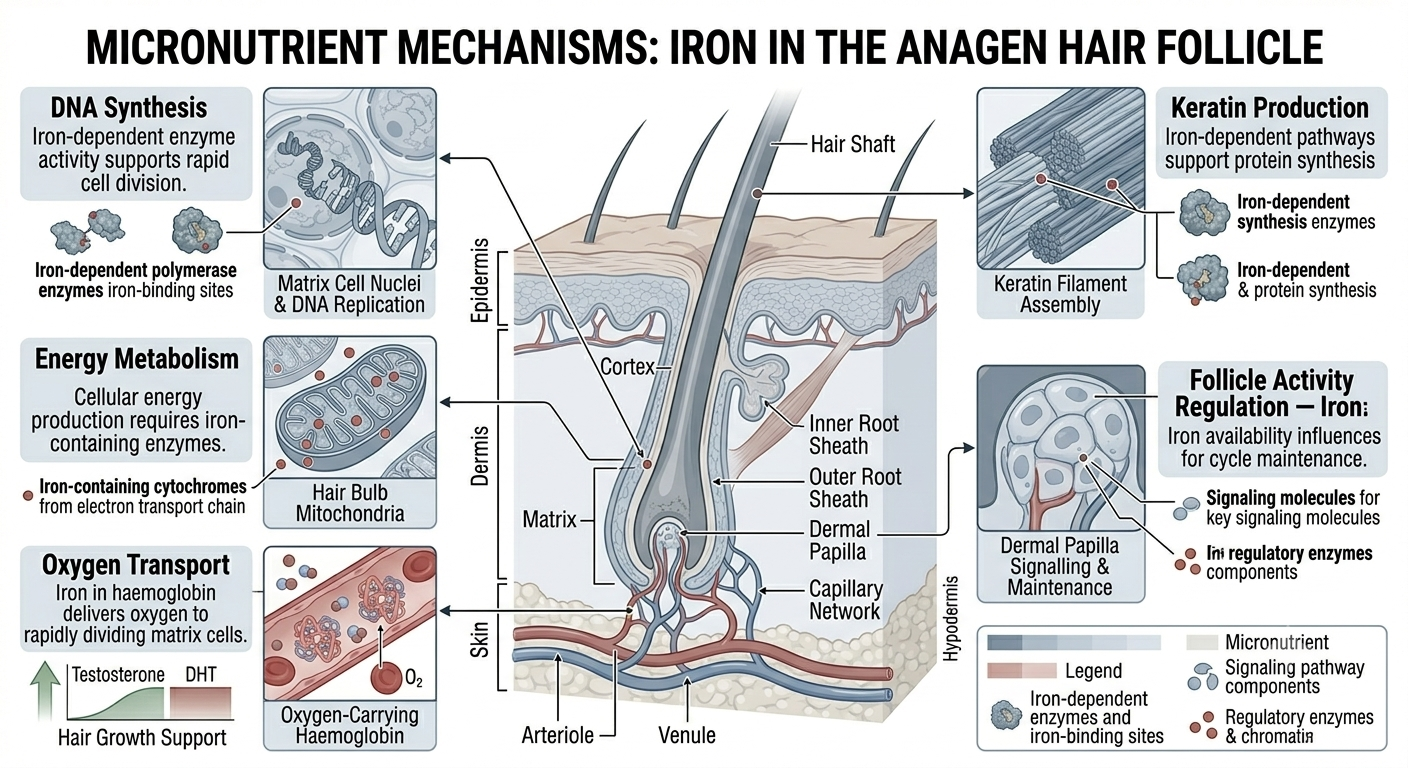
Hair follicles require iron for growth
Iron contributes to multiple biological processes involved in hair production.
These include:
Cell division
DNA synthesis
Energy metabolism
Oxygen transport
Because hair matrix cells divide rapidly, follicles may become sensitive to iron depletion when the body prioritises more essential functions elsewhere.
Hair is not necessary for survival. During physiological stress, the body may redirect resources away from follicle activity.
Diffuse shedding is more common than patchy loss
Iron-related hair loss typically presents as diffuse thinning rather than sharply defined bald patches.
Common features may include:
Increased hair shedding
Reduced ponytail thickness
More hair during washing or brushing
Generalised reduction in density
The frontal scalp often appears affected first simply because thinning is more visible there.
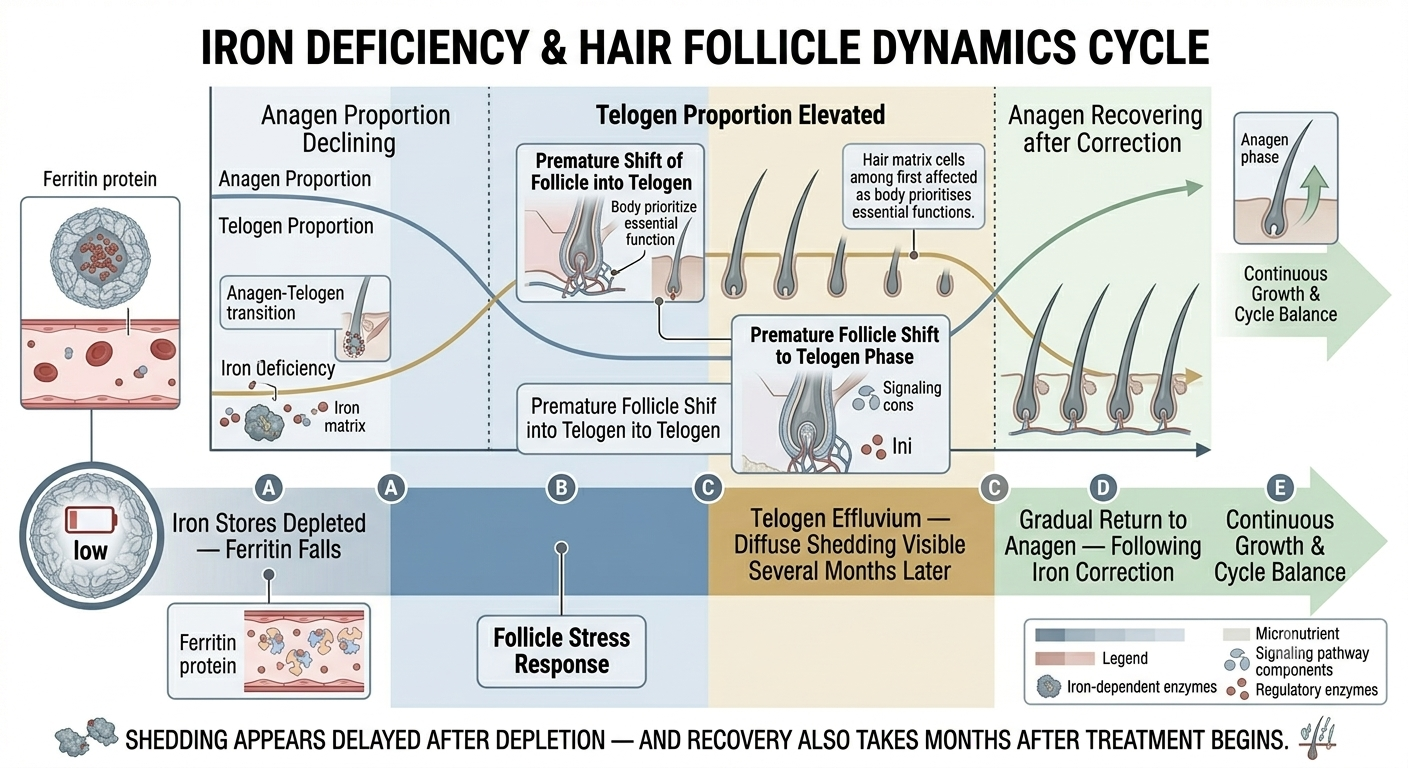
Telogen effluvium is commonly associated with iron deficiency
Low ferritin is often linked to telogen effluvium, a shedding disorder where more follicles prematurely shift into the resting phase of the growth cycle.
Triggers for telogen effluvium may include:
Iron deficiency
Illness
Stress
Rapid weight loss
Hormonal shifts
Nutritional deficiency
In this setting, the issue is usually abnormal cycling rather than permanent follicle destruction.
Ferritin thresholds remain debated
One controversial area is determining what ferritin level is truly “too low” for hair health.
A ferritin value considered technically normal by laboratory standards may still be viewed as suboptimal by some clinicians treating hair disorders.
Different doctors use different thresholds.
Some hair specialists aim for ferritin levels well above the lower laboratory limit when managing chronic shedding. Others are more cautious about attributing hair loss to mildly reduced ferritin alone.
The evidence remains imperfect.
Severe iron deficiency is more clearly linked
Although debate exists around borderline ferritin levels, severe iron deficiency and iron deficiency anaemia are more consistently associated with shedding.
Symptoms may include:
Fatigue
Shortness of breath
Dizziness
Poor exercise tolerance
Brittle nails
Pale skin
Hair shedding
In these cases, correcting the deficiency becomes medically important beyond cosmetic hair concerns alone.
Women are affected more commonly
Iron deficiency is particularly common in women of reproductive age because of menstrual blood loss.
Risk increases with:
Heavy periods
Pregnancy
Restricted diets
Frequent blood donation
Certain gastrointestinal conditions
This partly explains why ferritin testing is so common during female hair loss assessment.
Men with iron deficiency often need further investigation
Iron deficiency occurs less commonly in adult men and postmenopausal women.
When significant deficiency develops in these groups, doctors may investigate for possible underlying causes such as:
Gastrointestinal bleeding
Malabsorption
Chronic disease
Hair shedding may therefore become one clue within a larger medical picture.
Low ferritin does not guarantee hair loss
One important nuance is that many people with low ferritin maintain normal hair density.
Similarly, many people with hair loss have completely normal iron stores.
This means ferritin is one potential contributor rather than a universal explanation.
Hair disorders are often multifactorial.
Female pattern hair loss and low ferritin may coexist
Women frequently assume hair shedding must have one single cause.
In reality, conditions often overlap.
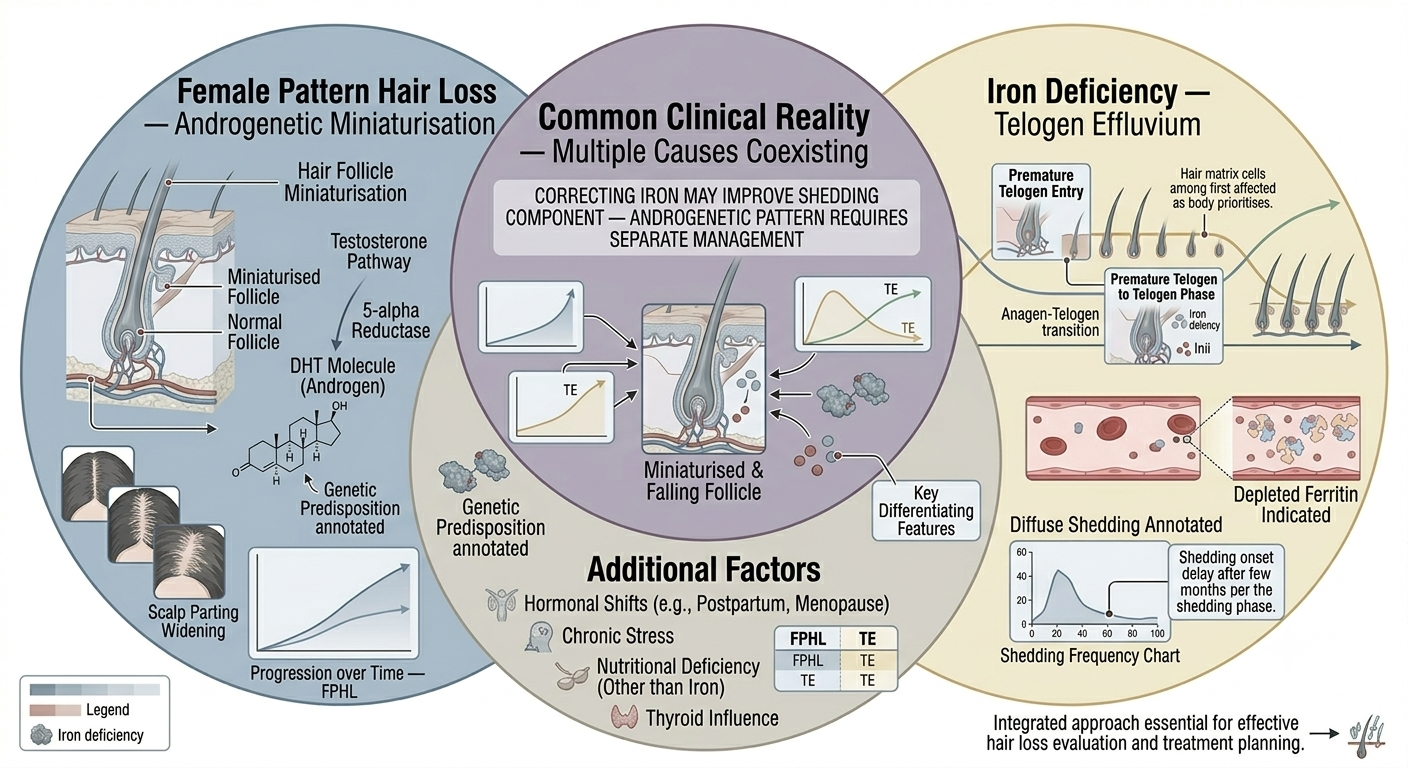
A person may simultaneously have:
Female pattern hair loss
Low ferritin
Stress-related shedding
Hormonal influences
Correcting iron deficiency may improve the shedding component without fully reversing underlying androgenetic alopecia.
Hair recovery takes time
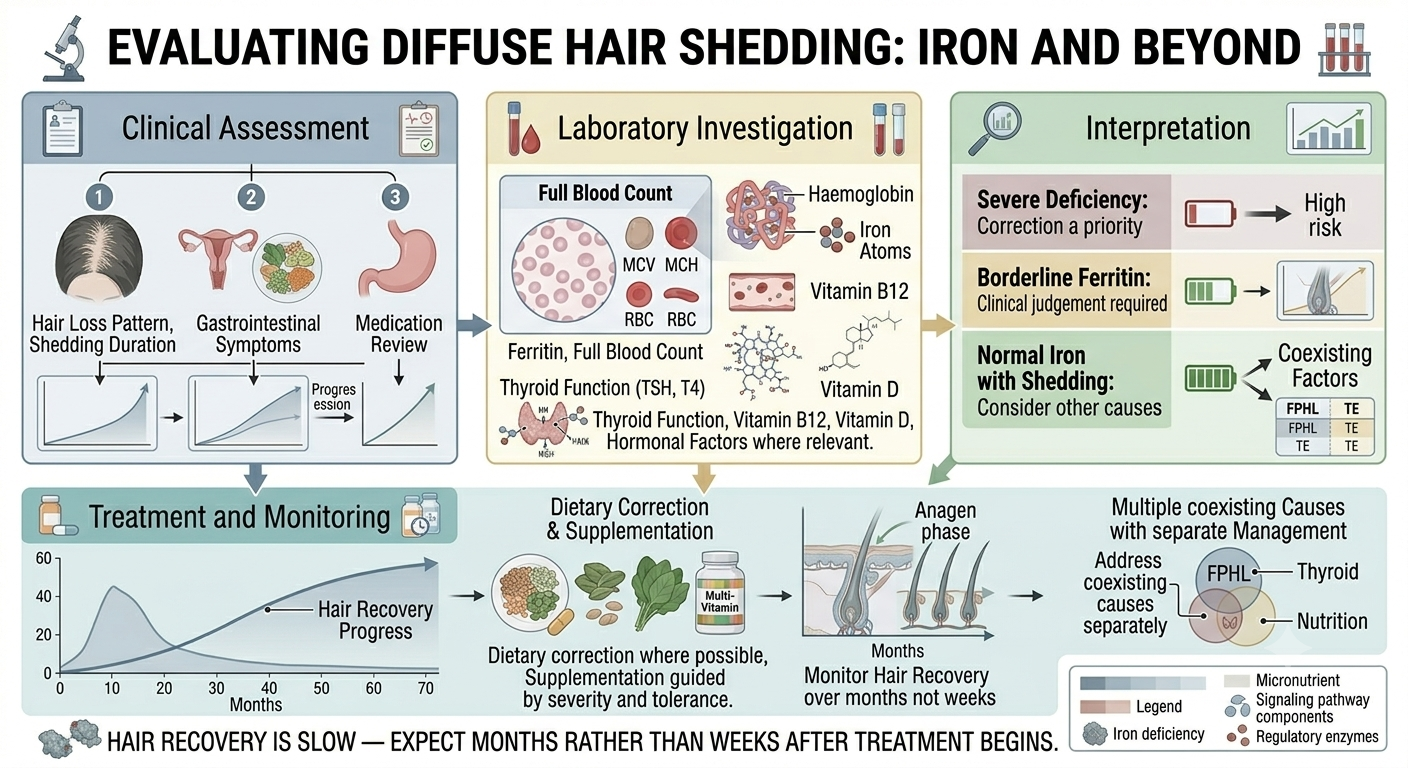
Even when iron deficiency contributes significantly, hair improvement is slow.
Follicles cycle gradually. Shedding may continue temporarily after treatment begins because the biological processes involved are delayed.
People often expect visible changes within weeks when meaningful improvement may take several months.
Iron supplementation is not risk free
Iron supplements are widely available, but unnecessary supplementation is not harmless.
Excess iron may cause:
Constipation
Nausea
Abdominal discomfort
Iron overload in rare situations
This is one reason treatment ideally follows proper testing rather than assumption alone.
Diet matters, but severe deficiency may need supplementation
Iron intake comes from foods such as:
Red meat
Legumes
Leafy greens
Fortified cereals
Shellfish
However, dietary correction alone may not rapidly restore depleted iron stores in moderate or severe deficiency.
Some individuals require oral or occasionally intravenous iron depending on severity and tolerance.
Absorption problems can complicate treatment
Correcting ferritin is not always straightforward.
Certain conditions impair iron absorption, including:
Coeliac disease
Inflammatory bowel disease
Gastric surgery
Chronic gastrointestinal inflammation
People may continue struggling with low ferritin despite supplementation if absorption problems remain unrecognised.
Inflammation can distort ferritin interpretation
Ferritin is also an inflammatory marker.
This means ferritin levels may appear artificially elevated during illness or chronic inflammation even when iron stores are actually low.
Doctors therefore sometimes interpret ferritin alongside additional blood tests rather than in isolation.
Hair texture may change as well
Iron deficiency may affect not only shedding but also hair quality.
Some individuals notice:
Dryness
Fragility
Reduced shine
Finer strands
Again, these findings are not specific to iron deficiency alone, but they may contribute to the overall picture.
Not all “hair vitamins” address the real problem
Many commercial supplements marketed for hair contain biotin or botanical ingredients while providing little iron or failing to evaluate whether deficiency exists at all.
In true iron deficiency, correcting the underlying problem matters more than relying on cosmetic supplements alone.
Medical evaluation is important in persistent shedding
Persistent diffuse shedding deserves proper assessment rather than automatic self-diagnosis.
Doctors may investigate:
Ferritin
Full blood count
Thyroid function
Vitamin B12
Vitamin D
Hormonal factors
Hair loss is sometimes the visible sign of broader systemic imbalance.
The bottom line
Iron deficiency and low ferritin are important potential contributors to diffuse hair shedding because hair follicles require iron to maintain normal growth and cycling. Low ferritin is commonly associated with telogen effluvium, particularly in women with heavy menstrual bleeding or other risk factors for depleted iron stores.
At the same time, ferritin is only one piece of the puzzle. Not all hair loss results from iron deficiency, and not everyone with low ferritin develops noticeable thinning.
Because hair disorders often involve multiple overlapping causes, proper medical evaluation remains important before assuming iron alone is responsible.
Author: Dr. Priya Goswami
Medical review: Dr. Denis Broun
Next step
If you notice coverage changes without increased shedding, confirm what process is occurring.
Take the Hair Assessment to have a physician review your pattern, identify whether miniaturization is present, and determine appropriate staging and next steps.
Add Comment