Finasteride is best known as an oral medication used for androgenetic alopecia, also called male and female pattern hair loss. For many years, tablets have been the standard form. More recently, however, topical versions including finasteride shampoos have entered the market with growing visibility.
The appeal is obvious. Many people want the potential benefits of finasteride while hoping to reduce systemic exposure and minimise the risk of side effects associated with oral treatment.
But shampoos create an important scientific question: can a medication designed to affect follicle biology work effectively when it is briefly rinsed off the scalp?
The answer is more complicated than marketing often suggests.
Finasteride shampoo sits in an uncertain middle ground between cosmetic product and pharmacological treatment. Some formulations may have biological activity, but the evidence remains far less established than for oral finasteride.
What finasteride actually does
Finasteride works by inhibiting the enzyme 5 alpha reductase, which converts testosterone into dihydrotestosterone, or DHT.
DHT plays a major role in androgenetic alopecia. In genetically susceptible follicles, DHT contributes to progressive miniaturisation over time. Hairs become shorter, finer, and less capable of providing visible coverage.
By lowering DHT levels, finasteride may help slow this process and preserve follicle function.
Oral finasteride has substantially more clinical evidence than topical shampoos.
Why people are interested in topical delivery
Interest in topical finasteride has grown largely because of concerns about systemic side effects from oral treatment.
Some individuals worry about:
Sexual side effects
Mood changes
Long-term medication exposure
Systemic hormonal effects
A topical approach aims to deliver medication closer to the scalp while theoretically reducing blood concentrations elsewhere in the body.
This concept is biologically plausible in principle. But the delivery method matters enormously.
A shampoo is not the same as a leave-on treatment
This is one of the central issues with finasteride shampoos.
Unlike topical solutions or foams that remain on the scalp for hours, shampoos are usually applied briefly and then rinsed away.
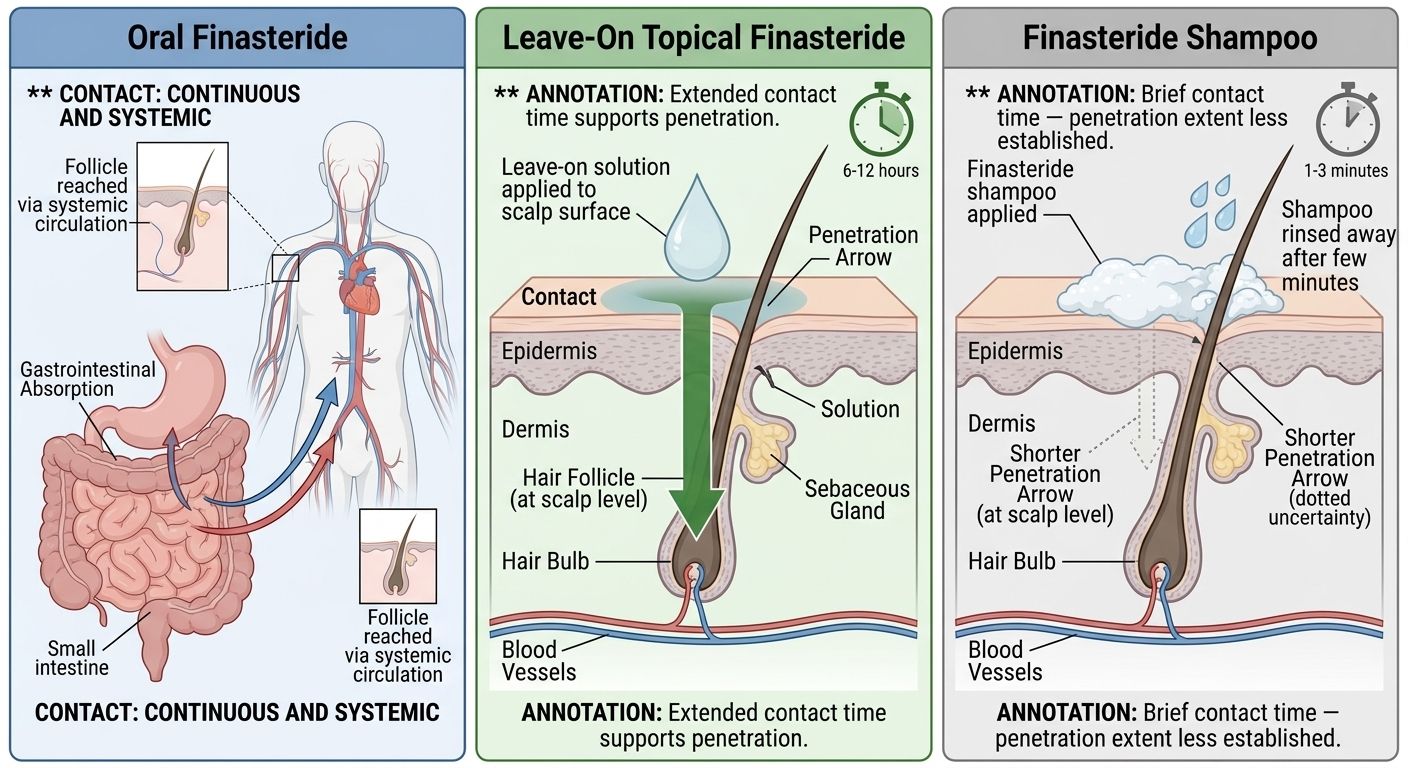
That creates several questions:
How much finasteride penetrates the scalp during washing?
Does contact time allow meaningful follicular absorption?
How stable is the ingredient within the formulation?
How much actually reaches target tissues around the follicle?
At present, robust long-term evidence answering these questions remains limited.
Topical finasteride itself has some emerging evidence
It is important to separate topical finasteride generally from finasteride shampoo specifically.
Some studies involving topical finasteride solutions or sprays suggest they may reduce scalp DHT while producing lower systemic exposure than oral tablets. However, the research remains smaller and less mature than the evidence base for oral finasteride.
Shampoos are even less well studied.
This distinction often disappears in marketing, where all topical forms are grouped together despite having different delivery characteristics.
Contact time may limit effectiveness
Many shampoos remain on the scalp for only a few minutes.
For an active drug to penetrate effectively through the scalp barrier and influence follicle biology, exposure time may matter significantly. This is one reason leave-on medications are often more pharmacologically effective than wash-off products.
Some manufacturers recommend leaving finasteride shampoo on the scalp longer before rinsing. Even then, the exposure remains relatively brief compared with leave-on formulations.
Whether this provides sufficient delivery for clinically meaningful long-term results remains uncertain.
Some shampoos contain very low concentrations
Commercial finasteride shampoos vary substantially in formulation.
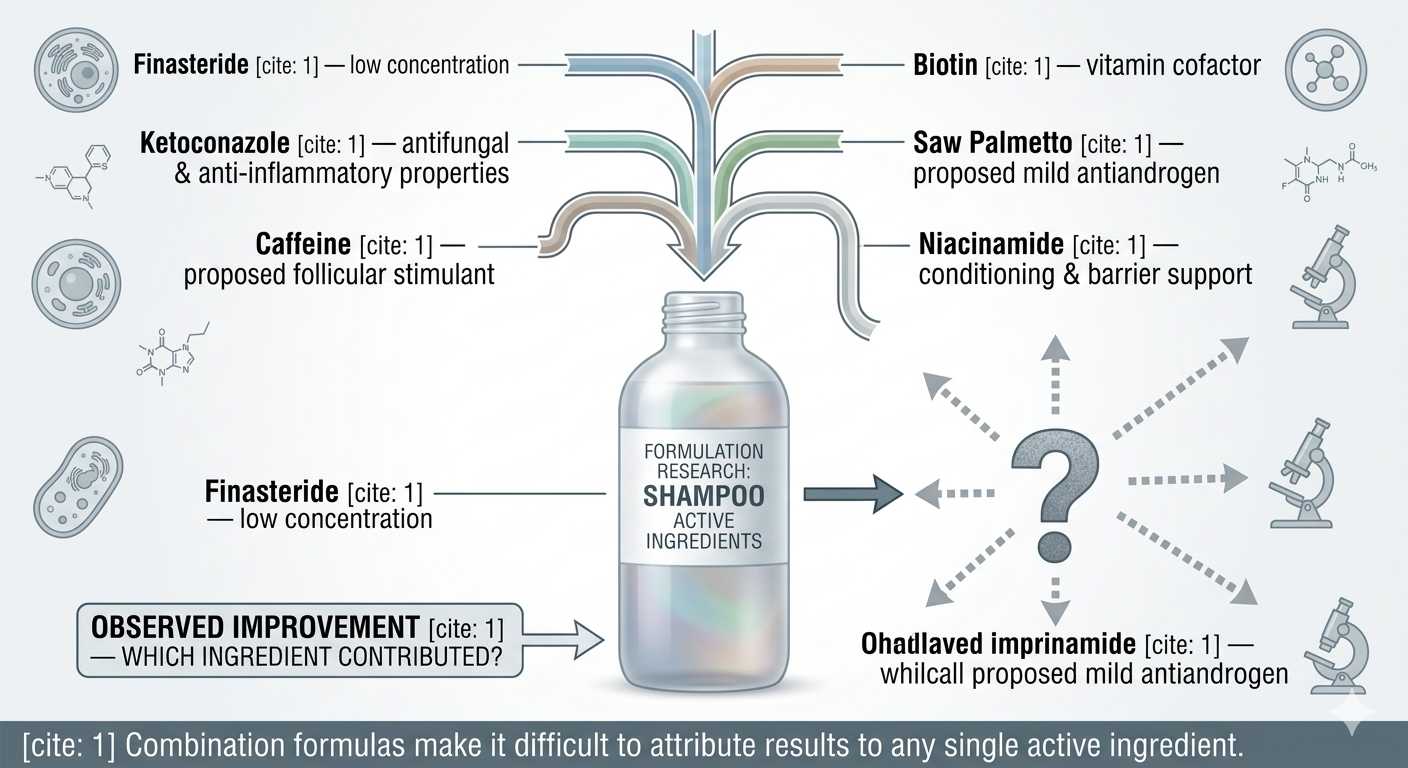
Some contain low concentrations combined with cosmetic ingredients such as:
Caffeine
Ketoconazole
Biotin
Saw palmetto
Niacinamide
Plant extracts
This creates another difficulty when evaluating effectiveness. If improvement occurs, it may not be clear which ingredient contributed most, or whether the result reflects cosmetic improvement rather than significant follicular change.
Ketoconazole is often included for a reason
Many finasteride shampoos also contain ketoconazole, an antifungal ingredient commonly used in dandruff shampoos.
Ketoconazole has attracted interest in hair loss partly because of its anti-inflammatory properties and possible mild antiandrogen effects. Some evidence suggests it may modestly support scalp health in androgenetic alopecia.
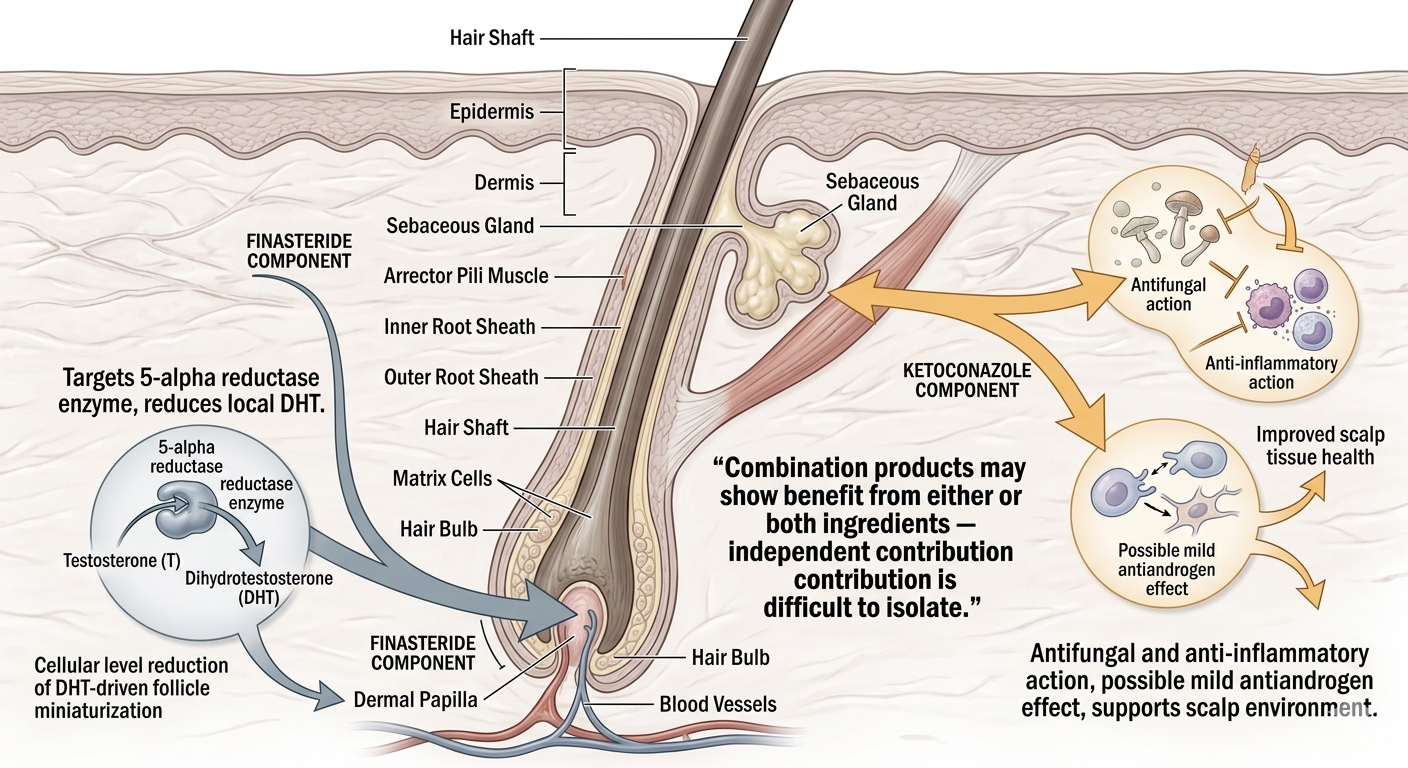
As a result, some observed benefits from combination shampoos may relate partly to ketoconazole rather than finasteride alone.
Again, this makes interpretation difficult.
Topical does not necessarily mean side effect free
One common misconception is that topical finasteride eliminates systemic absorption entirely.
That is unlikely to be true.
Human skin is not an impenetrable barrier, and some degree of systemic absorption may still occur depending on:
Formulation
Concentration
Frequency of use
Scalp condition
Duration of contact
The extent of absorption from shampoos specifically may be lower than from oral treatment, but lower does not mean zero.
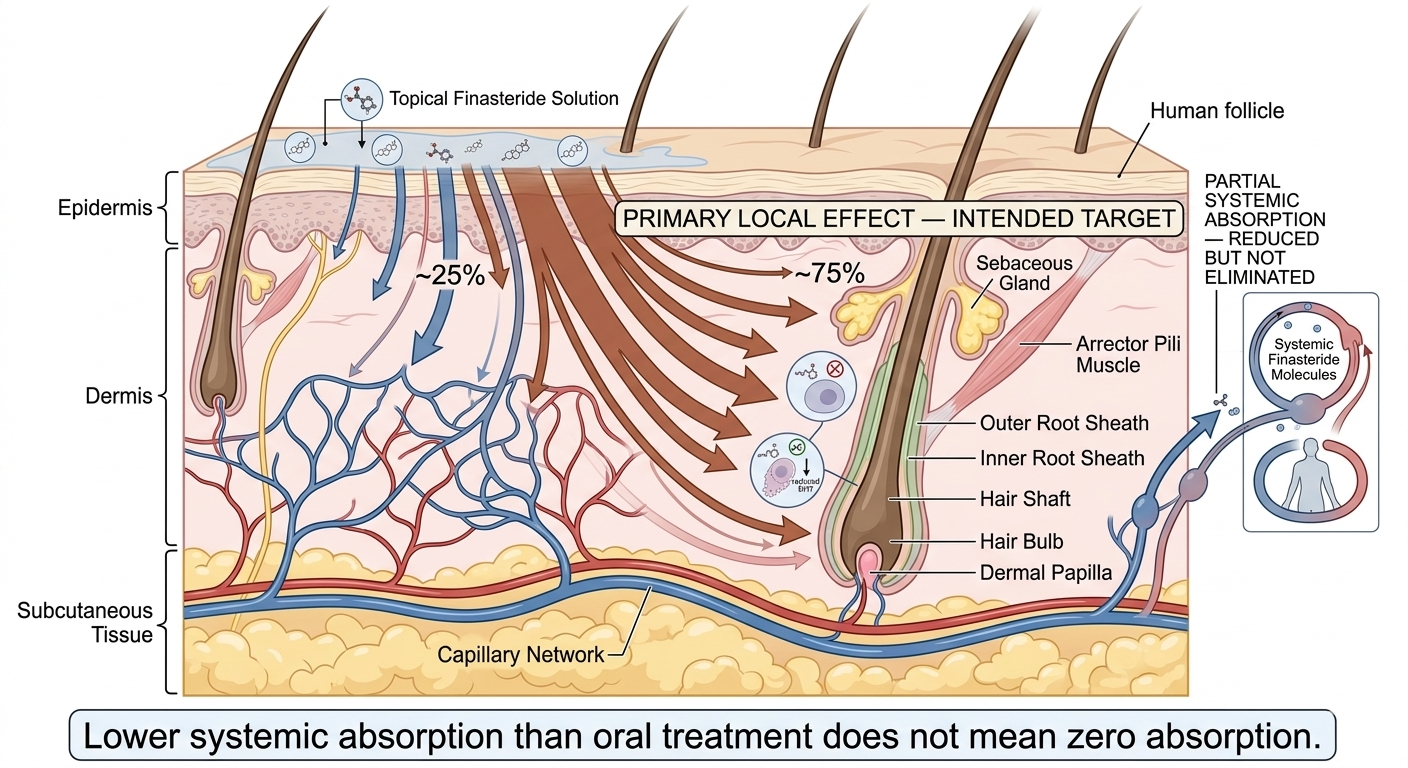
People with concerns about side effects should still approach these products thoughtfully rather than assuming complete absence of systemic exposure.
There is no universally standardised formulation
Unlike licensed pharmaceutical tablets with tightly standardised dosing, finasteride shampoos vary widely between manufacturers.
Differences may include:
Drug concentration
Vehicle formulation
Stability
Scalp penetration enhancers
Application instructions
Some products are pharmacy compounded while others are marketed more cosmetically.
This variability makes broad conclusions difficult because not all formulations behave the same way.
Marketing often exceeds the evidence
Terms commonly used in advertising include:
DHT blocking shampoo
Follicle activating formula
Hair regrowth wash
Scalp hormone therapy
These phrases sound scientifically convincing but may imply stronger evidence than currently exists.
At present, finasteride shampoo does not have the same level of clinical support as oral finasteride for androgenetic alopecia.
That does not automatically make shampoos ineffective. It simply means certainty remains lower.
The role of scalp inflammation and cleansing
Some users may still benefit from medicated shampoos indirectly.
A healthy scalp environment matters for comfort and adherence to treatment routines. Reducing seborrhoeic dermatitis, itch, oiliness, or inflammation may improve overall scalp condition.
But improving scalp comfort is different from significantly altering the long-term course of androgenetic alopecia.
These distinctions are often blurred in commercial messaging.
Oral finasteride still has the strongest evidence base
For male pattern hair loss, oral finasteride remains one of the most extensively studied treatments available.
It has demonstrated the ability in many men to:
Slow progression
Maintain density
Improve visible hair counts
Topical alternatives are still being investigated and may eventually play a larger role, particularly for individuals unable or unwilling to take oral therapy.
But current evidence remains more limited.
Women and finasteride require additional caution
Finasteride is not routinely used the same way in women, particularly during pregnancy or potential pregnancy.
Because finasteride can affect fetal development in male fetuses, handling and use require medical guidance in relevant situations.
This caution applies regardless of whether the formulation is oral or topical.
Some people may prefer shampoos psychologically
There is also a behavioural aspect.
Some individuals are more comfortable adding a shampoo into their routine than committing to long-term oral medication. A wash-based product may feel less medically intimidating.
Adherence sometimes improves when treatment feels simpler or less invasive.
However, convenience alone does not determine biological effectiveness.
Hair loss treatment usually requires long timelines
Even if a finasteride shampoo does exert some biological effect, visible evaluation still takes time.
Hair follicles cycle slowly. Meaningful assessment generally requires months rather than weeks.
Products promising dramatic rapid regrowth are usually oversimplifying hair biology.
More research is still needed
The idea behind topical finasteride is scientifically reasonable. The challenge is proving how much benefit specific formulations actually provide in real-world use.
Important unanswered questions include:
Optimal concentration
Best delivery vehicle
Ideal contact time
Long-term safety
Comparative effectiveness versus oral therapy
Degree of systemic absorption
More independent large-scale trials would help clarify these issues.
The bottom line
Finasteride shampoo is an increasingly popular approach aimed at delivering antiandrogen treatment through the scalp rather than by mouth. The concept appeals to people seeking alternatives to oral finasteride, particularly those concerned about systemic side effects.
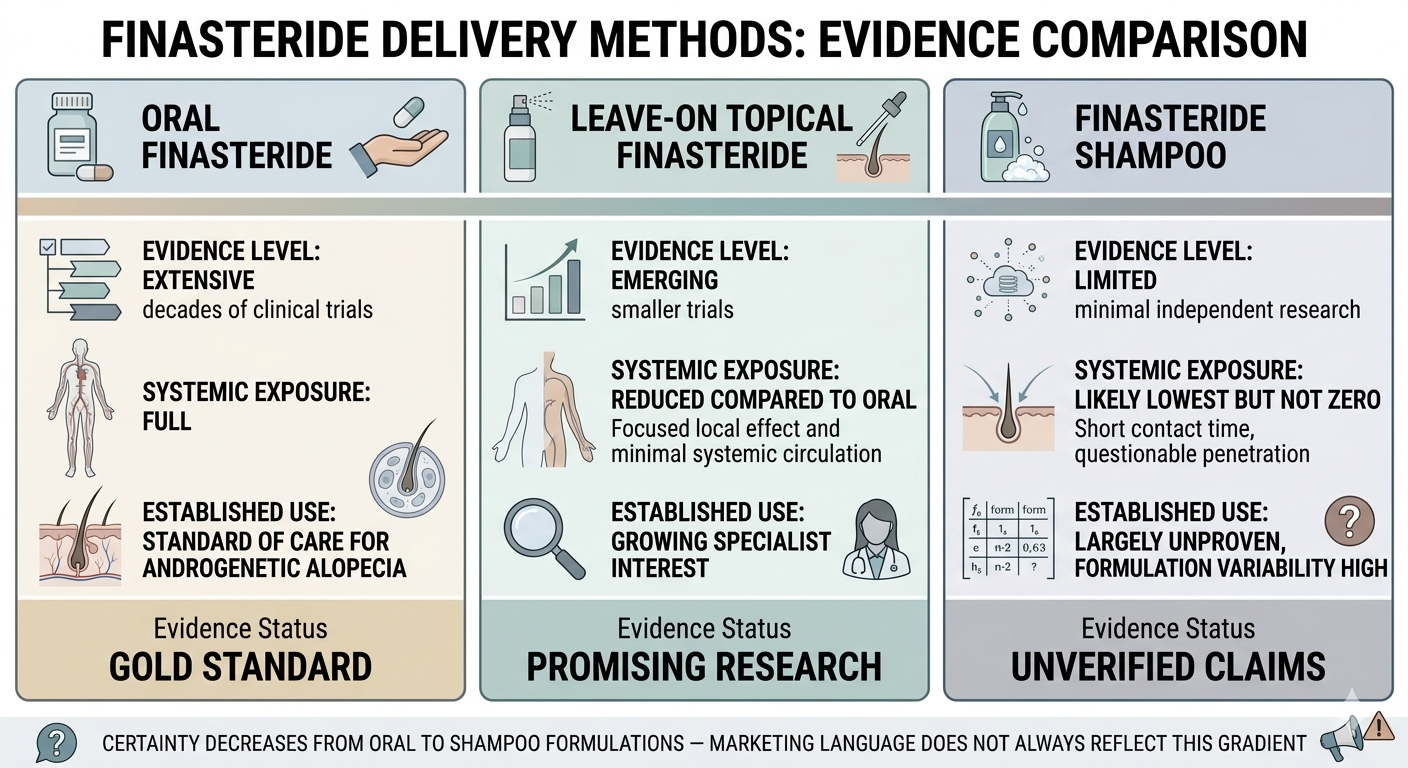
However, shampoos present clear delivery limitations because the medication is rinsed off relatively quickly. While topical finasteride generally has some emerging scientific support, evidence specifically for shampoo formulations remains limited and less established than for oral treatment.
Some products may still contribute to scalp health or modestly support hair maintenance, especially when combined with ingredients like ketoconazole. But marketing claims often move ahead of the available evidence.
For people considering finasteride shampoo, realistic expectations and medically grounded information remain essential.
Author: Dr. Priya Goswami
Medical review: Dr. Denis Broun
Next step
If you notice coverage changes without increased shedding, confirm what process is occurring.
Take the Hair Assessment to have a physician review your pattern, identify whether miniaturization is present, and determine appropriate staging and next steps.
Add Comment