Hair breakage is often confused with hair loss, but they are not the same thing.
In true hair loss, the follicle sheds the hair from the root. In breakage, the strand snaps somewhere along its length before naturally completing its cycle. The result can still look like thinning because hair becomes shorter, uneven, frayed, and less dense overall.
Many people trying to “grow” their hair are actually dealing with poor retention rather than slow growth. Their follicles may be producing hair normally, but the strands are breaking faster than length can accumulate.
This distinction matters because breakage prevention depends more on protecting the hair shaft than stimulating the follicle itself.
A large part of hair care marketing focuses on repair. In reality, once hair fibres are structurally damaged, they cannot truly regenerate biologically. The goal is usually protection, conditioning, and reducing further damage rather than reversing damage completely.
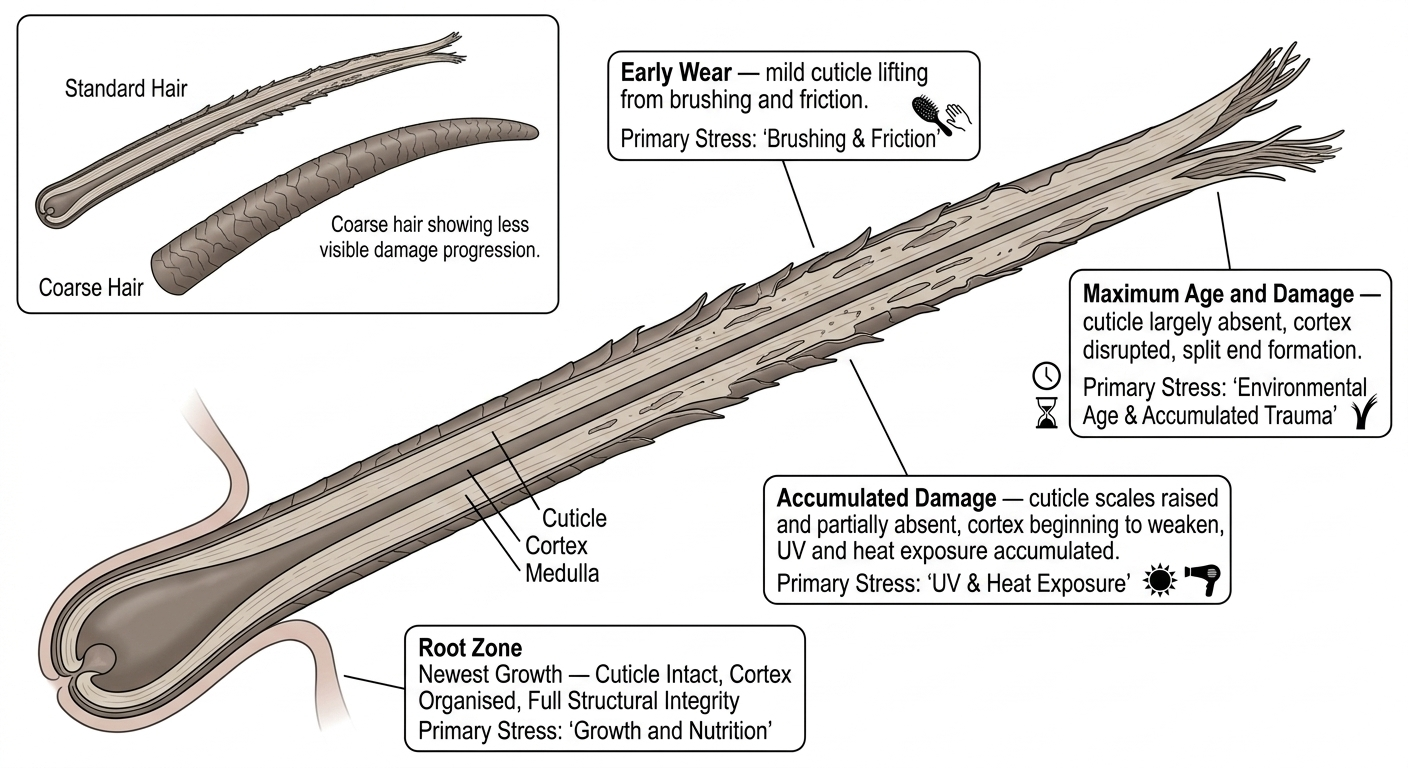
Hair is strongest near the root
The hair shaft changes as it ages.
Newer hair closer to the scalp tends to be stronger and smoother because the protective outer cuticle remains more intact. Older hair toward the ends has experienced:
Washing
Brushing
Heat
UV exposure
Friction
Chemical processing
for much longer.
This cumulative wear explains why breakage usually appears first at the ends and mid-lengths rather than directly at the scalp.
Breakage can mimic thinning
People sometimes assume they have severe hair loss when the primary issue is fragmentation of damaged hair.
Signs more suggestive of breakage include:
Short uneven pieces
Frayed ends
White dots at break points
Hair snapping during brushing
Reduced fullness at the ends
Difficulty retaining length
By contrast, follicle-driven hair loss more often causes reduced density directly at the scalp.
The two problems can also occur together.
Heat damage remains one of the biggest contributors
Frequent high heat weakens hair proteins over time.
Hair straighteners, curling tools, and very hot blow dryers gradually reduce moisture and alter the structural integrity of the shaft. Repeated thermal stress can cause brittleness and increased snapping.
Risk increases with:
Higher temperatures
Daily use
Lack of heat protection
Slow repeated passes over the same section
Many people underestimate how much damage accumulates gradually rather than appearing suddenly.
Lower heat is usually safer than no heat protection alone
Heat protectant products may help reduce damage, but they do not make extreme heat harmless.
This is important because some marketing implies that protectants completely shield hair from thermal injury. They may reduce damage somewhat, but temperature and frequency still matter significantly.
Moderate controlled heat used occasionally is generally less damaging than very high heat used daily.
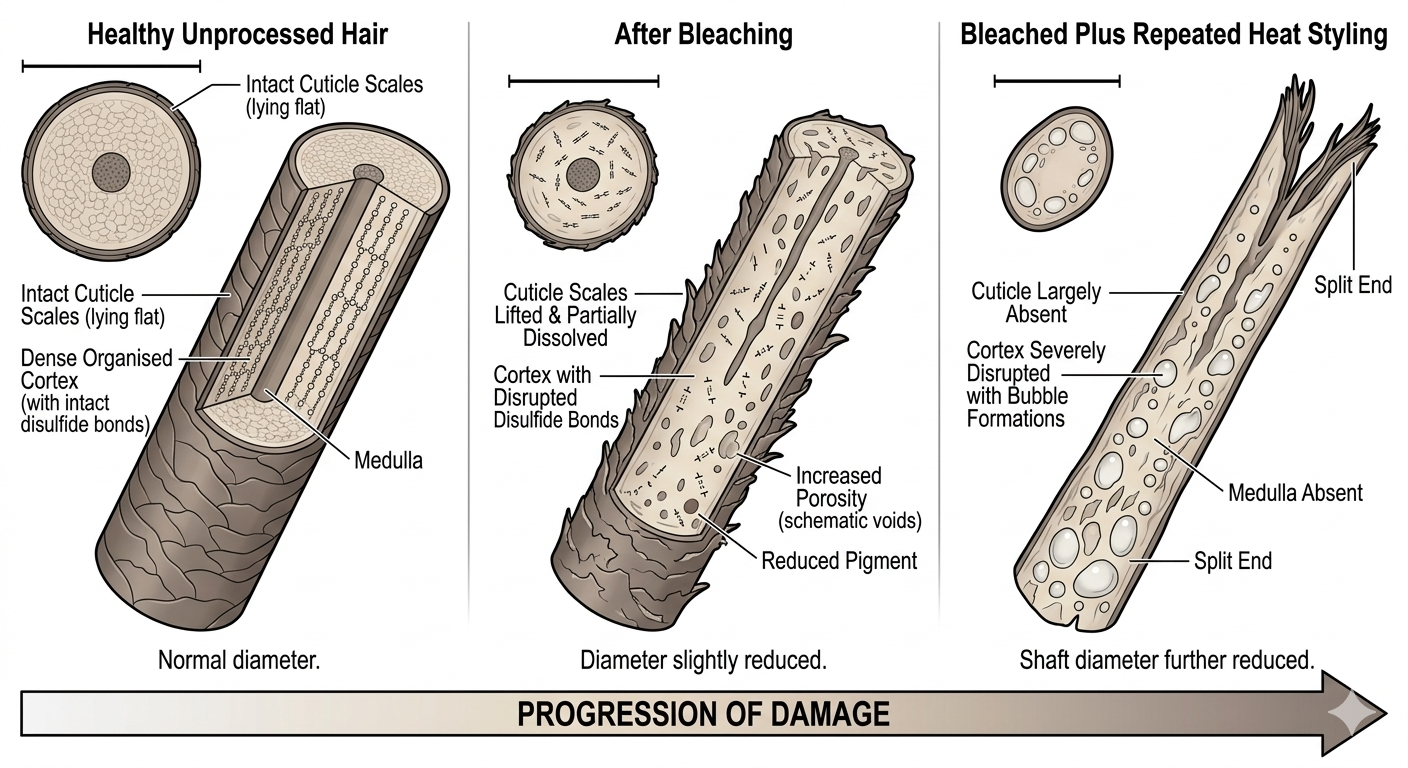
Bleaching weakens the hair shaft substantially
Chemical lightening is one of the most aggressive cosmetic processes for hair integrity.
Bleach disrupts protein structure and removes pigment through oxidation. This can leave hair:
More porous
Drier
Less elastic
More fragile
The risk of breakage increases further when bleaching is repeated frequently or combined with heat styling.
Even professionally performed bleaching carries some structural cost because the process itself alters the fibre.
Wet hair is more vulnerable
Hair stretches more easily when wet.
Aggressive brushing, towel rubbing, or tight styling immediately after washing can increase mechanical damage. This is especially relevant for people with:
Curly hair
Chemically treated hair
Fine hair
Already compromised hair
Gentler handling during the wet phase often reduces cumulative breakage significantly over time.
Rough towel drying is usually unnecessary
Vigorous rubbing with a towel creates friction and cuticle disruption.
Blotting or gently squeezing water from the hair is typically less damaging than aggressively scrubbing the strands dry.
Microfibre towels or soft cotton fabrics may reduce friction further, though they are not miracle solutions.
The broader principle is simply reducing unnecessary mechanical stress.
Tight hairstyles can cause repeated strain
Constant tension weakens hair gradually.
Styles associated with breakage or traction damage may include:
Tight ponytails
Braids under excessive tension
Heavy extensions
Very tight buns
Repeated slick-back styling
The problem is often chronic repetitive stress rather than a single styling session.
In some cases, prolonged traction can contribute not only to breakage but also to traction alopecia involving the follicles themselves.
Brushing technique matters more than many people realise
Aggressive detangling creates avoidable damage.
Starting from the roots and forcing a brush downward through knots increases snapping considerably. Gentler detangling usually works better when beginning at the ends and gradually moving upward.
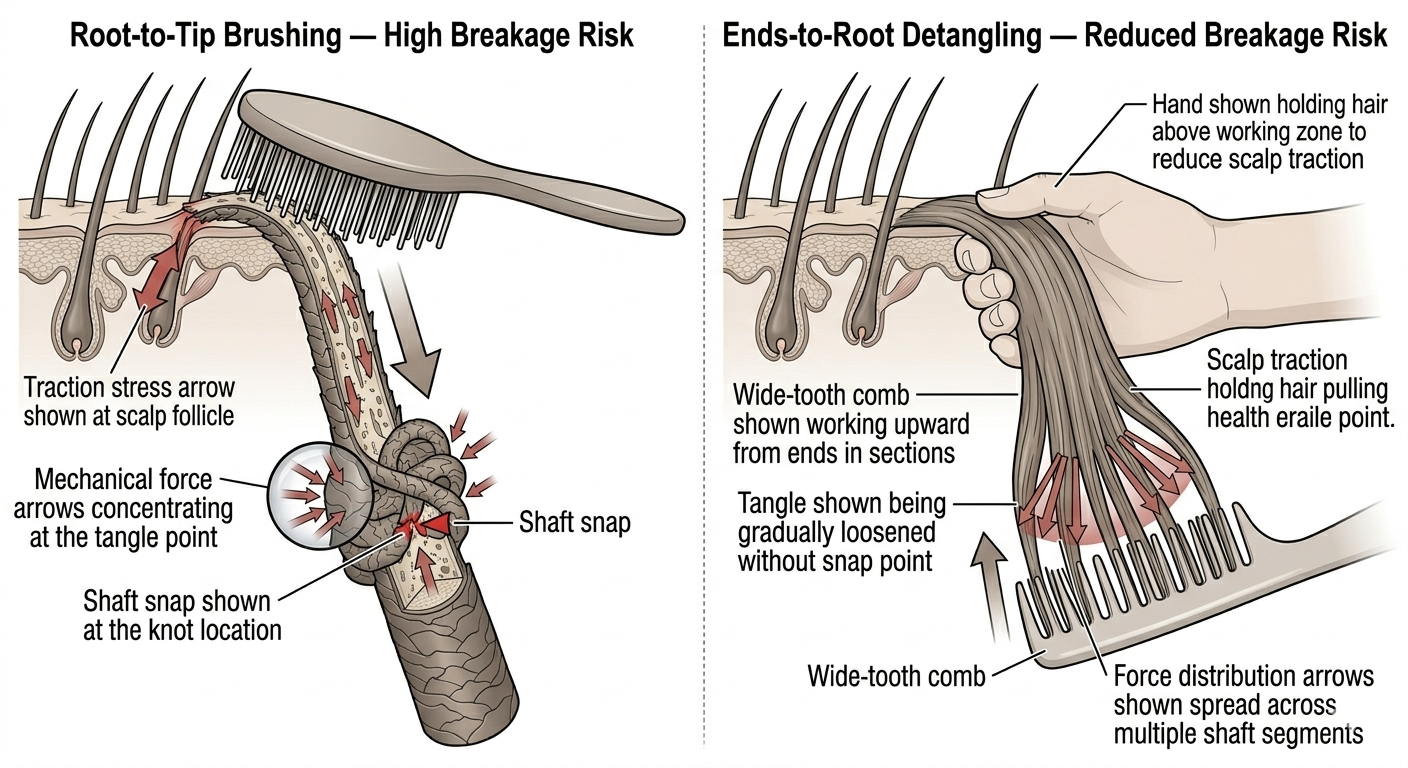
Brush type may also matter somewhat, though marketing claims are often exaggerated.
The key issue is not buying a magical brush. It is reducing excessive force.
Conditioner mainly helps by reducing friction
Conditioners do not permanently heal damaged hair.
What they often do effectively is coat the hair surface, improving lubrication and reducing friction between strands. This can decrease tangling and lower mechanical breakage during handling.
People with fragile hair frequently benefit from consistent conditioning because smoother fibres experience less physical stress during daily grooming.
Protein treatments are not universally beneficial
Protein-based products are heavily marketed for strengthening damaged hair.
Some people find them helpful temporarily, especially when hair feels overly soft or weak after chemical processing. But excessive protein-focused treatments can sometimes leave hair feeling stiff or brittle.
Hair responds differently depending on:
Porosity
Damage level
Curl pattern
Chemical history
The idea that more protein is always better is overly simplistic.
Oils can reduce friction but do not reverse structural damage
Hair oils are often misunderstood.
Certain oils may improve lubrication, reduce friction, and temporarily increase softness or shine. Some may modestly reduce protein loss during washing.
But oils do not biologically repair split ends or rebuild destroyed internal structure.
Claims that oils permanently “heal” severely damaged hair are usually overstated.
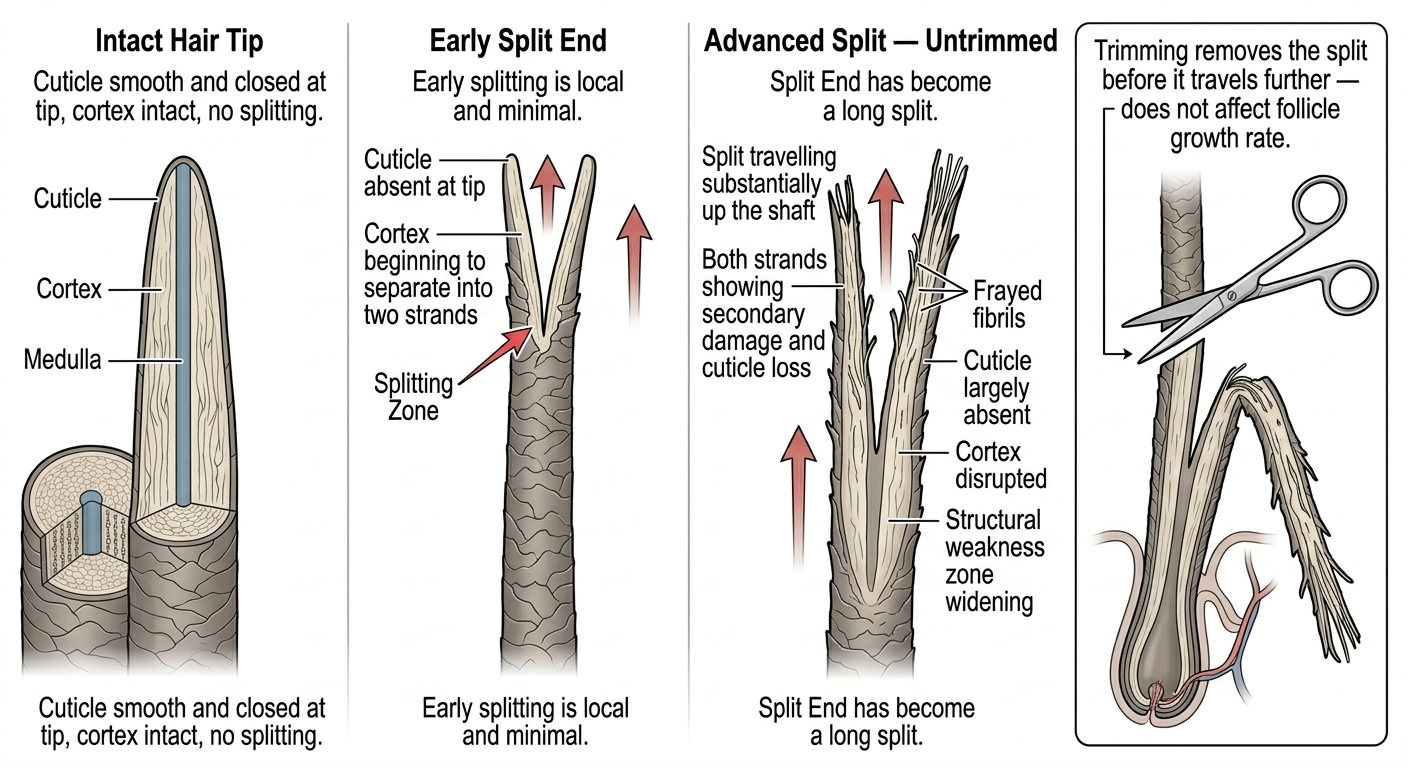
Split ends do not repair themselves
Once a strand splits, the damage cannot truly fuse back together permanently.
Some products temporarily bind split ends cosmetically, making them appear smoother. But the structural weakness remains.
Over time, untreated splits may travel further upward along the shaft.
Regular trimming is therefore less about stimulating growth and more about removing damaged sections before they worsen.
Frequent trimming does not make hair grow faster
This is one of the most persistent myths in hair care.
Hair growth originates from the follicle beneath the scalp. Cutting the ends does not change follicle growth rate.
However, trimming damaged ends may improve retention by reducing ongoing splitting and breakage. Hair may therefore appear healthier and longer over time because less length is being lost.
Sleeping habits can contribute to friction
Repeated overnight friction affects some hair types more than others.
People with curly, fragile, chemically treated, or fine hair sometimes benefit from reducing friction during sleep through:
Looser hairstyles
Smoother pillowcase fabrics
Protective wrapping methods
Again, these approaches reduce mechanical wear rather than directly stimulating growth.
Nutritional deficiency can increase fragility
Not all breakage is purely cosmetic.
Hair fragility may worsen with nutritional deficiencies involving:
Iron
Protein
Zinc
Certain vitamins
Systemic illnesses and hormonal disorders can also affect hair quality.
Persistent brittleness accompanied by shedding, fatigue, nail changes, or other symptoms deserves proper medical assessment rather than endless product experimentation alone.
Curly hair often needs different handling
Curly hair naturally contains more bends and weak points along the shaft, making it more prone to breakage from friction and dryness.
Many people with curls benefit from:
Less frequent brushing
More lubrication during detangling
Reduced heat exposure
Lower tension styling
Techniques that work well for straight hair may not translate effectively to curlier textures.
Some “damage repair” marketing is misleading
Many products imply that severely damaged hair can be fully restored to its original state.
This is not how hair biology works.
Hair fibres are not living tissue once they emerge from the scalp. Cosmetic products can improve feel, appearance, lubrication, flexibility, and manageability. But they cannot regenerate dead fibre biologically.
The goal is usually damage management rather than true repair.
Overwashing is not automatically harmful
People often receive conflicting advice about washing frequency.
In reality, overwashing is less damaging than aggressive handling, harsh chemicals, or excessive heat for many individuals. Scalp type, hair texture, activity level, and product use all influence ideal washing frequency.
The important factor is usually how the hair is treated during and after washing rather than shampooing itself.
Breakage prevention is mostly about reducing cumulative stress
No single product prevents breakage perfectly.
Hair integrity usually depends on the accumulation of small habits over time:
Heat exposure
Chemical processing
Friction
Tension
Handling technique
Conditioning practices
Environmental stress
Small reductions in repeated damage often matter more than expensive “repair” systems.
The bottom line
Preventing hair breakage is largely about protecting the hair shaft from cumulative physical and chemical stress. Heat styling, bleaching, aggressive brushing, friction, and tight hairstyles are among the most common contributors to fragility.
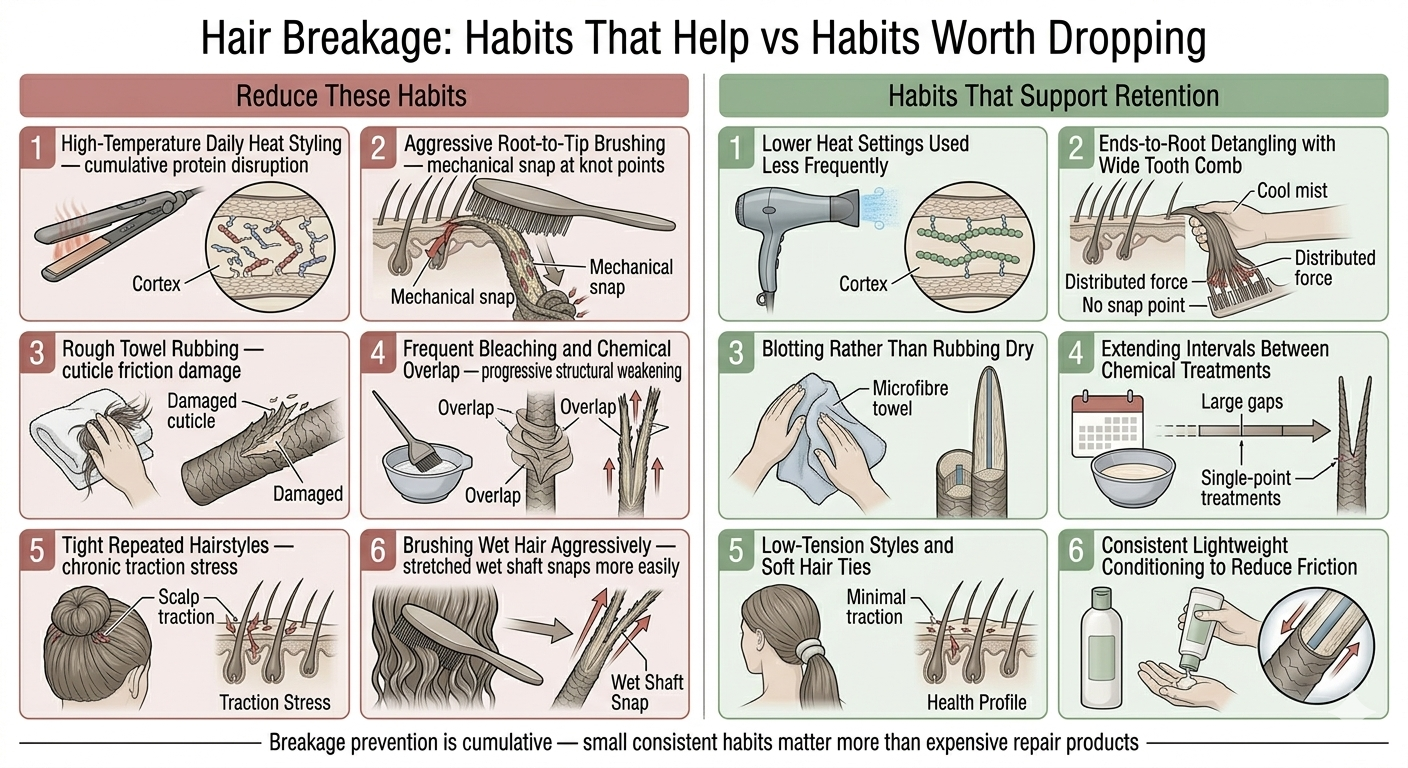
Conditioners, oils, and protective products may improve lubrication and reduce mechanical damage, but they do not permanently repair severely damaged hair fibres. Once structural damage occurs, management focuses mainly on minimising further breakage and improving retention.
For many people, healthier-looking hair comes less from making hair grow faster and more from helping existing strands survive longer without snapping.
Author: Dr. Priya Goswami
Medical review: Dr. Denis Broun
Next step
If you notice coverage changes without increased shedding, confirm what process is occurring.
Take the Hair Assessment to have a physician review your pattern, identify whether miniaturization is present, and determine appropriate staging and next steps.
Add Comment